[ Japanese ]
Disclosure in Line with the Recommendations of the Taskforce on Nature-related Financial Disclosures (TNFD)
The Six General Requirements of the TNFD
1. The Application of Material Issues
One of the Sekisui House Group’s material issues*1 is “Contributing to a Sustainable Society,” and we also put a strong focus on nature-related initiatives. In our TNFD disclosures and analyses, which are based on the LEAP approach, we apply the principle of double materiality—recognizing both our impact on nature and our dependence on it.
2. The Scope of Disclosures
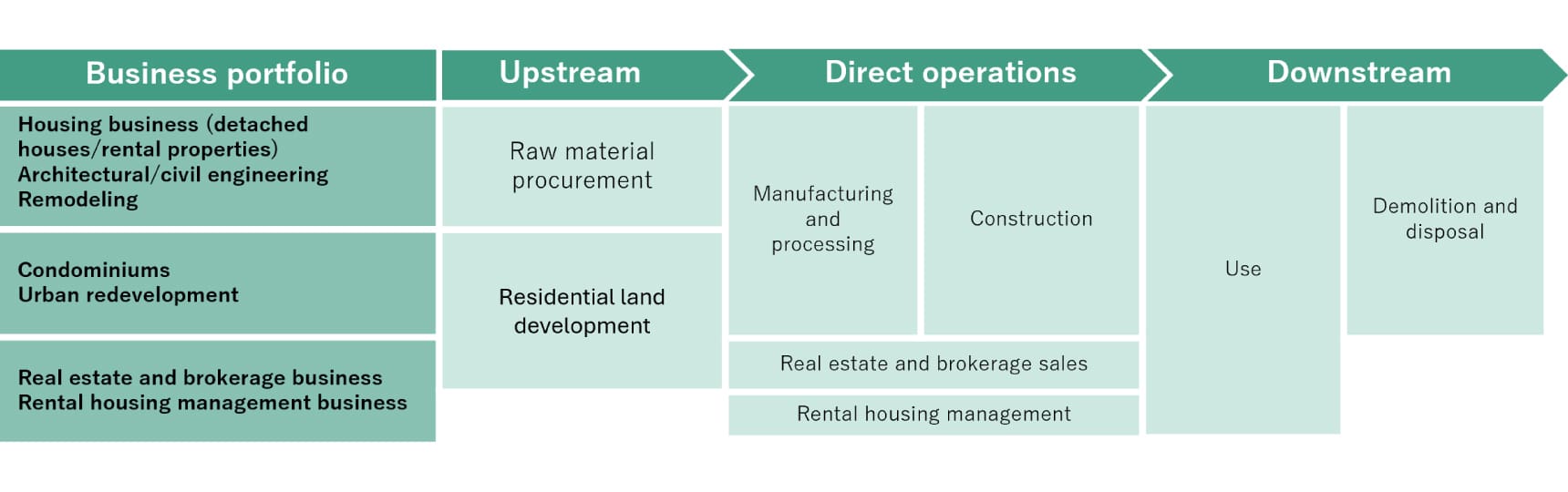
We evaluated the impacts and dependencies of all direct operations within our Group's business portfolio and conducted an analysis of associated risks and opportunities. In addition, after taking into account the scale of our operations and their financial significance, we performed an upstream evaluation of impacts and dependencies, along with a risk and opportunity analysis in our housing business. We also conducted a detailed analysis of impacts and dependencies on nature in wood procurement, which represents significant impacts and dependencies in the upstream value chain.
3. The Location of Nature-related issues
We have identified high priority locations in upstream value chain raw material procurement, particularly for wood, which has a significant impact and dependence on nature. Moving forward, we plan to further analyze and assess the impacts of other priority locations related to non-wood raw material procurement and the direct operations of our business.
4. Integration with other sustainability-related disclosures
This disclosure is based on the TNFD recommendations, and we are analyzing the alignment, synergies, and trade-offs of environmental issues such as climate change, resource circulation, and water security. Moving forward, we are considering integrating the nature-related disclosures into other sustainability-related disclosures.
5. The time horizons considered
The time horizons considered are short term: 3 years from 2024; medium term: up to 2030; and long term: up to 2050.
6. The engagement of Indigenous Peoples, local communities and affected stakeholders in the identification and assessment of nature-related issues
The Group places importance on “coexisting with local communities” as a key aspect of our material issue “Contributing to a Sustainable Society.” By accurately understanding the needs and issues of regional communities and building trust with local stakeholders, we are able to appropriately adjust business and activity plans while forming strong partnerships with regional communities. In addition, we conduct risk management to address regional issues, achieving sustainable business activities through initiatives that consider the impact on regional environments.
Governance
The Group has established the ESG Promotion Committee as an advisory body to the Board of Directors to determine and implement action policies while confirming that all ESG management initiatives are reasonable and in line with societal expectations. The committee meets once every three months. Along with climate change, addressing nature-related issues is one of the key topics discussed by the committee. The committee evaluates the appropriateness of action policies and progress, and reports important matters to the Board of Directors. Additionally, the Human Rights Policy respects international norms, such as the International Bill of Human Rights, the ILO (International Labour Organization) Declaration on Fundamental Principles and Rights at Work, and Guiding Principles on Business and Human Rights, and supports the Ten Principles of the United Nations Global Compact. The CSR Procurement Guidelines and the Wood Procurement Guidelines also establish policies and standards aimed at preventing human rights violations. By following these policies and guidelines, the Group strives to have zero biodiversity-related and natural resource-related human rights violations in our business activities and procurement. In particular, the Wood Procurement Guidelines stipulate that free, prior, and informed consent (FPIC)*2 be followed regarding all stakeholders, including indigenous peoples, near procurement sites. Additionally, we have established wood procurement policies that ensure we do not procure wood from any conflict areas.
*2 FPIC(Free,Prior Informed Consent)
Figure 1. The Scope of Our Group’s Businesses
Strategy
As with climate change, regarding biodiversity and natural capital, the Sekisui House Group works to clarify the appropriateness of its strategy and issues therein by anticipating various situations that may occur in order to make steady progress toward a world where people live in harmony with nature.
Accordingly, the Company considers risks and opportunities related to nature as well as assesses its impact and dependency based on the LEAP approach in the TNFD (Figure 2). In Value Report 2024, we screened and evaluated nature-related dependencies and impacts (1‒1), organized initiatives and used scenario analysis to prioritize our responses to risks and opportunities (3‒1). We conducted an advanced analysis of wood procurement in the material procurement process, which is one of the four stages of our housing business (material procurement, manufacturing and processing, construction, and demolition) and has a high impact and dependency on nature, using big data on biodiversity possessed by Think Nature Inc.¹ Through this, the Company identified points of contact with nature that bear particular importance and evaluated impacts and dependencies (1‒2, 2‒1, 2‒2), as well as qualitatively assessed the financial impact of risks (3‒2). This report locates and evaluates nature-related impacts and dependencies across the direct operations of all businesses (1‒3). It also identifies risks and opportunities, and quantitatively assesses the financial impact on these businesses (3‒3, 3‒4). In FY2025, we discussed and reviewed our response to the risks and opportunities identified in 3‒3 (3‒5).
Figure 2. Nature-related management approach in line with the TNFD LEAP
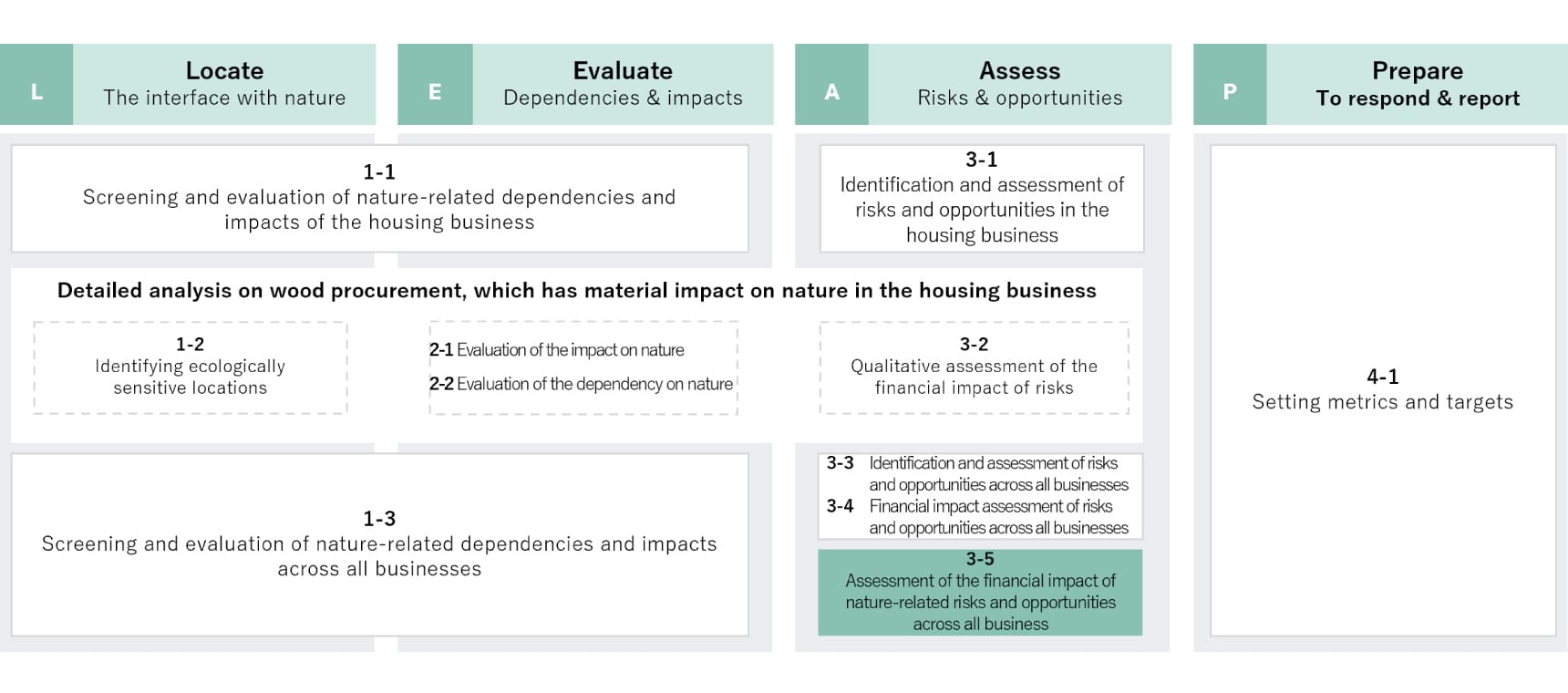
Note: Green indicates areas newly covered in FY2025
1-1 Screening and evaluation of nature-related dependencies and impacts of the housing business (Locate・Evaluate)
For the housing business (detached houses and rental housing), we screened potential impacts and dependencies using ENCORE*3 and other such methods on procurement data*4 and created a heatmap of our findings (Figure 3). Specifically, we split processes in the housing business into four phases—material procurement, manufacturing and processing, construction, and demolition—and analyzed each phase’s impacts and dependencies. For impacts on nature, we analyzed the impacts of land conversion in land, freshwater, and ocean areas, as well as of air, water, soil, and waste pollution. We also analyzed dependencies on ecosystem services including water supply, natural resources, soil regulation, flood control, and climate regulation. As a result, we confirmed that the material procurement process in particular may depend on several ecosystem services, and that it may have impacts on land conversion in land, freshwater, and ocean areas through wood harvesting and mineral extraction, as well as on air, water, soil, and waste pollution.
*3 ENCORE is an analytical tool on the TNFD Tools Catalogue. By helping users better visualize and understand the impact of environmental change on the economy, ENCORE can be used to understand how common business processes impact and depend on nature.
*4 For wood, we estimate main countries of origin based on procurement volume data covering secondary suppliers and subsequent suppliers. For materials other than wood, we estimate main countries of origin using general statistical data based on procurement volume and purchased value data.
Figure 3. Potential impact drivers and dependencies on natural capital in all businesses (direct operations)
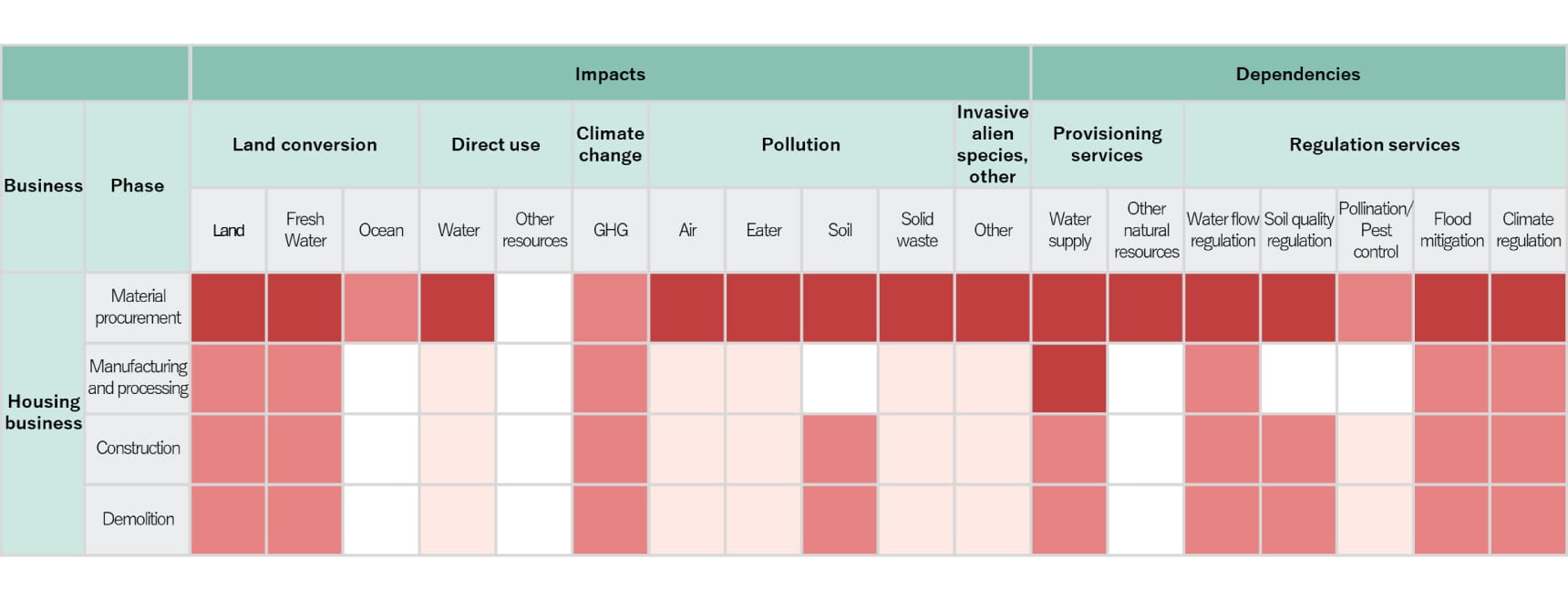
Note: Based on analytical results from ENCORE and other tools. The darker orange indicates the higher potential impact or dependency. As material procurement involves multiple materials and procurement processes, items identified as having higher impacts or dependencies have been included to avoid underestimation.
ENCORE Partners (Global Canopy, UNEP FI, and UNEP-WCMC)(2021). ENCORE: Exploring Natural Capital Opportunities, Risks and Exposure. Cambridge, UK: the ENCORE Partners. Available at: https://encorenature.org DOI: https://doi.org/10.34892/dz3x-y059.
1-2 Identifying ecologically sensitive locations in wood procurement (Locate)
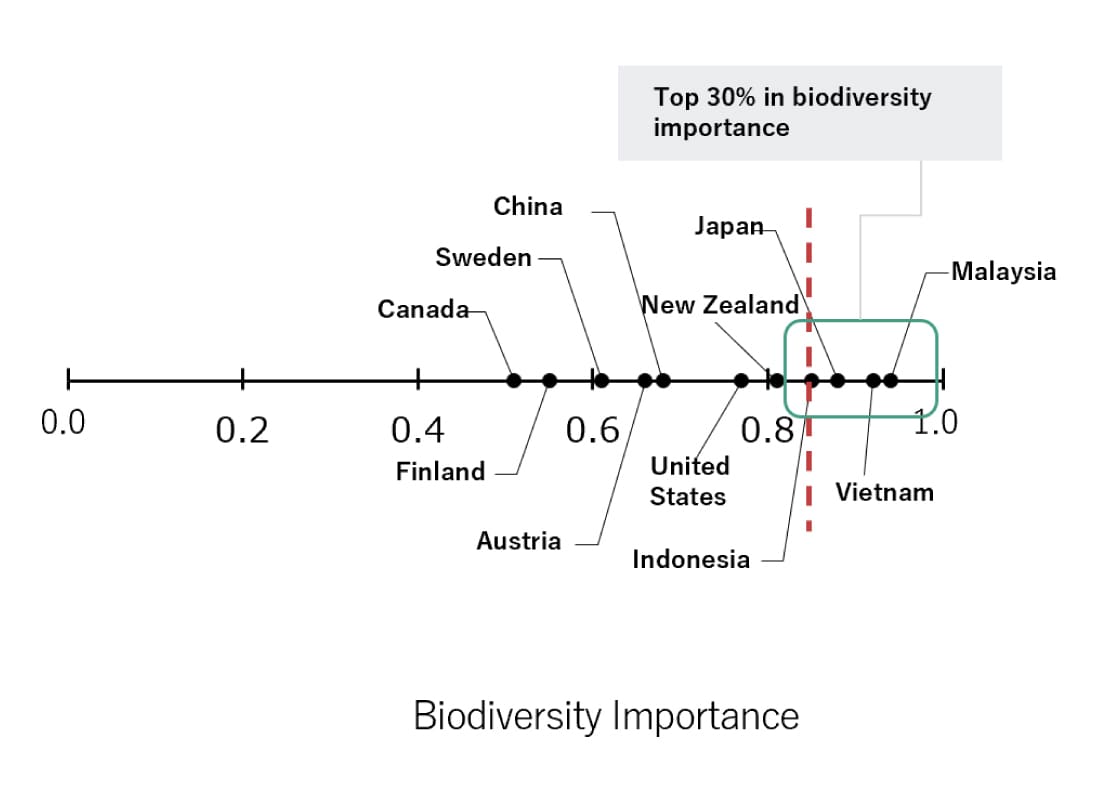
To start, we evaluated the biodiversity importance2 and the biodiversity integrity (hereafter referred to simply as “importance” and “integrity” respectively) of natural forests (Figures 4 and 5), focusing on the top 11 countries1 that accounted for 90% of our wood procurement in FY2022. In plantation forests, we only evaluated the importance (Figure 5). The distribution of the evaluation results for the 11 countries is shown in Figures 6 and 7. Our findings revealed that, out of the 11 countries evaluated, the highest conservation priority areas for natural forests are Indonesia and Malaysia, and the highest conservation priority areas for plantation forests are Indonesia, Malaysia, Japan and Vietnam. Understanding the impact in these areas is therefore of the utmost importance.
Results of Biodiversity “Importance” and “Integrity” Analysis in Top 11 Countries by Procurement Volume
Figure 4. Biodiversity “importance” - Natural forests
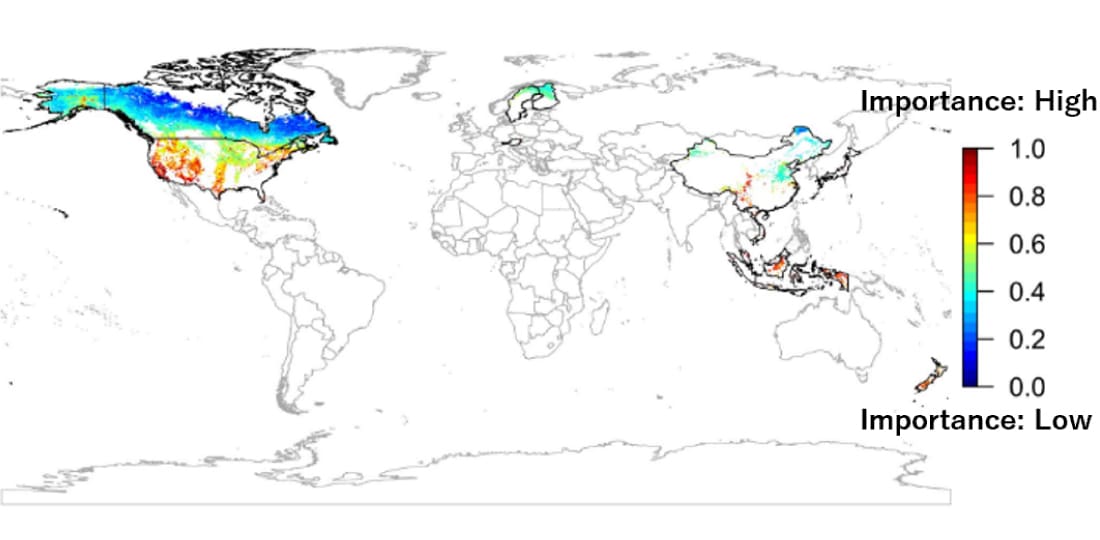
Figure 5. Biodiversity “integrity” - Natural forests
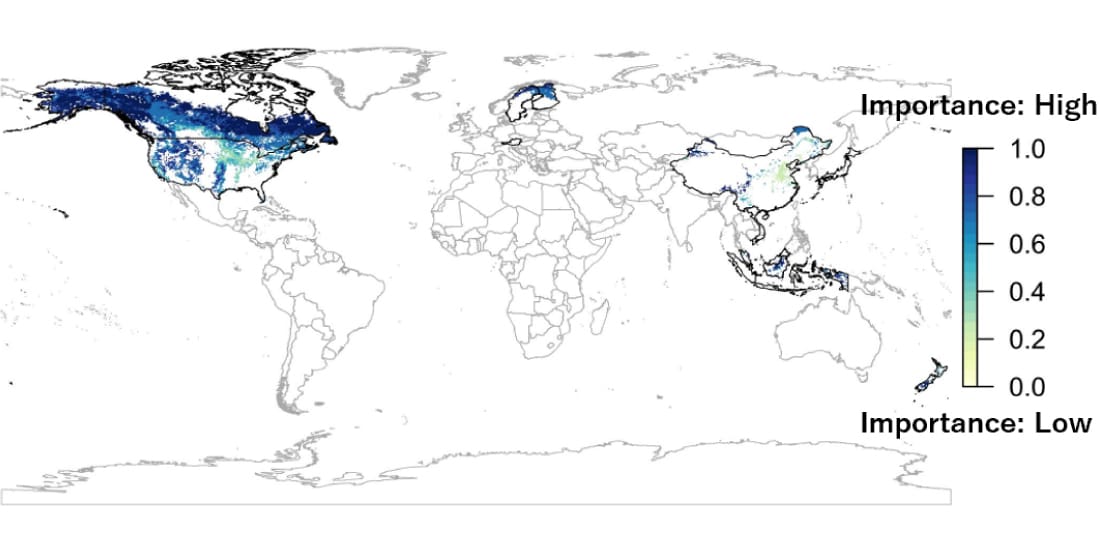
Figure 6. Biodiversity “importance” - Plantation forests
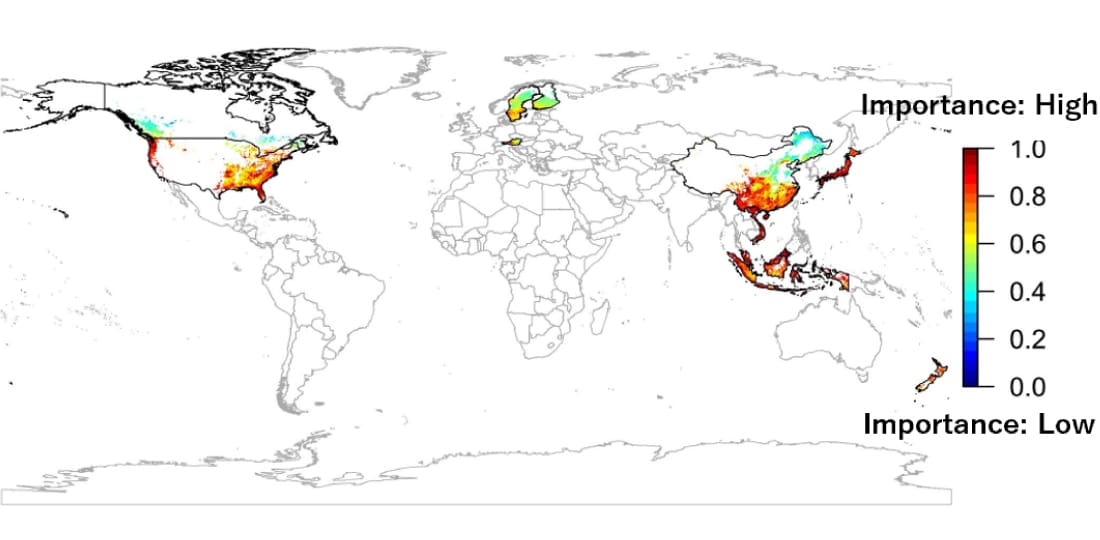
For natural forests, sites with high importance (red areas in the figure) and high integrity (dark indigo areas in the figure) are deemed as having high conservation priority. For plantation forests, sites with high importance (red areas in the figure) are considered a high conservation priority. The 11 countries we procure wood from are colored on both maps.
Note: The biodiversity importance score is a relative representation of the importance of each location from 0.0 to 1.0, with 1.0 being an area of land with utmost importance to the world’s natural environment and 0.0 being an area of land that has lost all importance as a natural environment.
Note: The biodiversity integrity score is a relative representation of the completeness of each location from 0.0 to 1.0, with 1.0 being an area of land in a completely pristine condition and 0.0 being an area of land that has been completely destroyed.
Figure 7. Assessment results for “importance” and “integrity” in top 11 countries - Natural forests
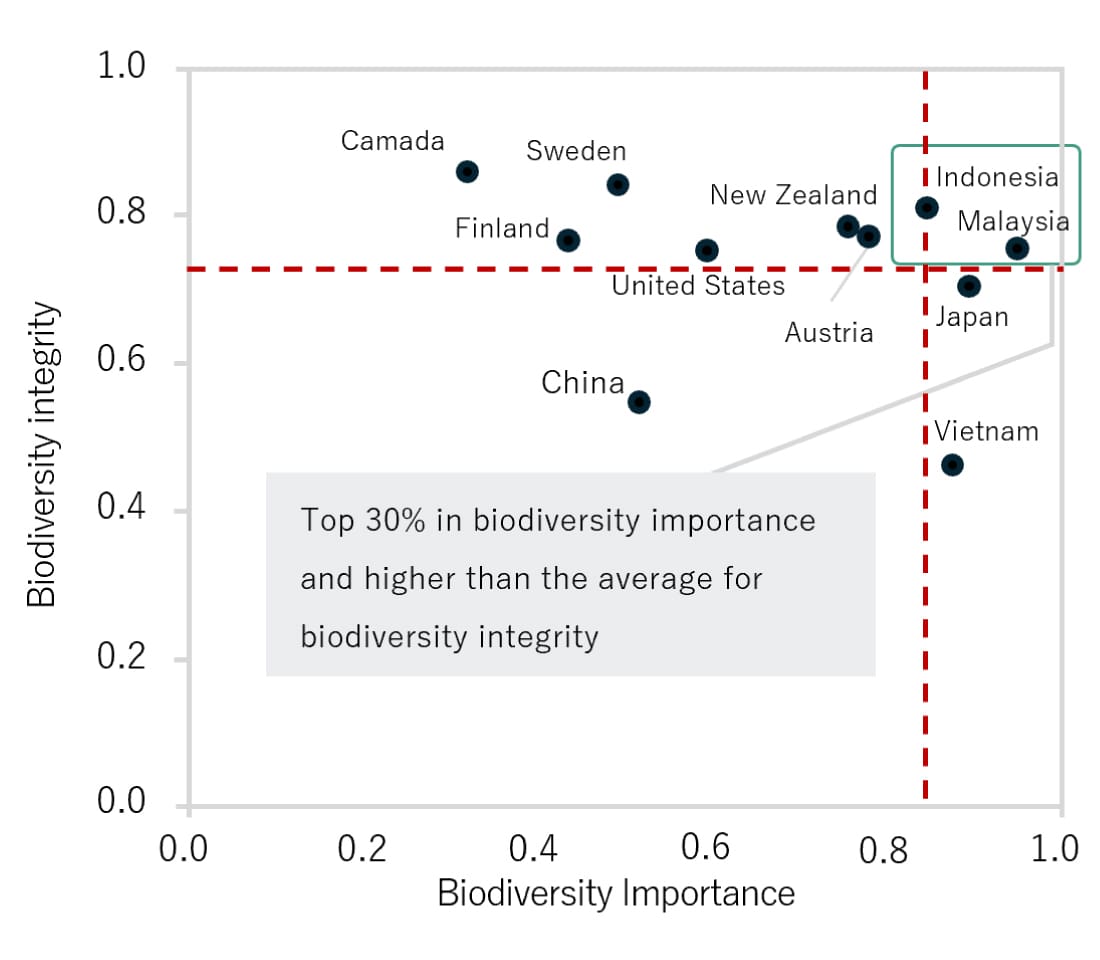
Figure 8. Assessment results for “importance” in top 11 countries - Plantation forests
1-3 Screening and evaluation of nature-related dependencies and impacts across all businesses (Locate/Evaluate)
We categorized all of the Group’s direct operations into four business classifications and used ENCORE to analyze nature-related impacts, such as the conversion of land and pollution, as well as dependencies on ecosystem services, such as rainfall regulation (Figure 9). From these analyses, we found that many of our direct operations are related to impact and dependency factors concerning water cycles and soil, as well as ecosystem services.
Figure 9. Potential impact drivers and dependencies on natural capital in all businesses (direct operations)
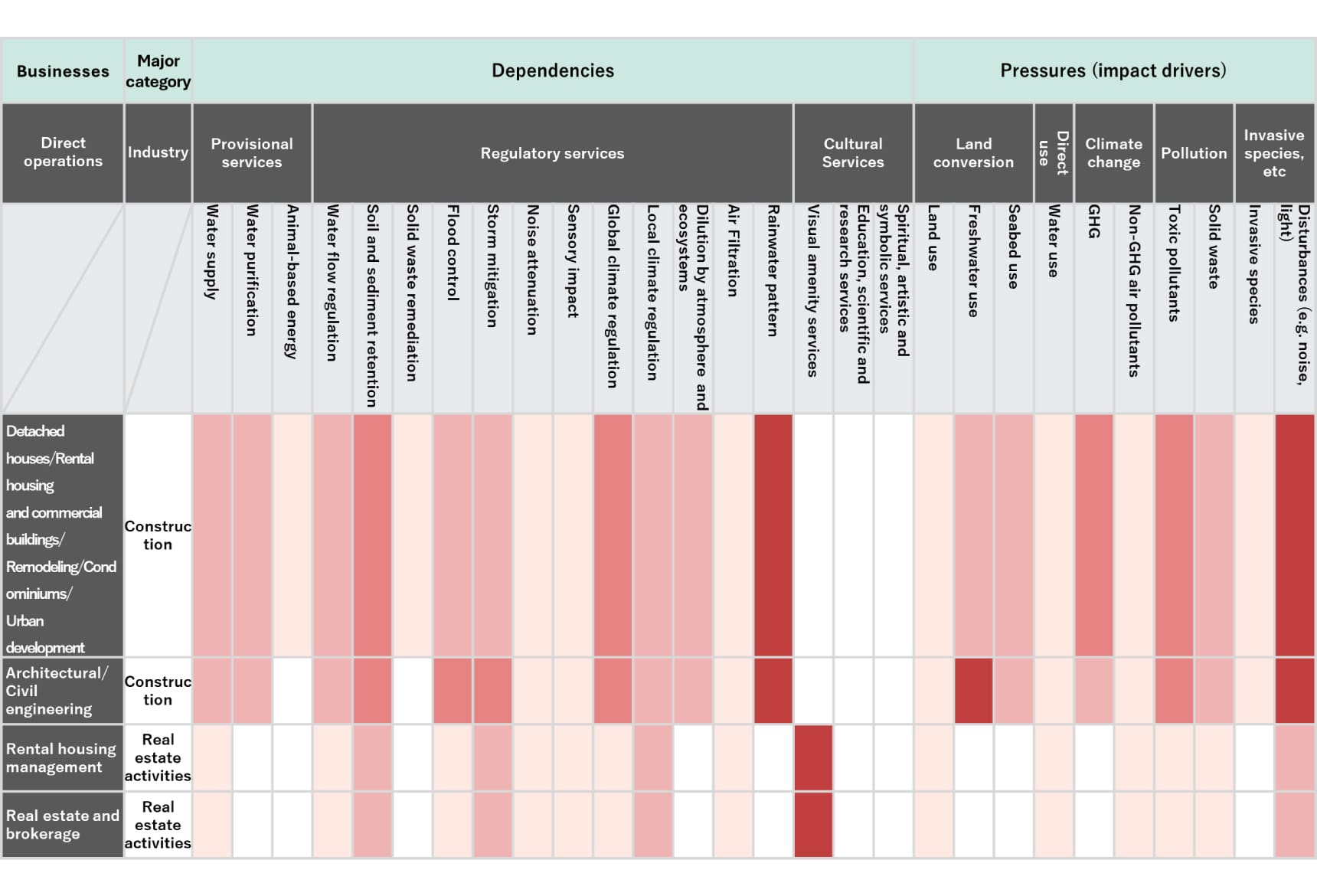
Note: Based on analysis results from ENCORE; darker orange indicates the higher potential impact and dependency.
ENCORE Partners (Global Canopy, UNEP FI, and UNEP-WCMC)(2024). ENCORE: Exploring Natural Capital Opportunities, Risks and Exposure. Cambridge, UK: the ENCORE Partners. Available at: https://encorenature.org. DOI: https://doi.org/10.34892/dz3x-y059.
2-1 Evaluation of the impact of wood procurement on nature (Evaluate)
ENCORE identifies terrestrial ecosystem use,*5 GHG emissions, water pollution, and soil pollution as four factors having a significant impact within the forestry-related sector. We analyzed the scale of these impacts and impact distribution in our top 11 wood procurement countries. As a result, we identified terrestrial ecosystem use as having a particularly significant impact, and found that impact levels are high in all countries identified above as being sensitive wood procurement locations from a biodiversity perspective (Indonesia, Malaysia, Japan, and Vietnam). Specifically, we have observed relatively large impacts on plantation forests throughout Malaysia; natural forests in Kalimantan, Indonesia; plantation forests in central Java, Indonesia; and plantation forests in the Chugoku and Shikoku regions of Japan as well as on the Pacific side of Honshu, south of the Kanto region. We recognize that wood production in these regions may pose a threat to the regional terrestrial ecosystems.
The Company conducts onsite due diligence as part of our commitment to achieving the DCF(Deforestation and Conversion Free) goal outlined in our Wood Procurement Policy. In FY2025, we carried out onsite due diligence at plantation forests in Vietnam, which have been identified as having a significant impact on terrestrial ecosystems due to wood procurement activities and being highly important in terms of biodiversity, as well as plantation forests in southern Thailand near Malaysia, also identified as being highly important.
*5 Refers to land conversion of terrestrial ecosystems for purposes such as agriculture, forestry or urban development. The magnitude of terrestrial ecosystem use was assessed by multiplying geographical data on the degree of threat to the terrestrial ecosystem by the volume of procurement distribution. The degree of threat to the terrestrial ecosystem was evaluated by scoring the concentration of rare species that are threatened by land use and development activities. It is important to note that land use and development may occur for reasons beyond wood production. Consequently, there may be additional factors influencing the degree of threat to the terrestrial ecosystem in areas identified as having high levels of threat.
Figure 10. Example Analysis of Impacts on Terrestrial Ecosystems (Plantation Forest Areas in Indonesia)
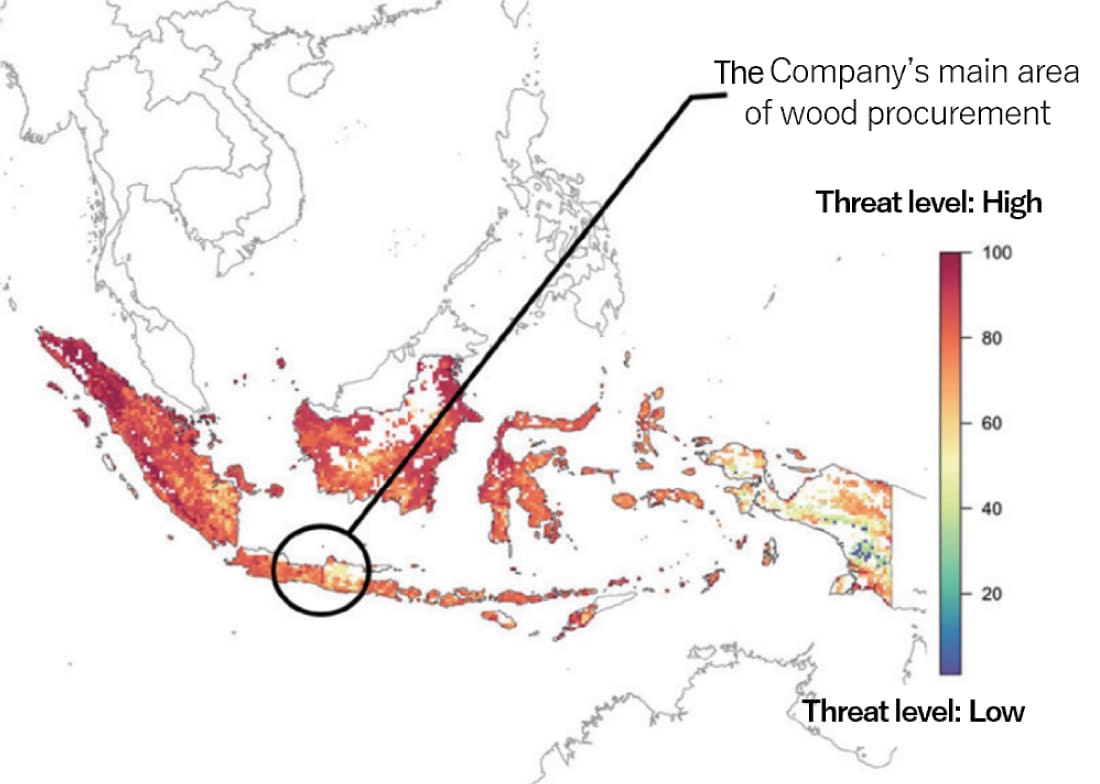
Figure 10. Plantation forests in the central part of Java comprise the Company’s main wood procurement area in Indonesia. The impact on the terrestrial ecosystem in this procurement area is relatively low compared with other areas in Indonesia. However, Indonesia’s importance to biodiversity is high, having a large nationwide impact on the terrestrial ecosystems. Therefore, it is vital to properly select and manage sustainable procurement practices.
Note: The threat to terrestrial ecosystems score is a relative representation of threat levels of each location, ranging from 1 to 100, where 100 indicates an area with the highest level of global threat and 1 indicates an area with the lowest level of global threat.
2-2 Evaluation of the dependency of wood procurement on nature (Evaluate)
To identify areas that are deficient in ecosystem services and vulnerable to dependencies on nature, we analyzed forestry-dependent ecosystem services, as identified by ENCORE. As a result of this analysis, we found areas in the following regions to be lacking in essential functions that wood procurement activities depend on: soil stabilization and erosion control in the Chugoku and Shikoku regions of Japan, pest control functions in the central and southern parts of Sweden, as well as in all natural forests in the United States and plantation forests in its northern and western regions, and flood protection functions in the northern parts of Austria.
Figure 11. Analysis of pest control functions (Plantation Forest Areas in Sweden)
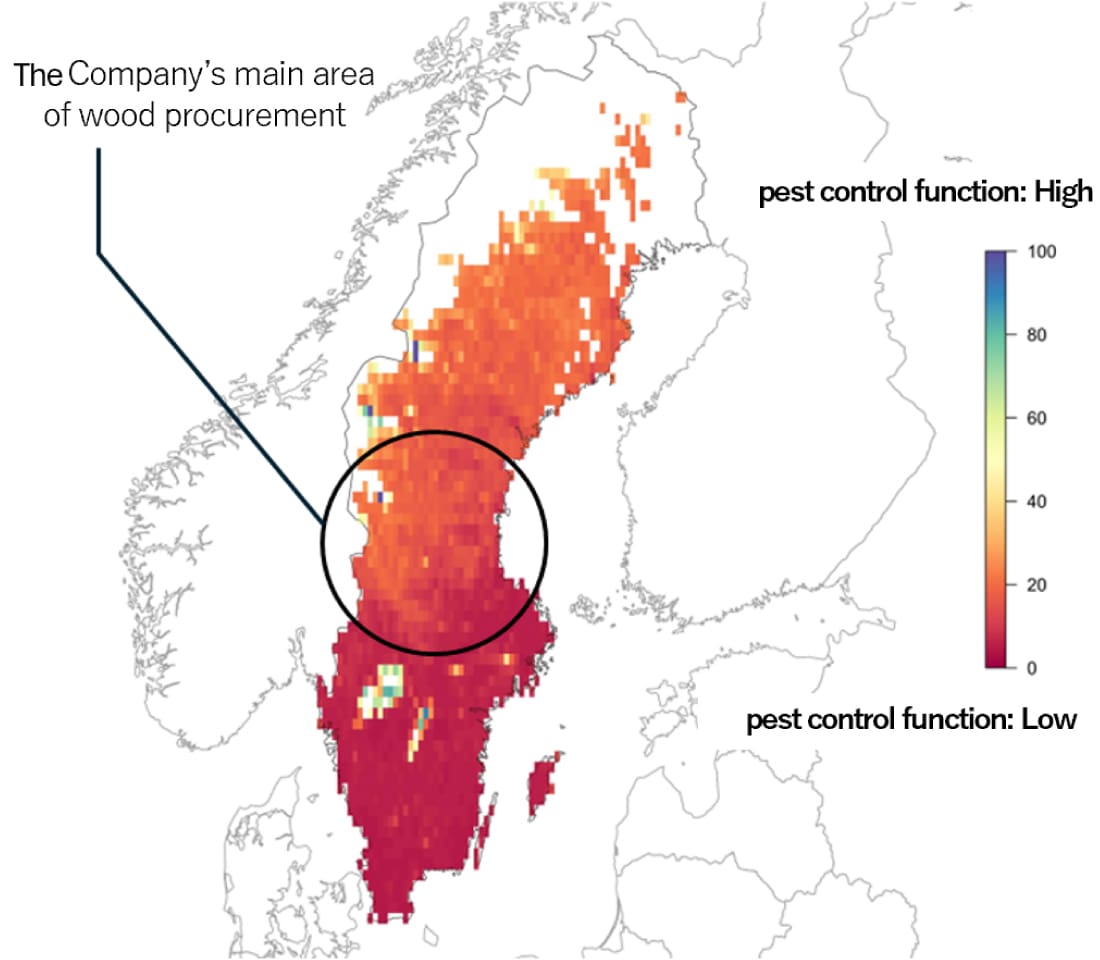
Figure 11. Plantation forests in the central region of Sweden comprise the Company’s main wood procurement area. In Sweden, pest control functions are weak particularly in the south, and in the past, forests primarily in the south have suffered from major pest damage. However, due to climate change and other factors, there is a distinct possibility that pest damage could extend beyond the south to the entire country, including the central region.
Note: Scores for pest control functions represent relative pest control functions at each site on a scale of 1 to 100, where 100 represents regions with the lowest level of pest invasion and strongest pest control functions globally, and 1 represents regions with the highest level of pest invasion and weakest pest control functions.
3-3 Identification and assessment of risks and opportunities across all businesses (Assess)
We have compiled a list of items with significant environmental impacts and dependencies in our direct operations (1‒3), along with potential risks and opportunities related to raw material procurement, which has been identified as having a substantial impact on nature (1‒1). Subsequently, we highlighted the items from this list that are particularly important to our Company and identified the corresponding specific risks and opportunities. As part of the process to identify these major risks and opportunities, we established a cross-functional working group consisting of 52 members from 23 departments within the Group. We have held 16 workshops in total, creating a platform for discussions on future nature-related risks and opportunities, as well as our resilience in addressing them.
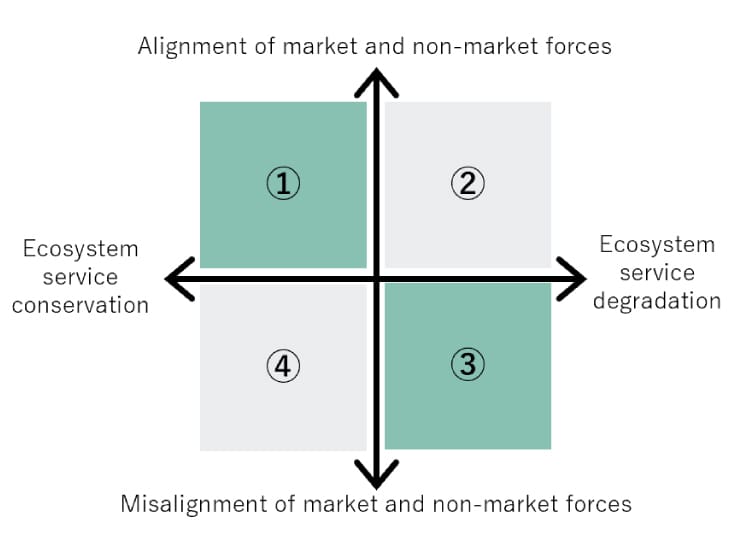
Figure 12. Four-quadrant Scenario Consisting of Two Uncertainties as Recommended by the TNFD
Note: Created based on the TNFD v1.0 “Guidance on scenario analysis”
When conducting these workshops, we constructed exploratory scenarios*6 for the short term (3 years from 2024), the medium term (up to 2030) and the long term (up to 2050), based on perspectives of the state of nature in terms of the condition of biodiversity and temperatures increases (horizontal axis) as well as global trends in technology, society, regulations and politics (vertical axis). In the four-quadrant scenario consisting of two uncertainties as recommended by the TNFD, we titled Scenario 1 as “A World of Sustainable Systems” and Scenario 3 as “A World Headed for Ruin” (Figure 5). Next, we held internal workshops for relevant employees and discussed the nature-related risks and opportunities the Company could face under each scenario.
*6 In constructing the scenarios, we used WWF’s Living Planet Report 2022 and IPCC’s Sixth Assessment Report (2021) as references to set fixed conditions regarding the state of nature in 2040. In Scenario 1, with the horizontal axis representing the state of nature, the ecosystem is gradually recovering and the global environment is projected to improve due to achievement of the 1.5°C scenario. The vertical axis represents market and non-market forces moving in the same direction. This scenario envisions a world where society, laws, regulations and the economy are all moving in a way that is beneficial for the environment. Scenario 3, on the other hand, envisions a world where ecosystems degrade and climate change-induced temperature increases continue. The vertical axis shows market and non-market forces running counter to each other, with society, laws, regulations and the economy moving in a way that is detrimental or has no positive impact on the global environment.
3-4 Financial impacts of risks and opportunities (Assess)
Through Company-wide workshops and scenario analysis, we identified key risks and opportunities and assessed their potential financial impact. The results are displayed on the following page. The Company will further advance internal discussions to gain deeper insights into nature-related impacts and dependencies linked to each risk and opportunity, refine priority areas and approaches, and formulate action plans for issues requiring further attention. Financial impacts will also be examined in greater detail.
The financial impact is defined as follows.
Financial impact: Large: ¥30 billion or more; medium: ¥10 billion or more; small: less than ¥10 billion
Table 1 The Group’s Nature-related Risks, Potential Financial Impacts, and Responses
| Physical risk/Acute: Protection from floods, storms, landslides, and soil erosion | |||
|---|---|---|---|
| Dependency | Landslides, storm damage, and flooding due to the degradation of nature caused by development activities may expose the Company to liability for compensation. | Financial impact | Time horizons |
| High | Long-term | ||
| Response | In accordance with laws and regulations, in addition to considering the natural environment and disaster risks in every stage including planning, design, and construction, we also conduct prior investigations into the natural environments and topographical features of the site and surrounding regions. In the event that these investigations reveal the potential for impacts on the natural environment or high levels of disaster risk, we carefully examine the development and prevent any development activity-related natural disasters from occurring by avoiding land acquisition as necessary. | ||
| Physical risk(Acute/Chronic): Increased local temperatures and heightened flood risk resulting from the expansion of impervious surfaces. | |||
|---|---|---|---|
| Dependency | The large-scale shift to sealed surfaces has increased the severity of events such as urban inundation and river flooding, and restrictions on water usage may cause delays or stoppages in various business operations, including construction and material transportation. | Financial impact | Time horizons |
| Low | Long-term | ||
| Response | Certain production bases and suppliers may be forced to suspend operations for the medium to long term due to restrictions on water use caused by water-related disasters. In preparation for this possibility, we have established a system, based on our business continuity plan (BCP), that will enable us to transfer the resources necessary for production (raw materials, personnel, and equipment) to other production bases. | ||
| Physical risk/Chronic: Sourcing of building materials | |||
|---|---|---|---|
| Dependency | The degradation of ecosystems poses challenges in sourcing materials from habitats associated with threatened species and products from supply chains that have a significant impact on the environment. This may affect the overall capacity for housing supply. | Financial impact | Time horizons |
| High | Long-term | ||
| Response | In the sourcing of wood, based on our proprietary Wood Procurement Guidelines, we are promoting the procurement of environmentally friendly and socially fair FairWood. For other important materials such as cement, steel, and aluminum, we have begun collecting information aimed at the creation of an environmentally friendly procurement system, in the same way as for wood procurement. | ||
| Physical risk/Chronic: Sourcing of building materials (gravel) | |||
|---|---|---|---|
| Dependency | Excessive gravel and sand extraction may diminish the supply of gravel and sand needed for concrete production, making it difficult to procure the volume of concrete required for building. | Financial impact | Time horizons |
| High | Mid-term | ||
| Response | To reduce the use of gravel and sand, which are natural resources, we have begun examining the use of alternative materials that are effective in reducing environmental impact. | ||
| Physical risk/Chronic: Sourcing of building materials (wood) | |||
|---|---|---|---|
| Dependency | Forest fires may disrupt the consistent procurement of timber, causing material procurement costs to rise sharply. | Financial impact | Time horizons |
| High | Mid-term | ||
| Response | To counter any risk of material supply stoppages, we are working to secure multiple procurement routes for each material. As a result, even in the event of a forest fire, we are able to prevent the complete stoppage of material supply to ensure business continuity and minimize any financial impact. | ||
| Physical risk/Chronic: Water supply | |||
|---|---|---|---|
| Dependency | As climate change increases the risk of groundwater contamination (saltwater intrusion) due to storm surges and landslides caused by torrential rain, the risk of stoppages on water use at production bases caused by restrictions on water use may increase. | Financial impact | Time horizons |
| Medium | Mid-term | ||
| Response | At the Shizuoka Factory, which uses the WRI Aqueduct tools and has been identified as having a relatively high levels of water stress compared to other production bases, we have set a target to reduce the consumption of industrial-use water used at wastewater treatment facilities within the factory in order to reduce dependence on water resources. We are actively promoting the internal circulation of water and the reuse of rainwater to achieve this target, and are aiming for more efficient use of water resources. | ||
| Transition risk/Chronic: Land clearance/Habitat fragmentation and degradation | |||
|---|---|---|---|
| Impact | Stricter regulations or increased emphasis on greenery and scenic value in planned development areas may necessitate changes to plans. | Financial impact | Time horizons |
| High | Short-term | ||
| Response | We have formulated “Streetscape Guidelines” for our residential developments. By setting standards for the positioning of greenery and the selection of trees, we are improving the quantity and quality of greenery and creating a landscape in harmony with the area. | ||
| Transition risk/Government policy: Contaminated soil and water from spills and waste accumulation | |||
|---|---|---|---|
| Impact | The introduction of new standards and regulations for pollution control and waste management may necessitate risk mitigation measures addressing waste disposal, soil contamination associated with demolition and land acquisition, and other related risks. | Financial impact | Time horizons |
| Medium | Long-term | ||
| Response | We have created a risk map based on the results of assessments by the Risk Management Committee on the likelihood of each risk and their Company-wide impacts. For industrial waste treatment malfunctions, which have been positioned as a particularly important issue, we are improving employee awareness through the sharing of case studies and working to minimize the occurrence of such risks. | ||
| Transition risk/Government policy: Land availability | |||
|---|---|---|---|
| Dependency | Urban planning regulations may become stricter to preserve the habitats of endangered species and valuable ecosystems in urban areas. | Financial impact | Time horizons |
| Medium | Mid-term | ||
| Response | Through our Gohon no Ki Project, we are promoting the creation of environments that enable local birds and butterflies to use residential gardens. In doing so, we are contributing to the creation of ecosystem networks in urban areas. We are also gathering information on advanced overseas initiatives including biodiversity net gain and biodiversity credits, and monitoring trends from the Ministry of the Environment’s “Study Group on Biodiversity Valuation.” | ||
| Transition risk/Government policy, Market: Noise disruption to wildlife | |||
|---|---|---|---|
| Impact | Growing concern about mitigating environmental impacts may lead to higher costs associated with noise monitoring for sounds that could negatively impact biodiversity and related management costs. | Financial impact | Time horizons |
| Low | Mid-term | ||
| Response | At the Group’s construction sites, we proactively use low-noise construction machinery certified by the Ministry of Land, Infrastructure, Transport and Tourism. By reducing operational noise, we are minimizing any impact on wildlife in the surrounding areas. | ||
| Transition risk/Market: Impacts associated with production of building materials | |||
|---|---|---|---|
| Impact | The growing demand from investors for reports on nature-related risks in the upstream supply chain of wood harvested from natural forests and forests with high conservation value. | Financial impact | Time horizons |
| Low | Mid-term | ||
| Response | One guideline with our “Wood Procurement Guidelines” mentioned above is to “Source wood products produced without damaging high conservation values (HCVs).” While requesting suppliers’ understanding of and cooperation with these guidelines, we are minimizing wood procurement from forests with high conservation value. | ||
| Transition risks/Reputation: Contaminated soil and water from spills and waste accumulation | |||
|---|---|---|---|
| Impact | Growing concern for ecosystem preservation and inadequate responses to environmental challenges may lead to distrust, resulting in reputational risks for the Company, which could cause project suspensions, reduced sales, and a decline in stock prices. | Financial impact | Time horizons |
| High | Mid-term | ||
| Response | We regularly implement various initiatives to prevent improper responses to environmental issues. In the event that an environmental emergency occurs, we ensure a rapid and appropriate response by conducting regular crisis response drills at each relevant department through the Risk Management Committee. In doing so, we are enhancing our initial response capabilities and working to prevent reputational risks from increasing. | ||
Table 2. Nature-related Opportunities of the Group
| Opportunities related to sustainability performance (resource use): General | |||
|---|---|---|---|
| Impact | Through initiatives such as the reuse of buildings, the Company is recognized as a leading organization implementing circular economy strategies, resulting in enhanced evaluations from customers and the market. | Financial impact | Time horizons |
| High | Short-term | ||
| Response | In 2024, we launched the Circular Design from “House to House” project, aimed at the transition to a circular economy. This project focuses on housing design that considers recycling, reuse, and renewables from the design stage, enhancing recycling capabilities at Resource Recycling Centers, and building networks with suppliers and universities. Through these efforts, we aim to provide housing products built solely with renewable materials and components by 2050. | ||
| Opportunities related to sustainability performance (resource use): General | |||
|---|---|---|---|
| Impact | By engaging with local communities, government, and stakeholders early on through explanations of development and architectural design projects, the Company can avoid potential issues and facilitate smooth business operations. | Financial impact | Time horizons |
| High | Mid-term | ||
| Response | When conducting development work that exceeds the scale specified in local ordinances, after the formulation of our basic plan, we conduct briefings for local residents to ensure smooth project promotion. | ||
| Opportunities related to sustainability performance (resource use): General | |||
|---|---|---|---|
| Impact | By proposing initiatives that protect cultural values and leverage regional strengths, the Company can create new value by gaining customer empathy, which may lead to increased sales of existing businesses and the development of new business opportunities. | Financial impact | Time horizons |
| High | Mid-term | ||
| Response | In collaboration with Marriott International, we promote the “Trip Base Michi-no-Eki Stations Project,” a regional revitalization project. In this project, we aim to revitalize local communities through travel by proposing a new style of travel called “TRIP BASE STYLE,” which enables guests to experience the unique food culture, nature, history, and traditions of each region. The project is based at Fairfield by Marriott hotels located adjacent to Michi-no-Eki roadside rest stations across Japan. | ||
| Opportunities related to sustainability performance (ecosystem conservation/restoration/regeneration): Land clearance/Habitat fragmentation and degradation | |||
|---|---|---|---|
| Impact | By establishing buffer zones around construction sites that consider the habitat of native species and other wildlife, the Company can reduce the impact on ecosystems. Additionally, the presence of green spaces in the area improves the living environment and enhances the asset value of land and buildings. | Financial impact | Time horizons |
| Medium | Mid-term | ||
| Response | Through our Gohon no Ki Project, we plant primarily native species in residential gardens, ensuring that these gardens function as buffer zones that reduce impact on ecosystems. Moreover, through connections between residential gardens incorporating our Gohon no Ki approach and surrounding greenery, we are contributing to the creation of ecosystem networks. | ||
| Opportunities related to business/sustainability performance (products and services, ecosystem conservation/restoration/regeneration): Land clearance/Habitat fragmentation and degradation | |||
|---|---|---|---|
| Impact | We will promote green spaces in residential areas and enhance the value of urban green spaces, thereby facilitating the development of new business opportunities. | Financial impact | Time horizons |
| High | Mid-term | ||
| Response | In June 2024, we worked with Think Nature Inc. to develop the “Biodiversity Visualization Tool,” which recommends trees that help maximize biodiversity conservation in gardens. Using this tool, in addition to improving the quantity and quality of greenery in living environments, we are aiming to improve the value of green spaces in urban areas overall. Through these initiatives, we are promoting the creation of living environments that coexist with nature, and aiming to create new urban greening business opportunities. | ||
| Opportunities related to business performance (products and services): Green space creation, improving environmental quality and protection from floods, storms, and soil erosion, as well as providing amenity value | |||
|---|---|---|---|
| Dependency | Increasing demand for real estate with green spaces or those located near green areas will lead to higher demand for projects that incorporate environmentally conscious planting plans, while also expanding business opportunities such as hotel operations that leverage the rich natural environment. | Financial impact | Time horizons |
| High | Short-term | ||
| Response | We have formulated “Streetscape Guidelines” for our residential developments. By setting standards for the positioning of greenery and the selection of trees, in addition to improving the quantity and quality of greenery and creating a landscape in harmony with the area, we are aiming to improve the quality of life through ecosystem services. Through these initiatives, alongside responding to growing demand for homes and residential developments with greater green space value, we are aiming to create new business opportunities such as hotel operations that leverage the rich natural environment. | ||
| Opportunities related to business performance (market/reputation): Impacts associated with production of building materials | |||
|---|---|---|---|
| Impact | By transforming virgin materials into alternative products made from waste and by-products, the Company enhances its reputation as an environmentally conscious organization, which in turn raises environmental awareness throughout our value chain. This can lead to the development of new business opportunities and an increase in sales. | Financial impact | Time horizons |
| High | Short/Mid-term | ||
| Response | Since 2024, we have worked with our suppliers to promote horizontal recycling. Specifically, in new construction projects, we are using scraps from resin piping for water and hot-water supply systems in our houses to create components used in the same applications. For other materials and parts used in our houses, we plan to work actively with our suppliers on initiatives aimed at the effective use of resources and the transition to a circular economy. | ||
| Opportunities related to business performance (market/reputation): General | |||
|---|---|---|---|
| Impact | By creating community services that involve local residents in the maintenance of planting in residential developments, the Company contributes to the sustainable development of the community through revitalization efforts, while also facilitating business expansion. | Financial impact | Time horizons |
| High | Mid-term | ||
| Response | At our condominiums, there are examples of community spaces being used to revitalize the local community by bringing together residents and other locals and promoting interaction. PRIME MAISON Egota no Mori and GRANDE MAISON Egota no Mori, for example, are providing opportunities for local residents to connect with nature through forest concerts for children and craft events using the natural elements of the four seasons. | ||
| Opportunities related to business performance (market/reputation): General | |||
|---|---|---|---|
| Impact | Due to policies in various countries, there is a growing demand for low-environmental-impact construction, such as green buildings, driven by a significant promotion of sustainable building practices. | Financial impact | Time horizons |
| High | Mid-term | ||
| Response | To promote so-called green buildings, at several properties we have built and own, we have acquired CASBEE certification, which objectively assesses a property’s environmental performance. | ||
Risk and Impact Management
As part of the Group-wide risk management process, the Group implements assessments to determine nature-related risks and opportunities as well as impact and dependency assessments based on the TNFD’s LEAP approach. First, we identified activities throughout the entire value chain that have potential nature-related impacts or dependencies. For wood, we conducted a geographic assessment to identify points of interface with ecologically sensitive locations based on detailed procurement information. After identifying impacts and dependencies, we evaluated their significance based on qualitative and quantitative analyses.
The identification of risks and opportunities was conducted across the Group using scenario analysis, with the relevant departments of each business unit taking the lead. The results are consolidated within the Environmental Subcommittee, where financial impact assessments are performed. Key risks and opportunities identified through this process are reviewed by the ESG Promotion Committee and are subsequently shared with the Board. Necessary discussions regarding risk mitigation and responses are considered as needed. In addition, matters related to operational risks and hazard risks are shared with the Risk Management Committee as appropriate, and are reviewed and managed within the Group-wide risk management framework.
We will continue to strengthen our engagement with key stakeholders, including suppliers related to our business activities. Currently, we are implementing initiatives that create opportunities and contribute to risk reduction, as outlined below. Moving forward, we will actively consider and execute new initiatives.
Risk Reduction: Sustainable wood procurement
Sustainable wood procurement
We are committed to sourcing ‘FairWood’, which not only complies with legal standards, but also contributes to biodiversity conservation and the development of local communities. In 2007, we established the Wood Procurement Guidelines (10 principles) to promote the use of sustainable wood in procurement, and since then we have positioned the guidelines as the basis for our FairWood procurement.
In 2023, we formulated the Wood Procurement Policy as our basic policy for wood procurement. We reorganized our previous guidelines into specific approaches based on this policy.
In 2025, we added “Deforestation and Conversion Free” to our Wood Procurement Policy to strengthen our environmental considerations in the procurement of wood. In addition to further clarifying the policy’s position, this addition more clearly demonstrates our approach to wood procurement as we aim to contribute to a sustainable society, which is one of our material issues.
We believe that sustainable procurement efforts also enhance our risk resilience from the perspective of resource efficiency. In procurement areas where we have identified significant impacts and dependencies, we will closely monitor information based on these guidelines and verify details individually as necessary to work on risk reduction.
Opportunity creation:
Measuring the biodiversity effects of the Gohon no Ki Project
Since 2019, in collaboration with the Kubota Laboratory of the Faculty of Science of University of the Ryukyus and Think Nature Inc., we have been engaged in joint research to analyze the quantitative effectiveness of biodiversity conservation. This project has demonstrated that the Gohon no Ki Project can contribute to the recovery of biodiversity in urban areas where ecosystem degradation is severe, and that expanding the project in the future will further enhance its effectiveness. In June 2024, we jointly developed an internal tool called the “Biodiversity Visualization Tool,” which aims to maximize the biodiversity conservation effects of trees and other plants in customers' gardens by visualizing these effects from the design stage. We are currently reviewing future developments and objectives based on pilot tests and result analyses. Additionally, we are conducting joint research on biodiversity and well-being with the Laboratory of Conservation Ecology in the Graduate School of Agriculture and Life Sciences / Faculty of Agriculture, The University of Tokyo. In 2024, we found that planting native tree species fosters interaction with nearby nature, enhancing the well-being of residents and their environmental awareness. The Gohon no Ki Project, which contributes to biodiversity while providing a rich living environment, not only creates brand value for our Company but also has the potential to contribute to society's nature-positive initiatives as a Nature-based Solution (NbS). We will actively engage in new areas, including the verification of the social aspects of nature-related initiatives.
Metrics and Targets
At the Sekisui House Group, our Sustainability Vision 2050*7 sets goals for 2050 that aim not only for No Net Loss (ensuring that ecosystem values are not diminished) but also for becoming Nature Positive (to enhance the value of the ecosystem through our business operations). We are committed to maximizing ecosystem networks through our business activities, focusing on the landscaping and greening initiative the Gohon no Ki Project, and sustainable wood procurement through FairWood. Additionally, we will promote decarbonization across all business activities, including our supply chain, and advance our efforts toward a circular economy.
4-1 Setting Metrics and Targets (Prepare)
The Group aims to properly evaluate and manage risks and opportunities that have large nature-related impacts and dependencies. To achieve this, we establish appropriate assessment metrics in line with recommendations from the TNFD and disclose actual results, mainly focused on the core global disclosure metrics.
We will disclose all TNFD-established core global disclosure metrics that are relevant and important to the Company. We have established assessment metrics from two perspectives: indicators that should be monitored to achieve our Sustainability Vision 2050 and metrics that should be monitored to stabilize business foundations and ensure responsible business activities.
We have disclosed results for some of the core global disclosure metrics that can be presently calculated (Table 3). Going forward, we will calculate results for core global disclosure metrics that were not disclosed at this time as well as results for important assessment indicators, which we will include as additional global disclosure metrics. We are also considering setting targets and monitoring progress using assessment metrics that are most closely related to the identified risks and opportunities
In addition, as a non-indicator-based target, we had designated achieving a rate of zero deforestation as a KPI starting in FY2023, with the 2030 goal of reaching zero deforestation in natural forests, as set forth in our Wood Procurement Policy.
In line with recent international sustainability standards and stakeholder expectations, in FY2025, we changed our KPI to “the rate of Deforestation and Conversion Free (DCF),” and continue to manage its progress. In pursuit of this target, we are advancing a range of initiatives, including strengthening supplier engagement, conducting thorough due diligence in regional areas, and switching.
Indicators established by the Company in accordance with TNFD core indicators
Table 3. List of Company-established Indicators Corresponding to TNFD Core Indicators for Impact and Dependency
| Category |
Metric No. |
Overview of TNFD indicators | Company-established indicators | Company results (FY2025) |
|---|---|---|---|---|
| Climate change | GHG emissions | GHG emissions | Referencing Scope 1 to Scope 3 | |
|
Land/freshwater/ ocean-use change |
C1.0 | Total spatial footprint | Total area of manufacturing sites | 935,671㎡ |
| Area of Nationally Certified Sustainability Managed Natural Sites | 21,808㎡ | |||
| C1.1 | Extent of land/freshwater/ ocean-use change | Construction area over a specified period | 2,349,000㎡ | |
| Pollution/ pollution removal | C2.0 | Pollutants released to soil split by type | Hazardous waste discharged into the environment (including soil) from direct operations | No incidence of discharge |
| C2.1 | Wastewater discharged | Wastewater volume and its concentration of pollutants Group-wide |
1,044,000㎥ Please refer to separate page for pollutant concentration in wastewater from manufacturing processes. No pollutants in wastewater from construction and demolition activities. |
|
| C2.2 | Waste generation and disposal |
Top row: Quantity of waste generated in manufacturing and processing, construction, demolition and office-related activities Bottom row: Hazardous waste generation |
Top row:923,000t |
|
| Quantity and rate of recycling in manufacturing and processing, construction, demolition and office-related activities | 902,000t、97.7% | |||
| Recycling rate in new construction | 100% | |||
| C2.3 | Plastic pollution | Material recycling rate of plastics in new construction | Under review for future disclosure | |
| C2.4 | Non-GHG air pollutants | Quantity of non-GHG air pollutants from manufacturing and processing activities |
NOx:6.02t VOC:55.4t SOx:0.083t |
|
| Resource use/ replenishment | C3.0 |
Water withdrawal and consumption from areas of water scarcity |
Quantity of water withdrawal and consumption from water-stressed areas in manufacturing and processing activities |
480,100 ㎥, 227,700 ㎥ Reevaluating water stress |
| C3.1 | Quantity of high risk natural commodities sourced from land/ocean/freshwater | Quantity of wood procured from tree species other than those at risk, such as threatened species (Sustainable wood procurement amount) | 223,373 ㎥ (97.1% of total procurement amount) | |
| Invasive alien species and other | C4.0 | Placeholder indicator: Measures against unintentional introduction of invasive alien species (IAS) | Risk of IAS introduction through implementation of the Gohon no Ki Project | In our landscaping and greening business, we utilize the national “Invasive Alien Species (IAS) List” to avoid planting risks associated with IAS in trees. |
| State of nature | C5.0 | Placeholder indicator: Ecosystem condition | Areas with large impacts and dependencies on wood production | See TNFD Disclosure “Strategy” section. |
| Increase in the biodiversity integration index for Japan’s big three metropolitan areas (Tokyo, Nagoya and Osaka) as a result of the Gohon no Ki Project |
See Evaluating effectiveness quantitatively using big data on biodiversity. |
Table 4. List of Company-established Indicators Corresponding to TNFD Core Indicators for Risks and Opportunities as well as Response Policies
| Category |
Metric No. |
Overview of TNFD indicators | Company-established indicators | Company results (FY2025) |
|---|---|---|---|---|
| Risk | C7.0 | Assets/liabilities/revenue/expenses vulnerable to nature-related transition risks | Quantity and proportion of assets vulnerable to transition risks | Under review for future disclosure |
| C7.1 | Quantity and proportion of assets vulnerable to physical risks | |||
| C7.2 |
Description and value of significant fines/penalties received/litigation action for the current fiscal year |
Compliance with environmental laws and regulations | No significant violations of environmental laws and regulations, including those related to soil, groundwater, or air pollution. | |
| Opportunity | C7.3 | Description and value of significant fines/penalties received/litigation action for he current fiscal year | Amount of opportunity-related capital expenditure | Under review for future disclosure |
| Amount of opportunity-related investing | ||||
| C7.4 | Increase and proportion of revenue from products and services producing demonstrable positive impacts on nature with a description of impacts | Increase in revenue from activities that have a positive impact on nature over a given period of time, and said positive impact |