[ Japanese ]
Contributing to a Decarbonized Society
- Achieving Comfortable Living Alongside Decarbonization While Strengthening Disaster Resilience
- Decarbonization of Business Activities and Response to Climate Change
- Reduction of CO2 Emissions at Procurement Stages for Components and Raw Materials
- Other Initiatives
- Initiatives in the Real Estate Portfolio
- The Sekisui House Group’s GHG Emissions, Energy Use, etc.
Achieving Comfortable Living Alongside
Decarbonization While Strengthening Disaster Resilience
Short term (up to 5 years) GHG emissions reduction targets
The Sekisui House Group has set a short-term, Scope 3 Category 11 (emissions generated from the use of sold products) reduction target of 55% compared with FY2013 levels by FY2030, and is advancing the decarbonization of our product line up. To achieve this, we are working to expand and promote the adoption of ZEH in our custom detached houses business, rental housing business, and condominiums for sale, as well as ZEB in the non-housing sector.
| Boundary | Unit | FY2023 | FY2024 | FY2025 | Targets | |
|---|---|---|---|---|---|---|
| Rate of CO2 emissions reduction from new housing and similar Operations*1 |
Group (Global)*2 |
% | 38.0 | 39.1 | 51.0*3 |
55 (FY2030) |
*1 Scope 3, Category 11 emissions reduction relative to FY2013 levels.
*2 Sekisui House, Ltd., Konoike Construction Co., Ltd., Sekisui House Construction Group, Sekisui House Real Estate Group, Sekisui House US Holdings, LLC and its subsidiaries housing sales companies, and Sekisui House Australia Holdings, PTY Ltd.
*3 Calculated by reflecting the expansion of the aggregation boundary and the revision of aggregation criteria (date of acquisition of confirmation certificate → date of handover ).
Promoting ZEH through Green First ZERO detached houses
Sekisui House’s Green First ZERO (ZEH)*4 detached houses contribute to the reduction of CO2 emissions and decarbonization through excellent energy-saving and energy-generating performance without sacrificing living comfort.
The foundation of this comfort is excellent thermal insulation that clears ZEH standards. A home designed with a living room atrium or large windows offers a bright, open space, but these features can be disadvantageous in terms of energy efficiency. By using windows with excellent thermal insulation, we achieve both an open indoor environment and energy efficiency. Since 2022, the standard specifications for Green First ZERO houses meet the newly established upper grades of thermal insulation (grade 5) and primary energy consumption (grade 6) under Japan’s housing performance indication system.
In terms of exterior appearance, to harmonize with the townscape, it is crucial to create a beautiful home while also achieving ZEH standards. Photovoltaic panels, including tile-shaped photovoltaic panels that blend in beautifully with ordinary roof tiles, are an essential part of ZEH and are a standard feature on our sloped-roof buildings. In addition to their appearance, these tile-shaped panels make it possible to install a large area of panels even on complexly shaped roofs.
ZEH also helps promote everyday comfort and economy. Comfortable living requires energy for use in air conditioning and electronics. The spread of telecommuting is leading to an increase in time spent at home and, in turn, home energy consumption. Combined with recent rises in electricity and gas prices, this could cause an even greater burden on household utility costs. The energy saving and generation of ZEH help significantly reduce these utility costs so that residents do not have to worry about major cost increases due to spending more time at home. The combined effect of this with the Family Suite bright and spacious interior designs we recommend make it possible to live comfortably and free of new stresses arising from new modes of living that incorporate telecommuting.
Thanks to these advantages, Sekisui House’s Green First ZERO (ZEH) detached houses have been embraced by customers, and in FY2025, 96%*5 of Sekisui House’s new detached houses were ZEH buildings, far exceeding the rate for Japan as a whole of 31%.*6 In addition, the cumulative number of ZEH houses we have constructed since the launch of this product reached 95,776 as of March 31, 2026. The Japanese government’s 7th Strategic Energy Plan, announced in 2025, sets the goals of having all new houses built from FY2030 meet the ZEH standard for energy efficiency and installing photovoltaic power generation equipment in 60% of new detached houses by 2030. Sekisui House already meets both of these targets.
The largest portion of the Sekisui House Group’s CO2 emissions, at 74.8% of the total, is from the use of supplied housing (Scope 3, Category 11). Promoting the adoption of ZEH is therefore indispensable to reducing CO2 emissions.
*4 Net zero energy house, a house that aims for an annual primary energy balance of zero through energy efficiency and energy generation while providing a comfortable indoor environment. Green First ZERO is the brand name of our detached house ZEH with standard adoption of a solar power generation system.
*5 The ratio of ZEH, Nearly ZEH, and ZEH Oriented (in areas with snow accumulation of 100 cm or more) dwellings constructed between April 2025 and March 2026.
*6 Source: Net-Zero Energy House Demonstration Project Survey Results (2024 Edition); Ministry of Economy, Trade and Industry, Agency for Natural Resources and Energy; Sustainable open Innovation Initiative. Figure for FY2024.
| Boundary | Unit | FY2023 | FY2024 | FY2025 | Targets | |
|---|---|---|---|---|---|---|
| Ratio of detached ZEH homes*7 | Sekisui House, Ltd. | % | 95 | 96 | 96 |
90 (FY2025) |
*7 For FY2023 and FY2024, the ZEH ratio excluding of contracted and for-sale housing in the domestic business in Hokkaido.
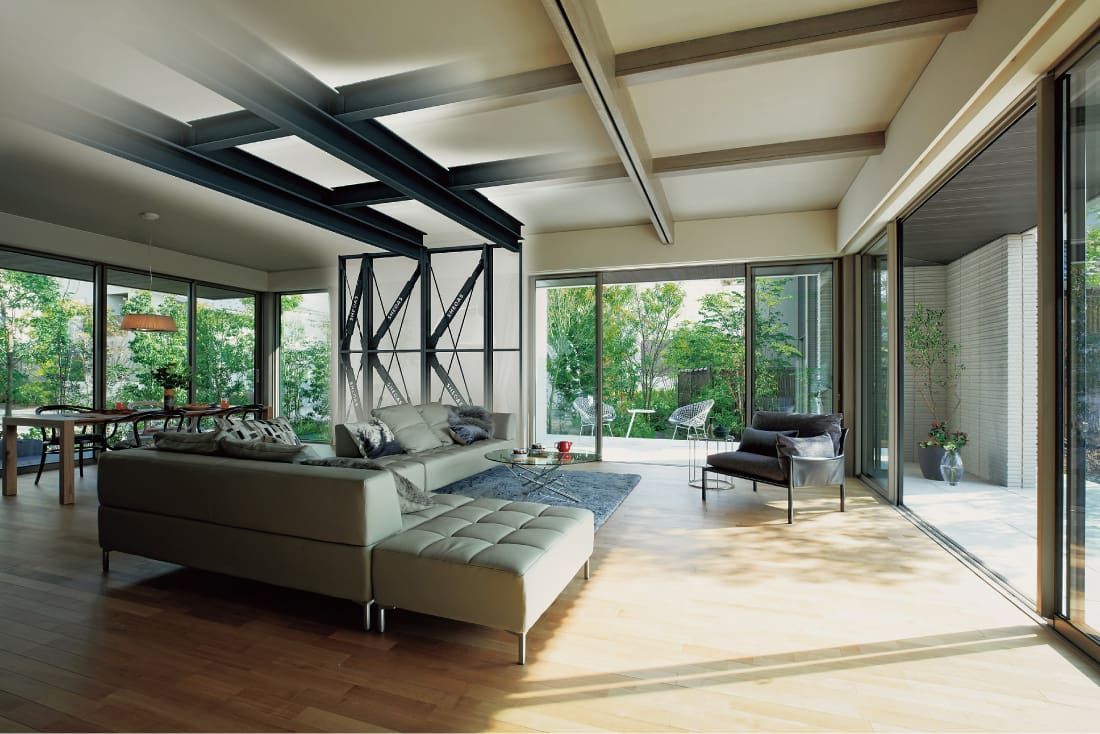
The Family Suite, a spacious living area with large windows overlooking the garden of the Gohon no Ki Project
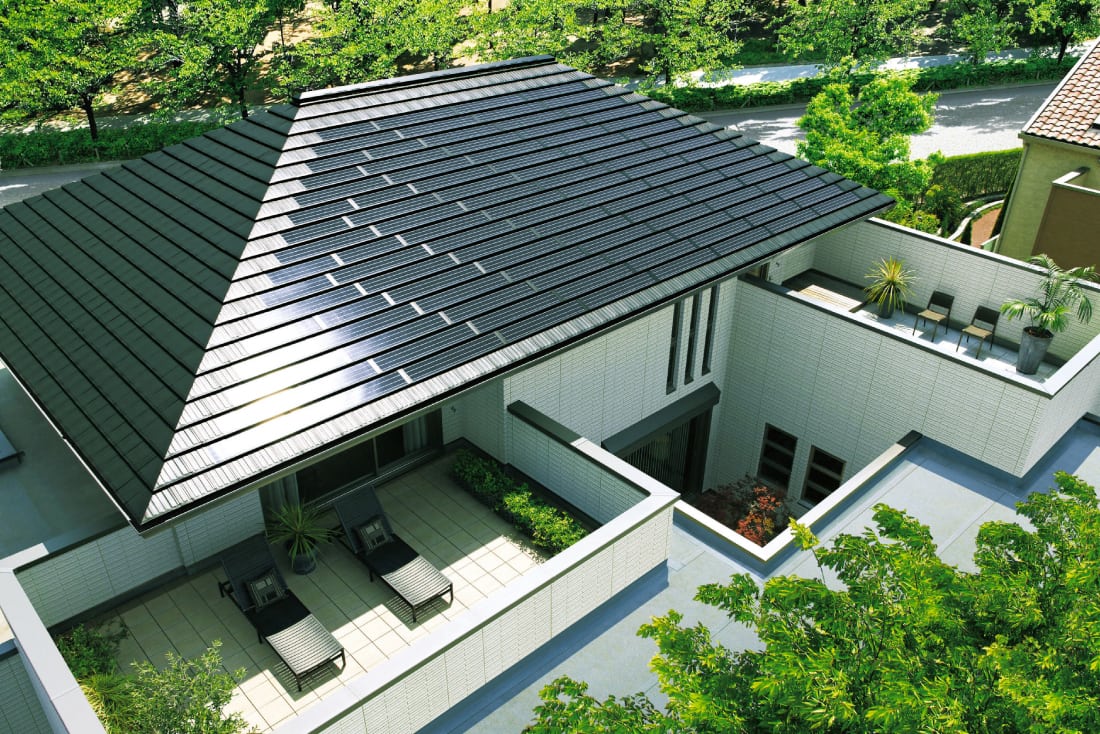
Sekisui House proprietary tile-shaped photovoltaic panels
Expansion to Group companies
In order to expand its business domain in housebuilding, the Sekisui House Group is engaged in the construction of wooden housing that utilizes commonly available materials, in addition to its mainstay pre-fabricated housing. A shared Group-wide stance on achieving a decarbonized society through ZEH is reflected in the activities of Sekisui House Real Estate, which delivered ready-built detached houses that were all ZEH in FY2025. We are working to promote ZEH, which proposes simple and just-right home building, through means such as third-party ownership schemes for photovoltaic power generation. The Sekisui House noie housing business brand was transferred to Sekisui House Real Estate on February 1, 2025, enhancing our ability to provide high-quality homes that meet a diverse range of customer needs.
Disaster resilience of Green First ZERO Houses
Comfortable living is only possible if residents feel secure about their homes when disaster strikes. To prepare for earthquakes, typhoons, and other natural disasters, in addition to the robustness of houses themselves, it is crucial to secure living spaces, food, water, and energy for use in the aftermath of a disaster. In 2004, the Sekisui House Group became the first house builder in Japan to launch an energy-saving, disaster-resistant house with facilities for storing supplies of food and water as well as household power storage cells and photovoltaic power generation equipment. Then in 2011, we launched Green First HYBRID houses, which enable not only optimized daily energy use but also continued power use during power outages through the coordinated control of these systems, including fuel cells. As climate change has caused more frequent and severe natural disasters, we have enhanced the disaster resilience of our housing so that residents can live their lives with peace of mind.
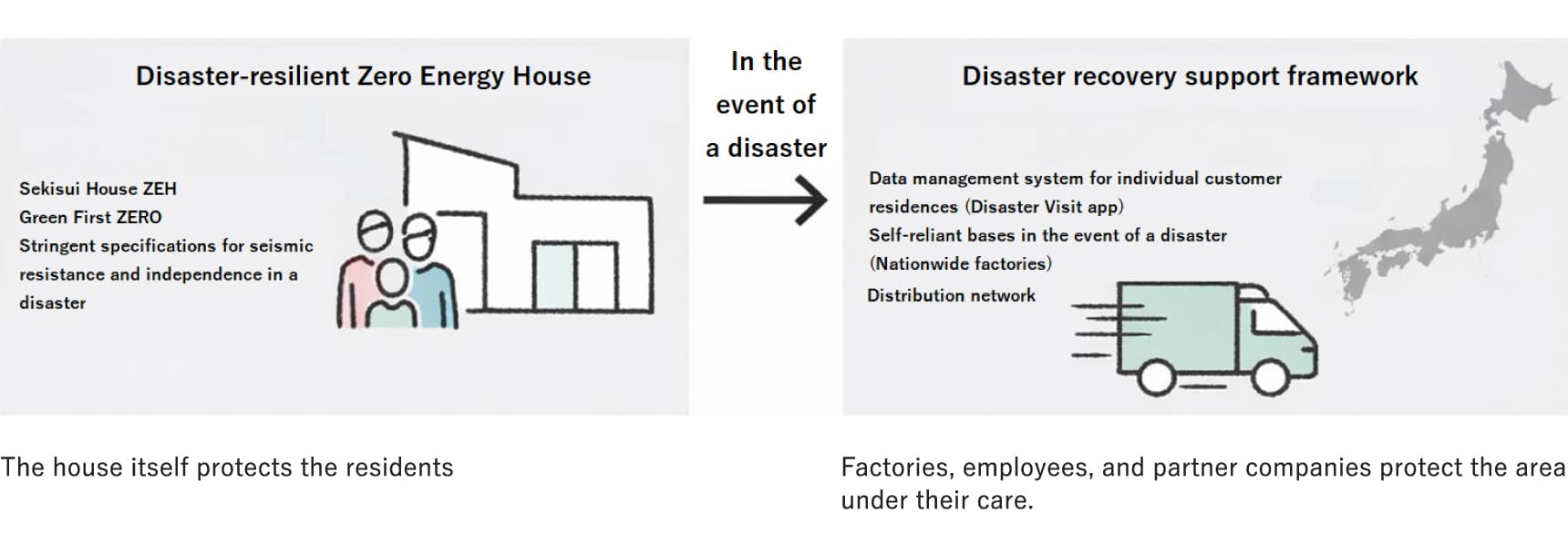
Today, we propose disaster-resilient zero energy houses that combine three features: securing living spaces after major earthquakes with high seismic resistance; space and facilities to store a three-day supply of food, drinking water, and water for hygiene; and energy self-sufficiency. Such houses offer photovoltaic power generation systems to generate electricity when the sun is shining, fuel cells that can generate electricity in cloudy weather or at night as long as they have gas and water supply, storage cells that store excess power generated by photovoltaic and fuel cell systems, a strong structure, and excellent thermal insulation and energy-saving performance. Through this combination, these houses allow residents to live in a way that is closer to normal after disasters, making home an effective disaster shelter.
Since April 2022, we have been further enhancing our resilience offerings with new emergency power supply boards for use in power outages and reinforced measures to prevent water from entering underfloor spaces during sudden heavy rains or flooding. In a home that has only photovoltaic panels and fuel cells, during a power outage, power is only available from specific emergency outlets. With an emergency power supply board, however, appliances that need to stay powered, such as refrigerators, can stay plugged into their normal plugs (Figure 1).
Figure 1. Power Use during a Power Outage
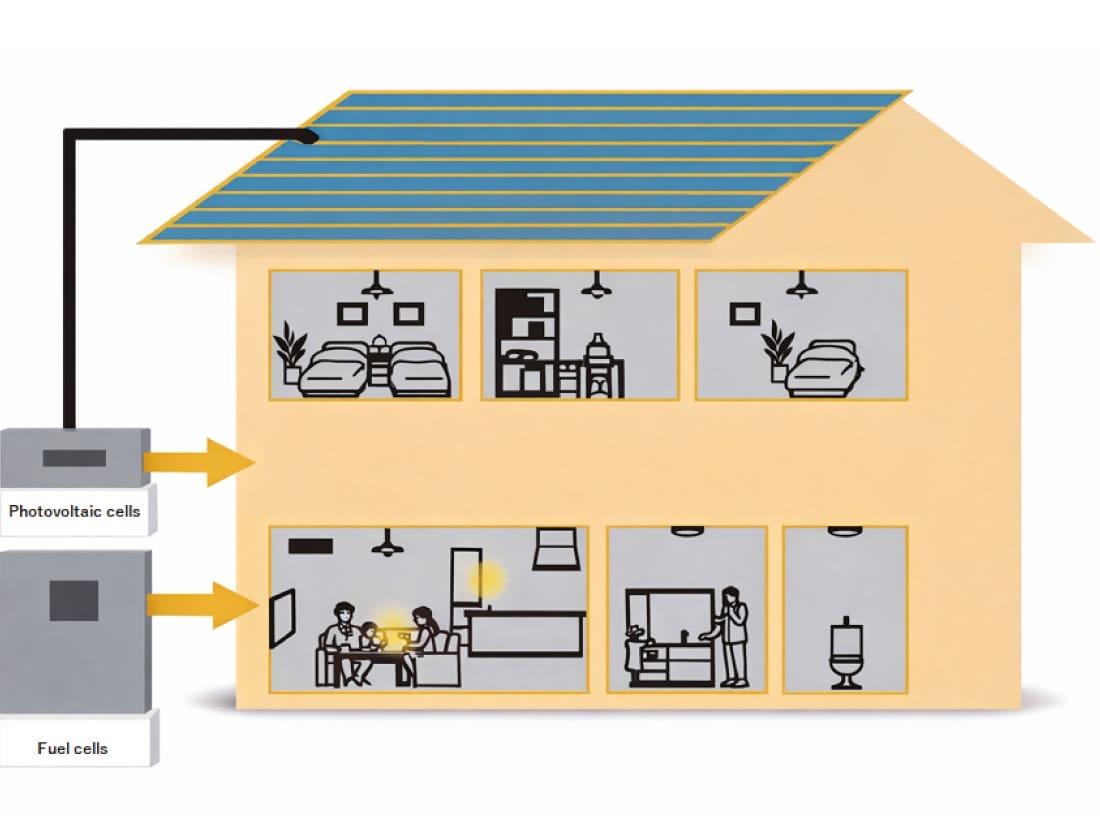
Power supply via emergency outlets
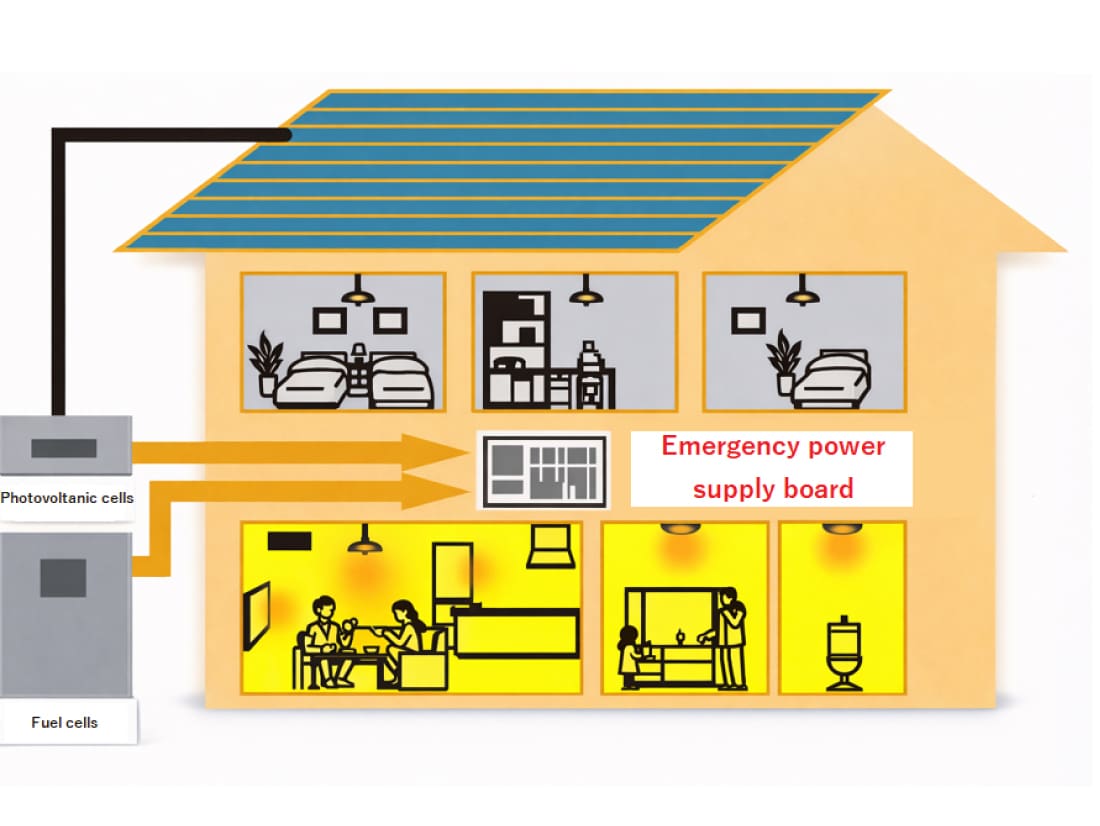
Supply though an emergency power supply board
In addition, to address increasingly common flooding damage, we raised the installation height of equipment, added water stops that can be set up at front doors during flooding emergencies, adopted reinforced concrete foundation slabs, added sewerage pipe air pressure release valves, and raised the height of building foundations. Through the combination of these five measures, we have reinforced measures to prevent underfloor flooding (Figure 2).
Recovery measures after a disaster are also important. Sekisui House leverages its Company-wide organizational strength to quickly assess the safety of the residents and the state of damage, make its nationwide factories available as bases to support regional restoration, and work with partner construction companies nationwide to provide the construction capabilities necessary for recovery. Through this recovery support framework, we aim to help customers get back to their normal lives as quickly as possible.
Figure 2. Measures to Prevent Underfloor Flooding
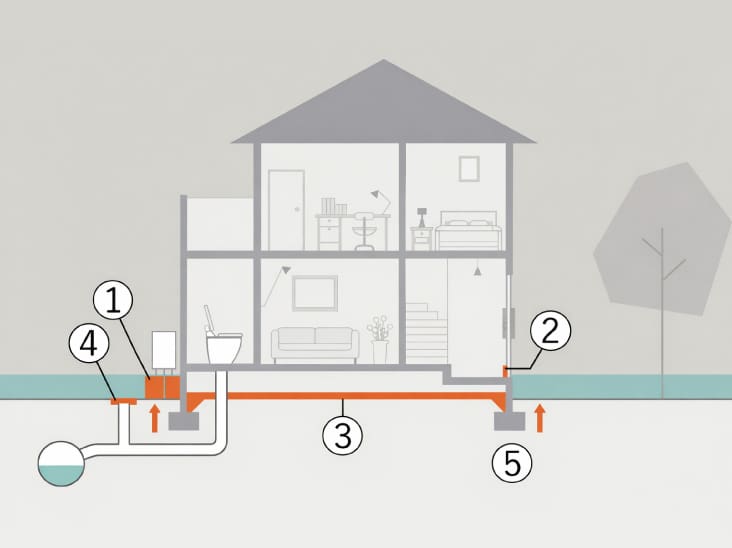
- Raised installation height of equipment to preventcostly equipment repairs due to water damage
- Water stop that can be set up at the front door during emergencies to keep water out
- Reinforced concrete foundation slab to prevent the entry of water from below the foundations
- Sewerage pipe air pressure release valve to prevent water spraying from toilets during sudden heavy rains, etc.
- Raised building foundation to prevent the entry of water over the foundation
In this way, we are continuously working to better protect the lives of our customers by balancing comfortable living with the realization of a decarbonized society in normal times and providing a recovery support framework that leverages the resilience of buildings themselves and the organizational strength of our nationwide operations in times of disaster. These efforts encompass both the mitigation and adaptation approaches necessary to form policies that address climate change.
Based on its global vision to make home the happiest place in the world, the Sekisui House Group will continue to evolve Green First ZERO while developing and spreading the value of ZEH, which contributes to the happiness of residents and society at large. By doing so, we will lead the way in the decarbonization of the housing industry.
Promoting ZEH in Sha Maison rental housing
Approximately 30% of the CO2 emissions attributable to the residential sector in Japan come from multi-unit housing complexes. Of this, rental housing accounts for a large fraction, approximately two thirds. Therefore, the conversion of rental housing to ZEH is essential for decarbonization. We have designated ZEH under the Sekisui House rental housing brand Sha Maison as Sha Maison ZEH, and have been promoting its full-scale popularization since FY2020.
Two types of ZEH standards, each with different targets, are used for multi-unit housing complexes. The first is known simply as ZEH and applies the net zero energy standard to individual housing units in much the same way it applies to detached houses.*8 The second is known as ZEH-M and applies the net zero energy standard to entire residential buildings, including common areas. In ZEH-M, the building as a whole is judged against the ZEH standard, and it may clear the standard even if individual units within it do not. For this reason, from a resident-first perspective, we offer systems in which photovoltaic panels are connected to each unit so that residents can sell their own electricity individually, thus promoting unit-level ZEH that allows residents to enjoy the benefits of ZEH, including comfort and reduced utility costs. By making as many units ZEH as possible within each building, we are working to popularize rental housing that also meets the ZEH-M standard as a result. In order to promote ZEH in rental housing businesses, which entails higher costs, it is also crucial to create business benefits for owners. We believe that as society as a whole progresses toward decarbonization, demand for ZEH will eventually increase in rental housing, as well. As the merits of residential units with unit-level ZEH are immediately clear before move-in, unit-level ZEH can be expected to help prevent occupancy rates and rents from declining, leading to long-term stable management. A survey we conducted in FY2021 on residential awareness of global warming prevention among people in their 20s and 30s, who are the main users of rental housing, found that respondents were familiar with the effects of climate change, and we were able to discern an ethical-mindedness among them in terms of choosing to live in an environmentally friendly manner in order to combat such effects. Because this type of thinking is expected to increase in the near future, the conversion of rental housing to ZEH can be considered a good investment.
Furthermore, a 2022 survey of Sha Maison ZEH residents found that 88% of respondents were satisfied and, of these, 78% said that they would choose ZEH for their next home after moving out. Rental housing residents often move out after a few years, meaning that over time, Sha Maison ZEH is helping increase the total number of people who prefer ZEH. In this way, Sha Maison ZEH, with its clear benefits to residents, is expected to have knock-on effects in popularizing ZEH throughout society.
This approach has been well received by numerous owners and residents, and the proportion of ZEH residential units across all of our rental housing is increasing every year. The ratio of ZEH units for rent*9 in FY2025 was 77%, the same as the previous fiscal year.
*8 For a multi-unit housing complex, four types of ZEH standards are defined, depending on the difference in energy efficiency. “ZEH” is capable of reducing net primary energy consumption by 100% or more; “Nearly ZEH” represents a reduction of more than 75%; “ZEH Ready” represents a reduction of more than 50%, and “ZEH Oriented” represents a reduction of more than 20%. In addition, ZEH-M and ZEH differ in their definitions of evaluation targets, which are “residential building” for the former and “residential units” for the latter.
*9 Ratio of ZEH Ready or higher-grade units.
| Boundary | Unit | FY2023 | FY2024 | FY2025 | Targets | |
|---|---|---|---|---|---|---|
| Ratio of ZEH units for rent*10 | Sekisui House, Ltd. | % | 76 | 77 | 77 |
75 (FY2025) |
*10 Ratio of orders received for ZEH Ready or higher grade units (includes only units in which individual residents can sell electricity to the grid).
Promoting ZEH in GRANDE MAISON condominiums
As with rental housing, we are promoting the transition to ZEH at the unit level in condominiums for sale.
In February 2019, Sekisui House built GRANDE MAISON Kakuouzan Kikuzakacho (Nagoya City, Aichi Prefecture), the first condominium building in Japan with all ZEH units connected to photovoltaic power generation systems. Since FY2023, all GRANDE MAISON locations have been ZEH, adding 10 buildings and 823 units of ZEH condominiums in FY2025 for a cumulative total of 52 buildings and 2,917 units.*11
In its condominiums, Sekisui House designs ZEH with an emphasis on livability, which is a benefit for the tenants. For example, sweeping vistas are part of the appeal of high-rise condominiums. The large windows typically used to maximize this appeal are disadvantageous in terms of energy conservation, but we have achieved both ZEH and comfort through innovations such as the use of vacuum double-glazed windows with extremely high thermal insulation performance. Since achieving a 100% ZEH ratio, we have been actively working toward acquisition of the Long-life Quality Housing Certification aimed at extending the longevity of our buildings, as a further step in our decarbonization initiatives. Moreover, construction work on a project we co-proposed with Fukuoka City, which was selected by the Ministry of the Environment as a “Decarbonization Leading Area,” began in 2025 toward its completion in 2028.
In FY2025, 100% of GRANDE MAISON condominiums sold were ZEH*11. We plan to continue this through FY2026 onward.
*11 Residential units that meet the ZEH Oriented standard or higher grade.
| Boundary | Unit | FY2023 | FY2024 | FY2025 | Targets | |
|---|---|---|---|---|---|---|
| Ratio of ZEH condominiums for sale*12 | Sekisui House, Ltd. | % | 100 | 100 | 100 |
100 (FY2025) |
*12 Residential units that meet the ZEH Oriented standard or higher grade.
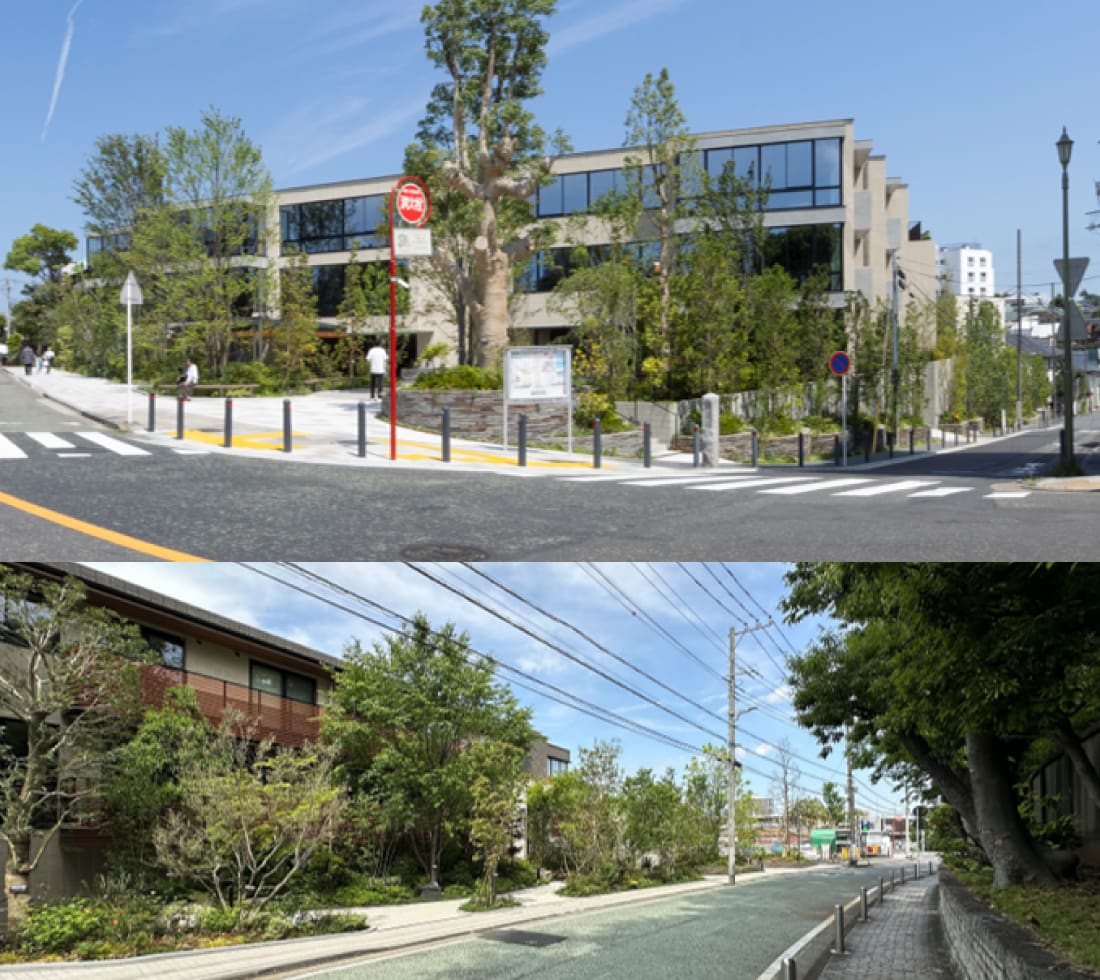
GRANDE MAISON The YAMATE253Marks/Garden
A multi-unit housing complex development comprising several buildings that preserves and renews residential traditions of Yamate, Yokohama. The buildings provide an attractive streetscape and stunning greenery in the entire area in line with the history of each site.
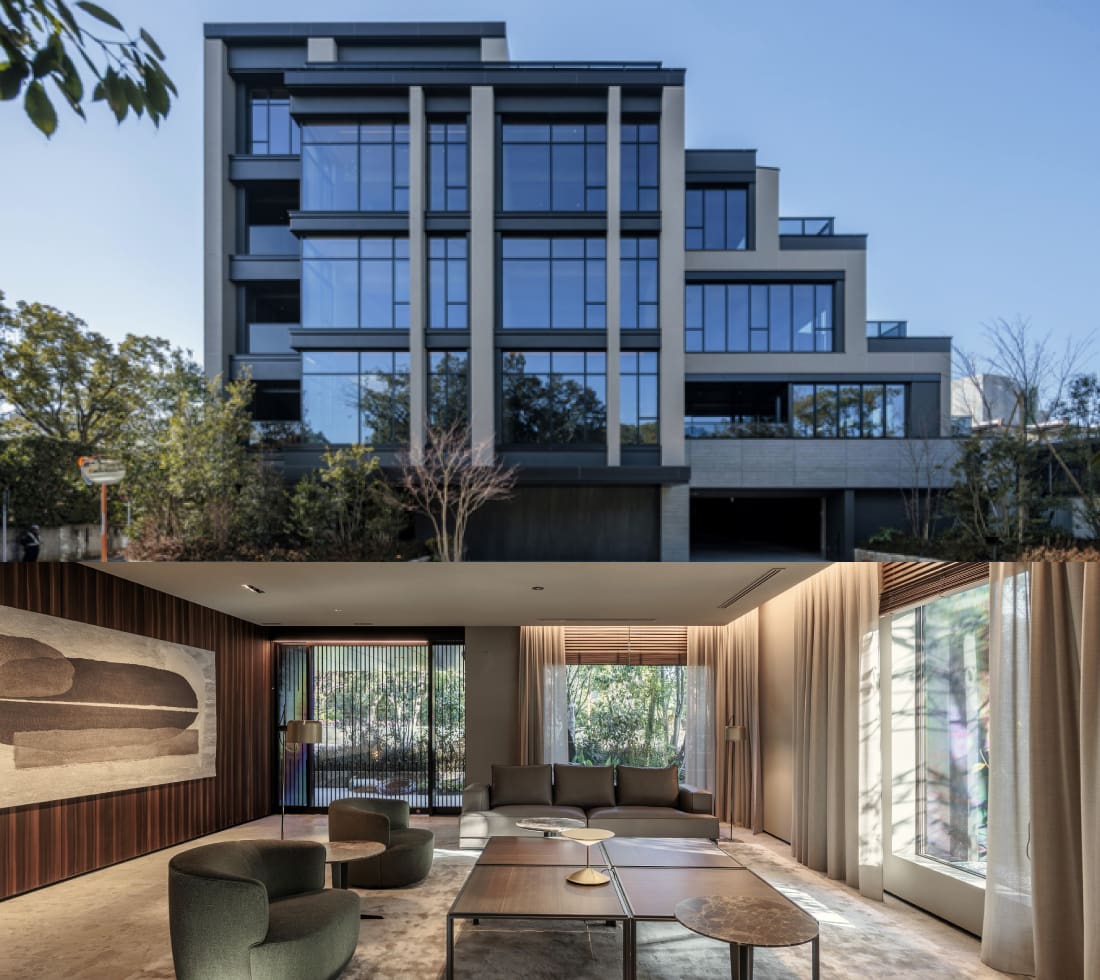
GRANDE MAISON Ohori LUSSO
A flagship property that maximizes the space facing Ohori Park. With layouts designed to incorporate views of the park and interiors designed in collaboration with overseas designers, the development delivers a high-quality space that cannot be found elsewhere.
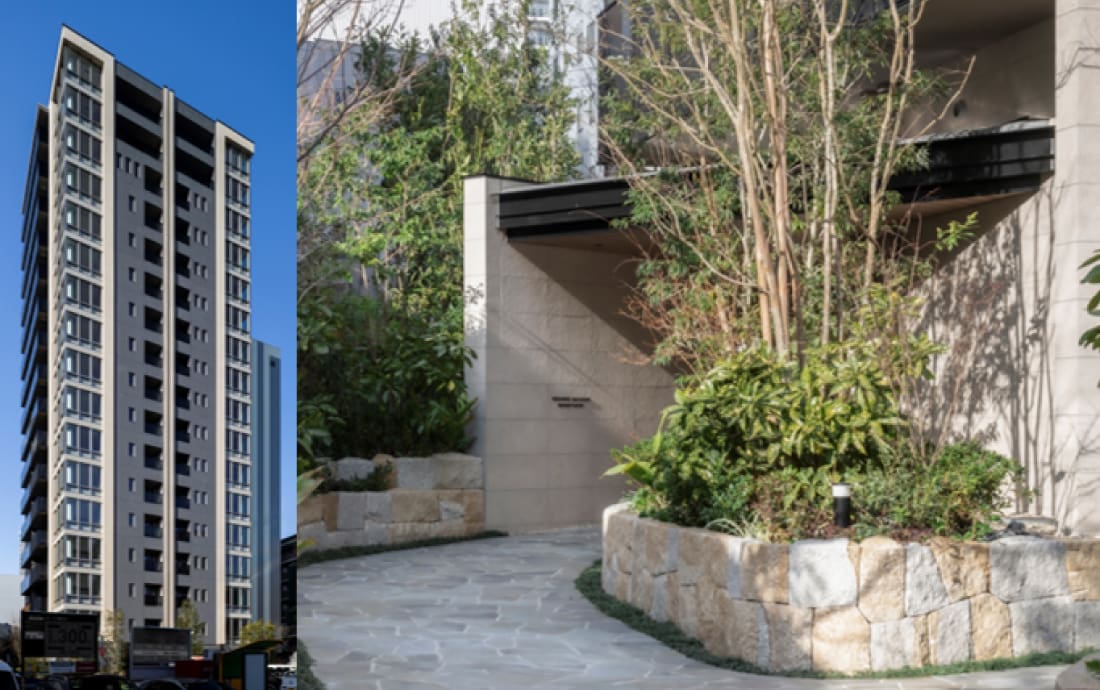
GRANDE MAISON Nagoya Station
An urban high-rise residence in the city center near Nagoya Station, featuring a lush greenery-filled approach and lounge space to create a calm and charming streetscape that coexists with the urban surroundings.
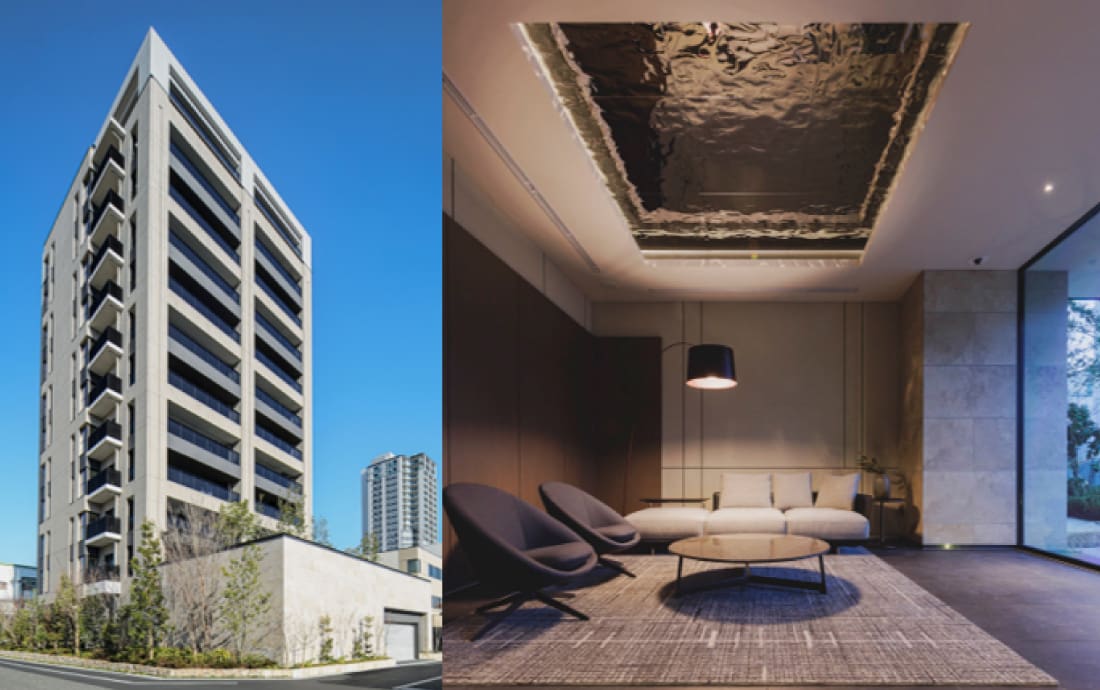
GRANDE MAISON Shimizu-dani SCENES
A high-spec condominium development with two residences per floor, sitting on high ground in the center of a strategic area. In addition to green spaces facing the streets on three sides, the development features indoor parking and a landscaped rooftop in consideration of the surrounding environment.
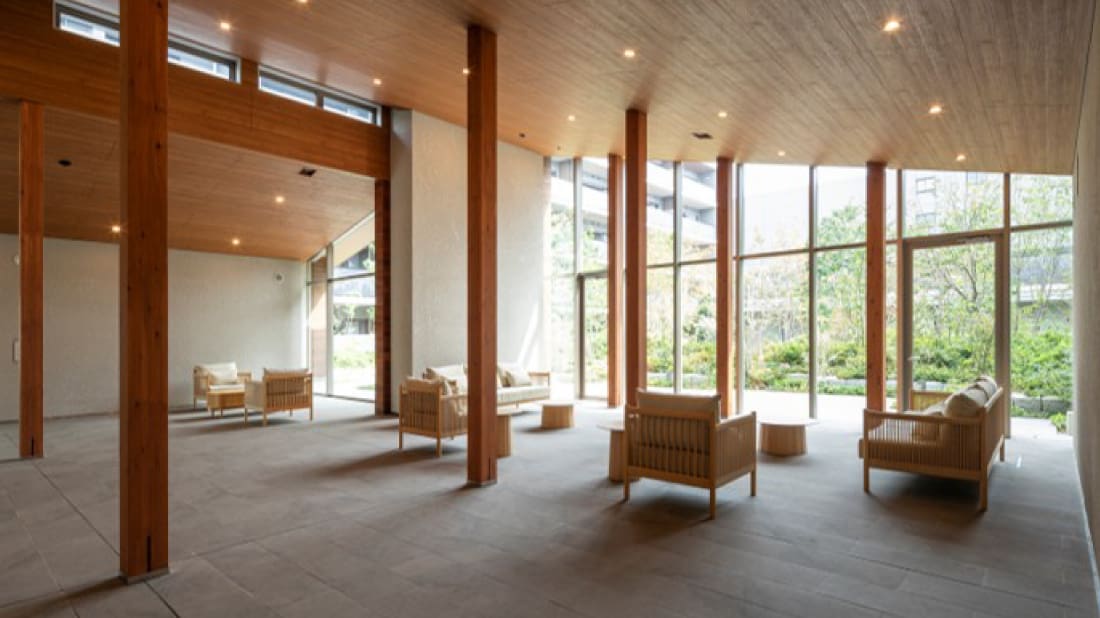
GRANDE MAISON Musashi-kosugi no Mori
A low-rise residential development utilizing an approximately one-hectare site featuring large-scale green spaces both surrounding the site and within a courtyard. The entrance building where people gather is a warm wooden-frame structure that harmonizes with the greenery of the courtyard.
Promotion of ZEB for non-residential construction
In addition to detached houses and multi-unit residential buildings, we are also promoting ZEB*13 in non-residential construction. To this end, we unveiled a style of proposal for office buildings called Green First Office. These proposals meet ZEB standards based on excellent thermal insulation performance that leverages ZEH design expertise and technologies developed in the housing business. These office buildings include proposals for spaces that improve worker productivity and help reinforce BCPs*14 with highly seismically resistant structures, thereby undergirding the sustained growth of companies. Reflecting customer needs related to reducing utility costs, promoting carbon neutrality, and increasing employee satisfaction, orders are up year on year. Outside of office buildings, we are also rolling out proposals suited to other building uses, such as clinics and nursing care facilities.
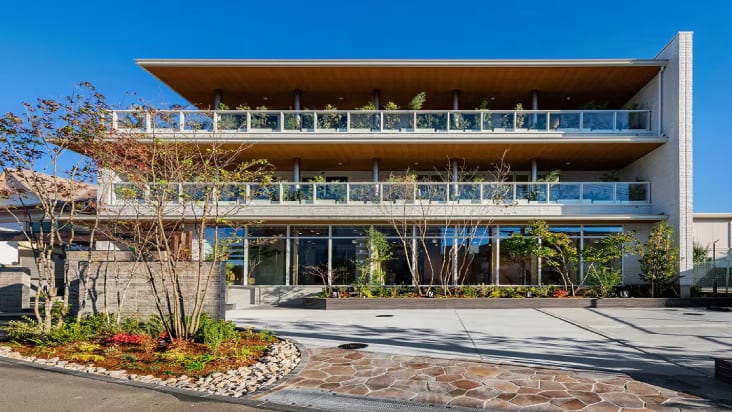
Green First Office
In FY2025, we completed 236 ZEB buildings, bringing our cumulative total since FY2016 to 711. As a company under the ZEB planner registration system, our target is for 50% or more of orders received in FY2025 to be for ZEB. In FY2025, we achieved our target with a ZEB ratio above 50%.
Furthermore, as an initiative to reduce CO2 emissions from our business activities (Scope 1, 2), since FY2021 we have ensured that all new offices and facilities built for the Group’s use are ZEB. Of the buildings designed and built by Sekisui House and occupied by companies of the Sekisui House Group, we now have a total of 18 ZEB buildings.
*13 Net zero energy building, a building that aims for an annual primary energy balance of zero through energy efficiency and energy generation while providing a comfortable indoor environment.
*14 Business continuity plan, an emergency plan for corporate survival or for business continuity that makes strategic preparations to avoid an interruption of critical operations in the event that a disaster or other risk transpires.
Environment friendly remodeling of existing houses
We make environment friendly remodeling proposals for our existing houses through Group company Sekisui House Remodeling, Ltd. Environment friendly remodeling is general term for remodeling that entails the installation of photovoltaic panels or storage cells to increase energy self-sufficiency, improving thermal insulation performance, or replacing existing air conditioning and water heating equipment with high-efficiency models. For owners of homes equipped with solar power generation systems that have reached the post-FIT period (past the end of the feed-in tariff system’s purchase period for renewable energy), we emphasize the merits of adding storage cells to their systems. Specifically, in addition to increasing the rate of self-consumption of surplus power, thereby helping reduce utility costs, we highlight the enhanced resilience that such an addition provides by enabling the use of electricity during power outages caused by natural disasters, which are increasing due to climate change. In FY2025, we were able to reduce CO2 emissions by approximately 3,000 tonnes through solar installations done as part of our Environment friendly remodeling reforms.
As part of our efforts to decarbonize existing housing, we are also focusing on an initiative to promote the proper recognition of the value of existing houses and create an active market for them. We believe that the proper assessment of the value of existing housing can help create more opportunities for investment in energy-saving remodeling and thus contribute to the decarbonization of housing stock.
The Japanese government’s goal of reducing greenhouse gas emissions attributable to the residential sector 66% compared with the FY2013 baseline by FY2030 depends on decarbonizing existing housing. As such, initiatives in this area are expected to receive a range of policy support going forward. Sekisui House has supplied more than 2.7 million housing units to date and will continue to make remodeling proposals and promote market circulation based on proper valuation while taking advantage of various forms of support measures from the government to further the decarbonization of existing housing.
| Boundary | Unit | FY2023 | FY2024 | FY2025 | |
|---|---|---|---|---|---|
|
Number of insulation upgrades for existing houses*15 |
Sekisui House Remodeling, Ltd. | Units | 1,699 | 4,874 | 5,031 |
*15 This indicator until FY2023 represents the number of houses remodeled under the Idocoro Dan-netsu initiative, focusing on partial insulation and insulation renovations in the living room, dining room, and kitchen areas. In FY2024, it includes remodeling projects aimed at both Idocoro Dan-netsu and enhancing insulation in openings and other areas.
CO2 Avoided Emissions*16
| Boundary | Unit | Avoided Emissions | Targets | |
|---|---|---|---|---|
| Detached houses | Sekisui House, Ltd. | 1,000t-CO2 | 1,278 | All new houses supplied by Sekisui House, Ltd. during the year |
| Rental housing | Sekisui House, Ltd. | 1,240 | New houses supplied by Sekisui House, Ltd. during the year (excluding RC and other special construction projects) | |
| Photovoltaic power installation | Sekisui House Remodeling, Ltd. | 3 | All work performed by Sekisui House Remodeling, Ltd. on existing houses during the year | |
| Total | 2,521 | |||
*16 These metrics represent to what extent the Group has contributed to reducing CO2 emissions through promoting housing and energy-generating equipment.
Decarbonization of Business Activities and Response to Climate Change
Short-term (up to five years) greenhouse gas (GHG) emissions reduction targets
Sekisui House is working to decarbonize its businesses in line with the short-term target for FY2030 of reducing the Scope 1 and 2 emissions from its business operations by 75% compared with the FY2013 levels. To achieve this target, we aim to reduce emissions by 4.4% each year, to this end advancing such initiatives as switching to power derived from renewable energy sources (hereinafter “renewable energy”), moving to office buildings that meet ZEB specifications, and replacing our fleet of Company vehicles with electric vehicles.
| Boundary | Unit | FY2023 | FY2024 | FY2025*19 | Targets | |
|---|---|---|---|---|---|---|
| Rate of CO2 emissions reduction from business activities*17 |
Group (Global)*18 |
% | 56.3 | 62.3 | 67.2 |
75 (FY2030) |
*17 Scope 1 and 2 emissions reduction rate relative to FY2013. Konoike Construction Co., Ltd. became a wholly owned subsidiary in FY2019. To enable time series comparability for emissions, we have retroactively added Konoike’s annual CO2 emissions to those of the Sekisui House Group for FY2013 (the baseline year for the Group’s planned CO2 emissions target).
*18 Sekisui House, Ltd. and its major consolidated subsidiaries in Japan and overseas (42 companies).
*19 With the addition of MDC into the boundary of aggregation, the rate of CO2 emissions reduction has been calculated based on emissions from the recalculated base year (FY2013).
Promoting RE100 through Sekisui House Owner Denki
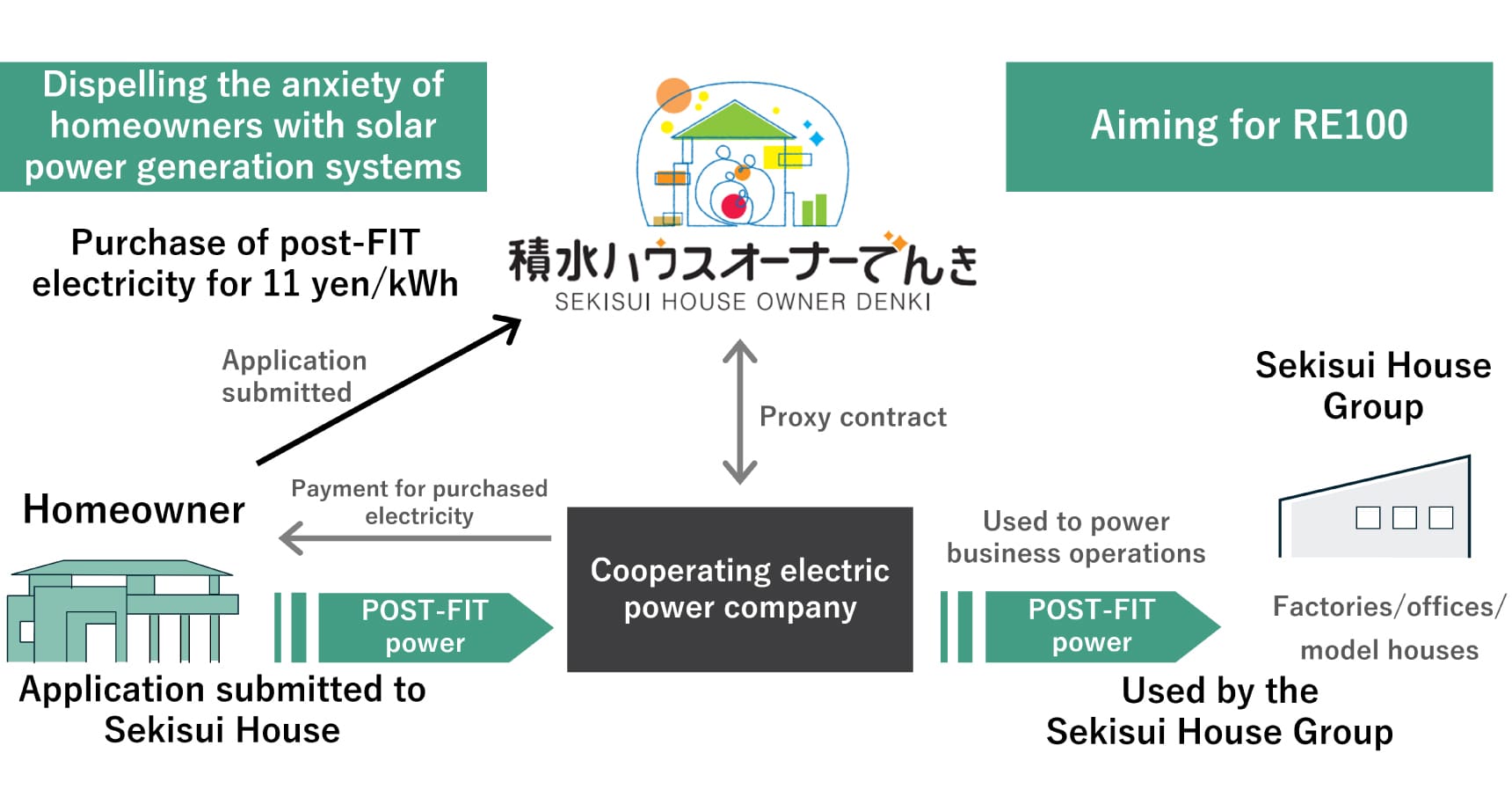
In an effort to decarbonize its business activities, in 2017, the Sekisui House Group became the second Japanese company and the first company in the housing industry to join the international initiative RE100.*20 The Group is working to switch to renewable energy for use in its business operations. Most companies procure renewable energy through the purchase of green power certificates and the installation of photovoltaic power generation systems. In contrast, we procure surplus solar power from our customers under the post-FIT mechanism through Sekisui House Owner Denki (figure on the right).
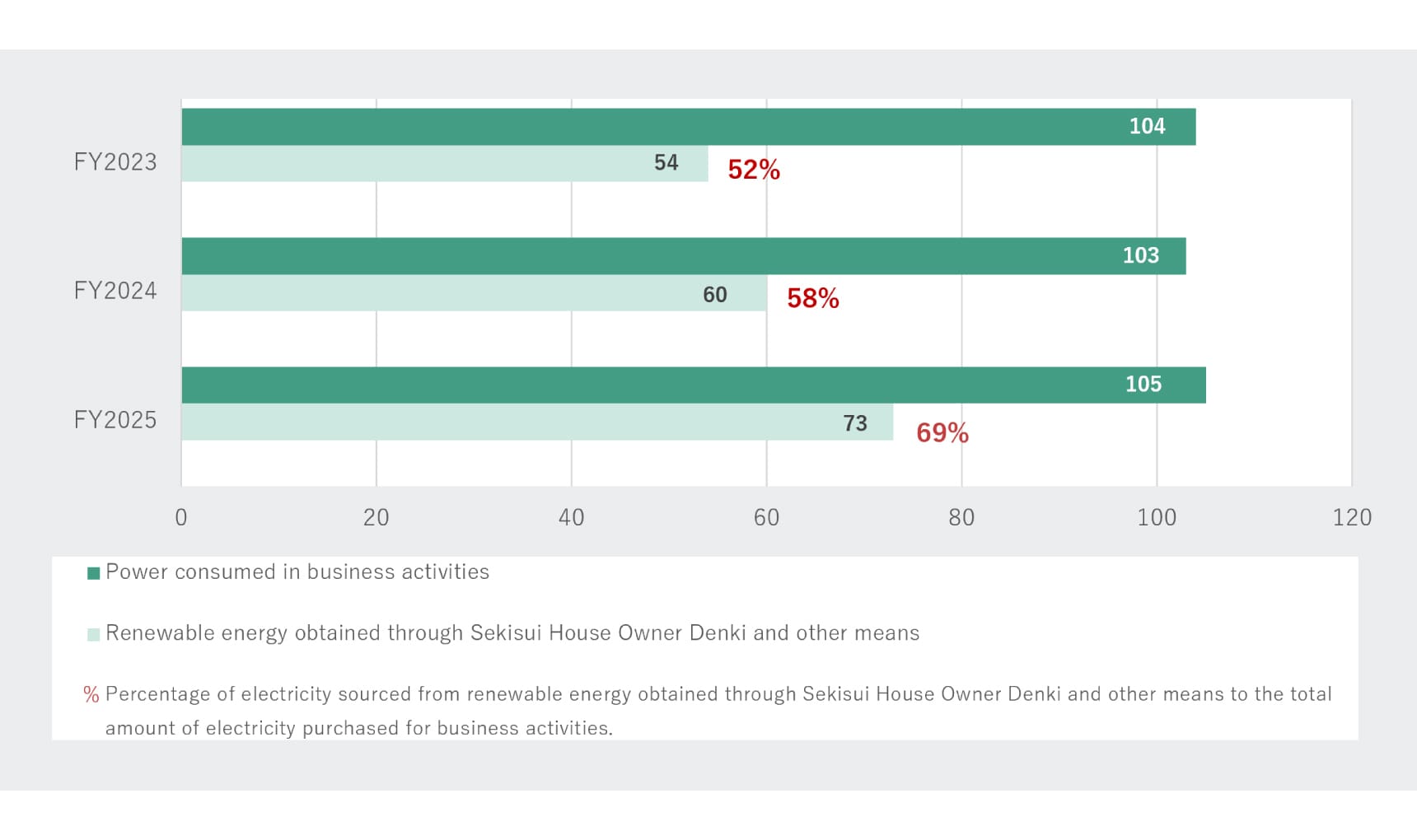
Because we were an early adopter of solar power generation systems in our houses, the annual amount of power generated by all of the solar power generation systems we had installed was estimated to be over 700 GWh when we joined RE100, more than five times the 120 GWh annual power consumption of the entire Group at that time. Based on this, we estimated that we would be able to achieve RE100 by around 2040 if we could procure surplus power from 20%–30% of our customers under the post-FIT mechanism, and established this as a target. In actuality, we have been able to procure such power from roughly 50% of our customers, and expect to achieve RE100 earlier than originally anticipated. In FY2025, 69.2% of the total electricity purchased by the Sekisui House Group came from renewable sources, including Sekisui House Owner Denki. Moreover, we have made adjustments to enable use of Sekisui House Owner Denki in temporary power supply at construction sites in certain regions.
In addition, Sekisui House Owner Denki also creates benefits for cooperating electric power companies by making large contracts for the Group’s business use power. This makes it possible to set the unit price for purchasing surplus power higher than the market price, leading to higher customer satisfaction. We also expect to be able to achieve RE100 while controlling the cost of adopting renewable energy.
*20 An international initiative of major companies around the world pledging to use 100% renewable electricity in their business operations.
Overview of Sekisui House Owner Denki
| Boundary | Unit | FY2023 | FY2024 | FY2025 | Targets | |
|---|---|---|---|---|---|---|
| RE100 achievement rate*21 |
Group (Global)*22 |
% | 52.3 | 58.3 | 69.2 |
100 (FY2040) |
*21 Percentage of electricity sourced from renewable energy obtained through Sekisui House Owner Denki and other means to the total amount of electricity purchased for business activities. The value in parentheses indicates the percentage of post-FIT photovoltaic power purchased through Sekisui House Owner Denki and other renewable sources to the total electricity consumed in business activities
*22 Sekisui House, Ltd. and its major consolidated subsidiaries in Japan and overseas (42 companies)
Figure. RE100 Achievement Rate
Initiatives aimed at 100% electrification of Company vehicles
Company vehicles account for roughly 40% of the Sekisui House Group’s CO2 emissions. We thus regard reducing these emissions as an important aspect of realizing decarbonization.
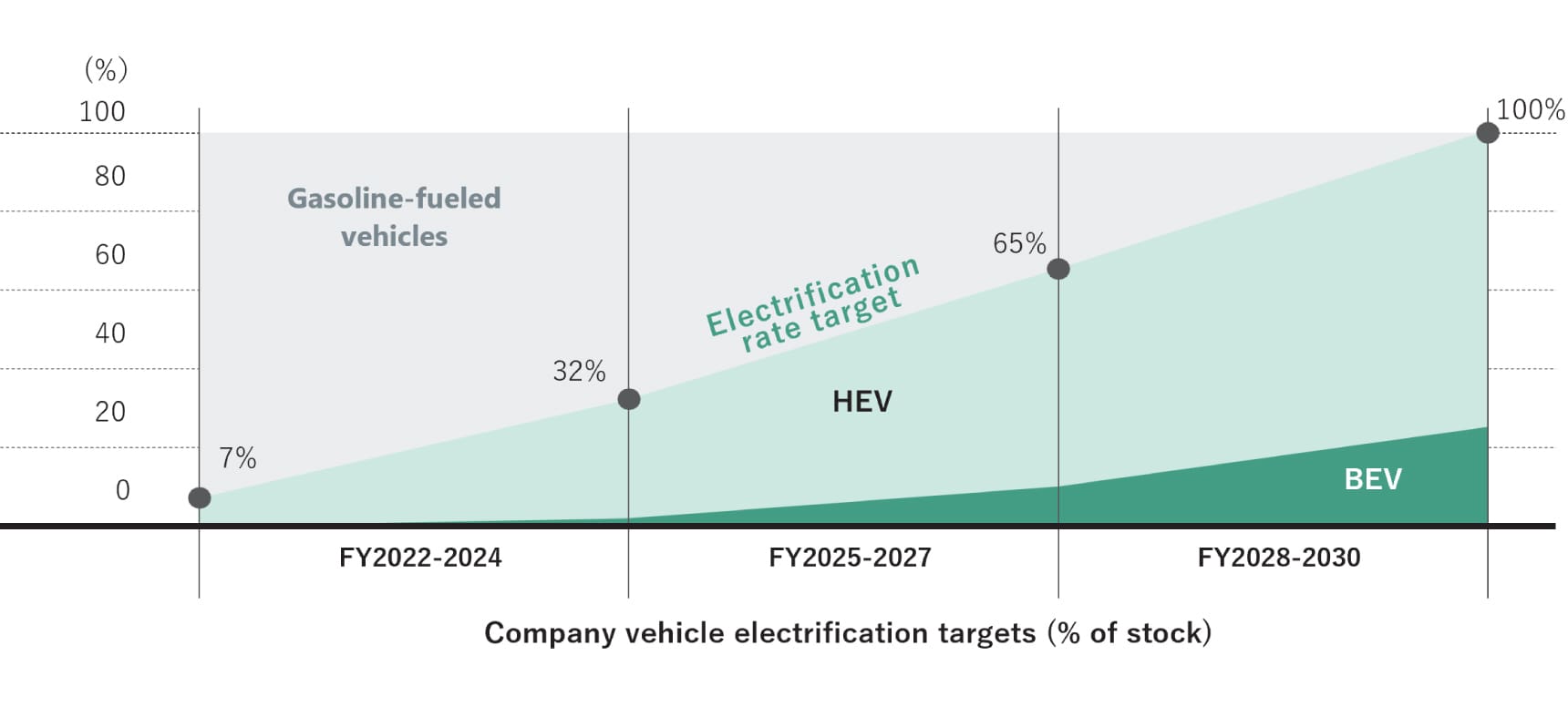
We are promoting the switch to and adoption of electric vehicles, such as hybrid electric vehicles (HEVs), plug-in electric vehicles (PEVs), and battery electric vehicles (BEVs), and have set a target of 100% electrification of Company vehicles by 2030 and begun initiatives to achieve this goal. Since FY2023, we have been creating charging infrastructure that can be used with cloud systems to understand decentralized charging and charging amounts in order to optimize for increasing power demand at our locations. Starting with the Toyohashi Branch, usage of EVs as Company vehicles has begun at 25 locations, and we started a service that allows customers to charge their EVs when they visit these locations for consultations.
In addition to the adoption of HEVs, the adoption of EV Company vehicles enables us to utilize renewable energy through Sekisui House Owner Denki for charging electric vehicles. This initiative aims significantly reduce CO2 emissions from Company vehicles (1,342 t-CO2 in FY2025) and contribute to the realization of decarbonization.
| Boundary | Unit | FY2023 | FY2024 | FY2025 | Targets | |
|---|---|---|---|---|---|---|
| Percentage of company electric vehicles(including hybrids)*23 |
Group (Global)*24 |
% | 15.5 | 28.7 | 49.0 |
35 (FY2025) 100 (FY2030) |
*23 Hybrid electric vehicles (HEVs) and electric vehicles (EVs)
*24 Sekisui House, Ltd. and its major consolidated subsidiaries in Japan and overseas (42 companies)
Roadmap for Electrification of Company Vehicles
Introduction of Internal Carbon Pricing (ICP)
To accelerate the reduction of greenhouse gas (GHG) emissions, the Company has introduced an Internal Carbon Pricing (ICP) mechanism, under which an internal price (¥10,000 per t‑CO₂) is set for CO₂ emissions arising from business activities and reflected in certain investment decisions and decisions related to equipment renewal. Through this initiative, we are working toward the realization of net zero.
Reduction of CO2 Emissions at Procurement Stages for Components and Raw Materials
To reduce lifecycle CO2 emissions from homes, the Sekisui House Group has been promoting the uptake of ZEH and other energy-efficient housing with the aim of reducing CO2 emissions at the residential stage (Scope 3, Category 11). These efforts have led to significant reductions. However, emissions from the procurement of components and raw materials in the supply chain (Scope 3, Category 1) account for 19% of the Group’s total emissions (FY2025 figure). We cannot address this significant portion of emissions alone, and are therefore continuing our collaborative efforts with suppliers. In October 2020, we surveyed our suppliers to determine the state of their initiatives to reduce CO2 emissions. Based on the results, we held a seminar in February 2021, which 135 suppliers attended. We positioned this event as the kickoff of initiatives to reduce CO2 emissions in our supply chain, and use the event to promote awareness of the need to acquire SBT validation*25 and to provide training for procurement staff. The seminars also feature keynote speeches by speakers from the SBT organization and progress reports for our policies, and major suppliers as well as small- and medium-sized suppliers who present on how they acquired SBT validation. A certain proportion of the Sekisui House Group’s CO2 emissions that are attributable to the procurement stages for components and raw materials come from small- and medium-sized suppliers. That being said, sharing positive examples of how even small companies can obtain SBT validation helps more suppliers get validated. We have also set up a consultation service within the Company for small- and medium-sized suppliers to provide specific advice and answers to individual questions. As a result of these initiatives, we are making steady progress toward our medium-term target of raising the SBT-setting rate of our major suppliers to 80% by FY2030, and 30 companies (132 in total) newly acquired SBT validation in FY2025. Establishing decarbonization targets and implementing initiatives to achieve them at our suppliers will drive decarbonization across the industry.
In recent years, we have been further enhancing our collaborative initiatives with suppliers. During seminars, we are covering a wider range of topics, including the provision of the latest information on CO2 reductions and sustainability. In the most recent seminar held in October 2025, we welcomed a total of 471 companies.
We joined the CDP Supply Chain Membership in January 2025. In addition to supporting suppliers’ climate-related information disclosure, we have begun full-scale discussions on acquiring and utilizing CO2 emissions data, and 102 suppliers submitted responses to the CDP questionnaire. In the course of receiving responses, we set up a consultation service within the Company for small- and medium-sized suppliers, in the same way as for SBT, providing specific advice and answers to individual questions.
Also in January 2025, we obtained the Gold Grade under the “GX Acceleration Declaration Framework,” a Ministry of Economy, Trade and Industry-led initiative in which companies voluntarily commit to and disclose actions toward creating a market for green transformation (GX). In line with this, we have launched efforts to reduce CO2 emissions, working with other certified companies and suppliers. By promoting effective CO2 reduction across the supply chain in cooperation with our suppliers, we will contribute to the realization of a decarbonized society.
*25 Validation by the Science Based Targets Initiative (SBTi) of corporate greenhouse gas reduction targets as being aligned with the requirements of the Paris Agreement
Environmental certifications acquired by suppliers
We confirmed our suppliers’ acquisition status of environmental certifications, including ISO 14001 (environmental management).
| Unit | FY2023 | FY2024*26 | FY2025 | Targets | |
|---|---|---|---|---|---|
| Percentage of suppliers setting science-based targets | % | 39.5 | 46.5 | 48.8 |
80 (FY2030) |
| Percentage of suppliers acquiring environmental certifications | 81.0 | 69.3 | 65.9 | ー |
*26 Starting from FY2024, the boundary of major suppliers included in the aggregation has been expanded.
Use of lifecycle analysis during product and system design
For some time, we have calculated CO2 emissions at every product lifecycle stage, from production to demolition, using the Life Cycle Assessment (LCA)*27 method. These calculations have shown that the residential stage is responsible for the largest portion of CO2 emissions. To contribute to the realization of a decarbonized society, we recognize that the most important factor is reducing environmental impact at the residential stage and therefore continue striving to promote and evolve the development of eco-friendly homes that reduce emissions.
In addition, Group companies specializing in remodeling existing houses are working to reduce CO2 emissions from the existing housing stock, making steady progress toward a decarbonized society by 2050.
Furthermore, by calculating CO2 emissions for Scope 1, 2, and 3, we are monitoring CO2 emissions not only during product manufacturing, but also upstream, including material procurement, and downstream, including during occupancy. We use this information to devise ways to reduce CO2 emissions over the entire product lifecycle.
*27 Life Cycle Assessment (LCA): An approach for quantitatively determining the environmental impact of all processes from the extraction of raw materials required for a product or service through to use and disposal.
Other Initiatives
Public policy collaboration on climate change in Japan
Through the Japan Federation of Housing Organizations, which supervises the housing industry, and the Japan Prefabricated Construction Suppliers and Manufacturers Association, we endorse practical policies such as tax incentives and the expansion of various subsidy programs to promote climate change mitigation in all aspects of buildings, including housing, formulated by the government, particularly the Ministry of Land, Infrastructure, Transport and Tourism; the Ministry of Economy, Trade and Industry; and the Ministry of the Environment. We actively cooperate with and make recommendations to these entities.
Collaboration with international public organizations
In 2008, the Sekisui House Group declared that it would aim to be carbon-free by 2050. Since then, we have been focused on promoting the adoption of net-zero energy houses. Moreover, we are also actively working alongside our suppliers to decarbonize building materials.The United Nations Framework Convention on Climate Change (UNFCCC) has proposed that urgent action is needed to reduce carbon emissions from the building and construction sector, which accounts for approximately one-third of global energy consumption. An urgent need exists to achieve this objective with innovative buildings and construction methods. We will continue to work with experts from around the world to decarbonize the building and construction sector.
Main activities:
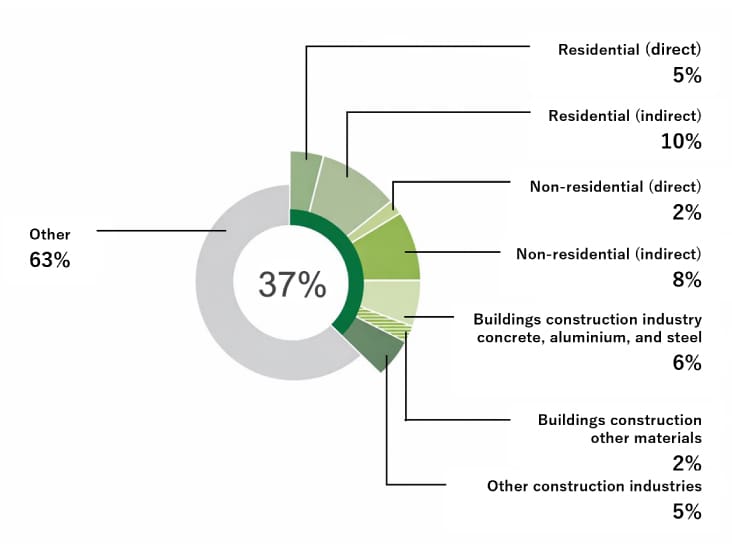
Global share of buildings and construction operational and process CO2 emissions, 2023
- Joined the Global Alliance for Buildings and Construction (GlobalABC), which was established at the UN’s COP21 conference in Paris, France.
- Participated in and submitted reports to the UN’s COP22 conference in Marrakech, Morocco.
- Made a presentation at COP23 in Bonn, Germany advocating the development of sustainable cities at SDG 11 Day, a ministerial meeting. on SDG 11, highlighting the rationale and background for the mass adoption of ZEH Participated in the Building Materials Working Group since FY2022.
- Participated in the international Race to Zero campaign for decarbonization organized by the UNFCCC through our membership in the Business Ambition for 1.5°C campaign organized by Science Based Targets (SBT) in conjunction with COP26.
- Invited to and participated in the round table meeting at COP28 in Dubai, UAE entitled “Delivering the Buildings Breakthrough: Pioneering leadership for a low-carbon and resilient world”.
Commitment in the event of inconsistencies between trade association positions and Company policy on climate change
As an industry leader, Sekisui House is positioned to play a leading role in decarbonization efforts. Industry trade associations have developed a good understanding of the Paris Agreement and the Japanese government’s policy on climate change and are engaging in initiatives consistent with broader industry activities. However, in the event of inconsistencies between Sekisui House’s policies and the climate change position of trade associations due to future changes in social conditions or other factors, or in the event that the Company deems trade associations’ stance on climate change insufficient, we will take the lead in engaging with industry actors to promote consistency with national policy.
Harmony with the environment
Environmentally Symbiotic Housing is an initiative aimed at creating better housing through compliance with certification standards based on CASBEE for New Detached Houses, part of the Comprehensive Assessment System for Built Environment Efficiency (CASBEE) promoted by the Ministry of Land, Infrastructure, Transport and Tourism. Housing that combines global environmental conservation (low impact); affinity with the surrounding environment (high contact); and amenities and a healthy living environment can be certified as “in harmony with the environment” by the Institute for Built Environment and Carbon Neutral for SDGs.
In addition to adopting the concept of Environmentally Symbiotic Housing in product development, Sekisui House reflects this concept in its development of custom detached houses, condominiums, and gardens, striving to provide good housing and attractive cityscapes through the “Common’s” cityscape evaluation system. In particular, we strive to reduce environmental impact through ZEH and promote harmony with the environment through the biodiversity-friendly Gohon no ki Project while creating comfortable living spaces. Through such tangible efforts to realize harmony with the environment, we aim to contribute to the emergence of a society committed to sustainability in housing and community development.
CASBEE has been adopted by numerous cities in Japan, particularly ordinance-designated large cities. Our CASBEE Accredited Professionals play a central role in promoting this initiative.
Urban renewal evidence
Built in 1956 as the head office of the Equitable Life Insurance Company, City Ridge, a project in Washington, D.C., is one of the masterpieces of Leon Chatelain, a former president of the American Institute of Architects. Since 1977, it has served as the headquarters of Fannie Mae (the Federal National Mortgage Association). Since then, the Company has redeveloped the property while preserving this historic building, which is listed on the United States’ National Register of Historic Places.
The project includes a 690-unit housing complex, a supermarket, a fitness club and a daycare center that serve local residents and provide a rich Streetscape in harmony with the historic community landscape. It is also the first property in Washington, D.C. to receive LEED ND (Neighborhood Development)*28 Gold certification, an environmental certification, for an entire community.
*28 LEED (Leadership in Energy and Environmental Design): An environmental certification system for buildings operated by the U.S. Green Building Council. Buildings are scored on multiple evaluation criteria, including energy efficiency, and ranked according to their score.
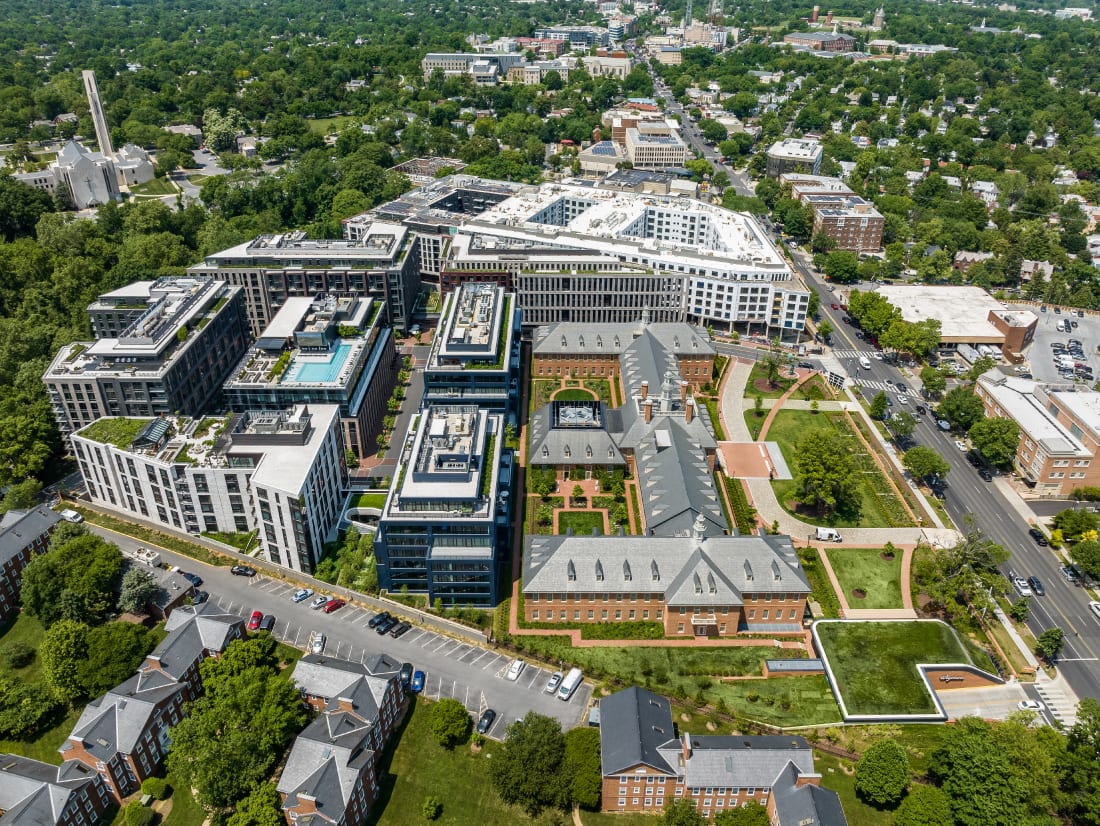
An aerial panoramic view of City Ridge
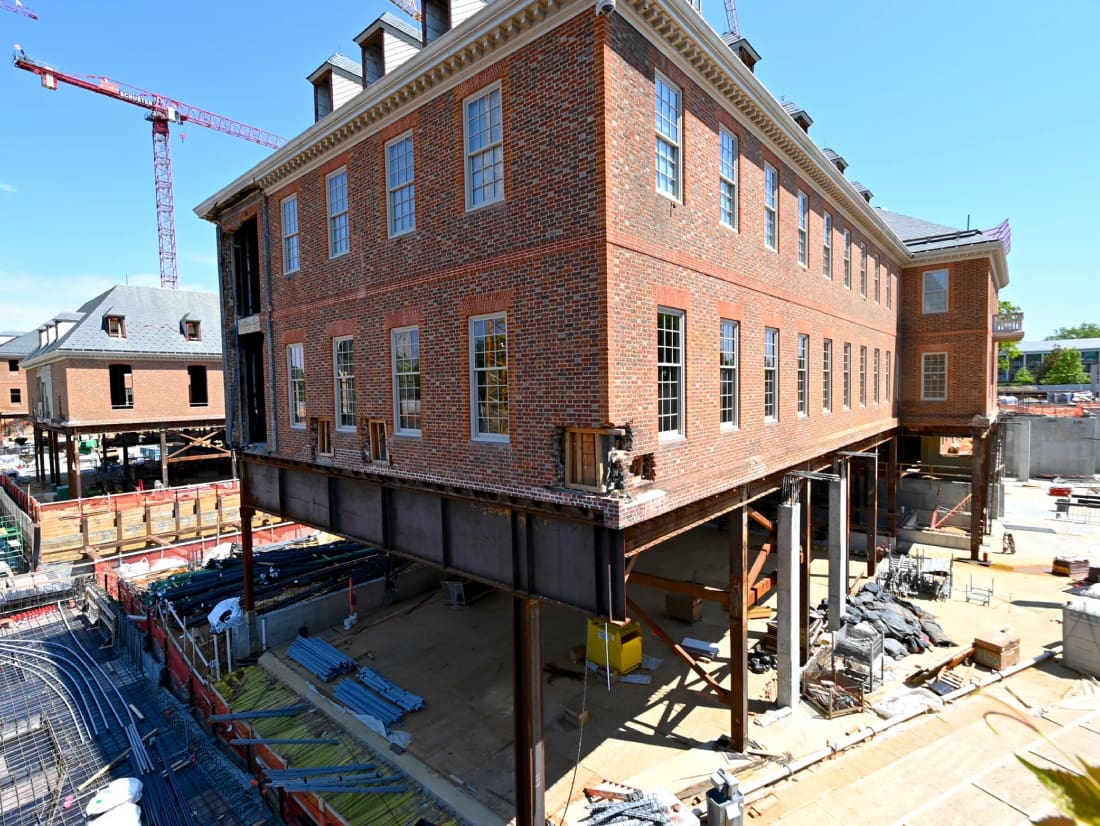
Shows redevelopment in progress, preserving the site’s historic architecture
Initiatives in the Real Estate Portfolio
GHG emissions, energy use, and water use
Sekisui House is working to decarbonize its real estate portfolio. The ESG Data Book contains figures for the portion of real estate that the Company owns, or for which it owns the real estate trust beneficiary rights, that is office and commercial buildings in the leasing business for which energy use and other such data is available.
Annual Data of our Real Estate Portfolio(Sekisui House, Ltd.)
| Unit | FY2023 | FY2024 | FY2025 | ||
|---|---|---|---|---|---|
| Electricity consumption | MWh | 28,322 | 35,394 | 32,555 | |
| Gas consumption | 1,000㎥ | 3,260 | 3,389 | 3,631 | |
| Water consumption | 1,000㎥ | 182 | 234 | 282 | |
| GHG emissions | t-CO2 | 14,367 | 17,286 | 16,540 | |
| Direct emissions | 6,623 | 7,112 | 6,946 | ||
| Indirect emissions | 7,744 | 10,174 | 9,594 | ||
| Floor area | ㎡ | 235,650 | 273,408 | 338,223 | |
Results of smart meter introduction
All of the real estate the Company owns or for which it owns the real estate trust beneficiary rights, all of the office and commercial buildings in the leasing business, for which energy use and other such data is available, are equipped with smart electric meters.
Evidence and ratio of buildings with green certification
Grand Front Osaka, in which Sekisui House owns a partial stake, has earned a five-star certification under the CASBEE*29 for Real Estate system.
The Company will continue striving to increase our ratio of buildings with green certifications, with a current ratio of 39% (based on number of properties).
*29 Comprehensive Assessment System for Built Environment Efficiency (CASBEE) is a Japanese green building system that comprehensively evaluates a building’s environmental performance, much akin to LEED or BREEAM. Certification for CASBEE for Real Estate refers to buildings completed at least one year ago
Green leases with tenants
Sekisui House has entered into green lease agreements with certain tenants of properties it owns, including those at Grand Front Osaka. From the perspectives of energy saving and environmental consideration, and sharing the principles of maintaining and improving residents’ comfort and productivity, we and our tenants mutually cooperate in one another’s environmental initiatives.
Building management systems that measure energy efficiency
Umeda Sky Building, which Sekisui House jointly owns, uses a building energy management system (BEMS). Managing the indoor temperature and humidity as well as the operation of heat source facilities, the system is used to, for example, optimize the operating hours of building equipment. The system is also able to measure electricity consumed by lighting separately from the rest of the building’s power.
The Sekisui House Group’s GHG Emissions, Energy Use, etc.
Material balance
Status of GHG emissions
Status of energy use, purchase, and generation