[ Japanese ]
Factory Site Report
The Sekisui House Group’s five domestic factories (Tohoku, Kanto, Shizuoka, Hyogo, and Yamaguchi) have compiled data and reported on their environmental activities at the production stage, including energy consumption and emissions, for FY2025.
All factories have in place exacting production quality management systems and operate with consideration for their impact on the local environment. In 2000, we built a unified environmental management system for all production factories and received JIS-Q-14001 certification. Under this system, we set voluntary standards for air and water emissions that are stricter than legal or regulatory standards and periodically measure emissions as part of management efforts. No serious accidental releases of chemical substances, oil, or fuels were reported in FY2025.
Working toward the realization of decarbonization, in FY2013 we installed photovoltaic (mega solar) power generation systems at all factories as part of efforts to spread the use of renewable energy. Furthermore, we are switching over power used at factories to power purchased through Sekisui House Owner Denki.*1 As a result of this and similar efforts, since FY2024, 100% of the electricity used at factories has been renewable energy.
*1 A mechanism by which Sekisui House buys surplus solar power from customers after their Feed-In Tariff (FIT) contracts expire. FIT is a contract system that sets fixed prices for the purchase of renewable energy.
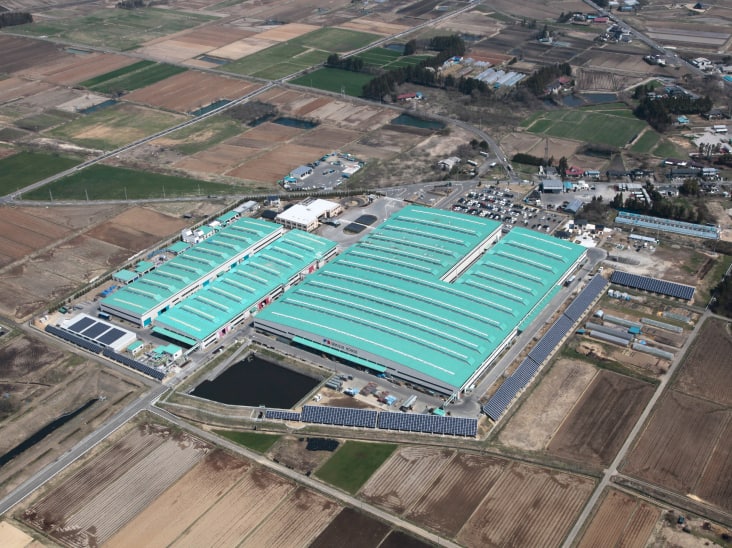
Tohoku Factory mega solar
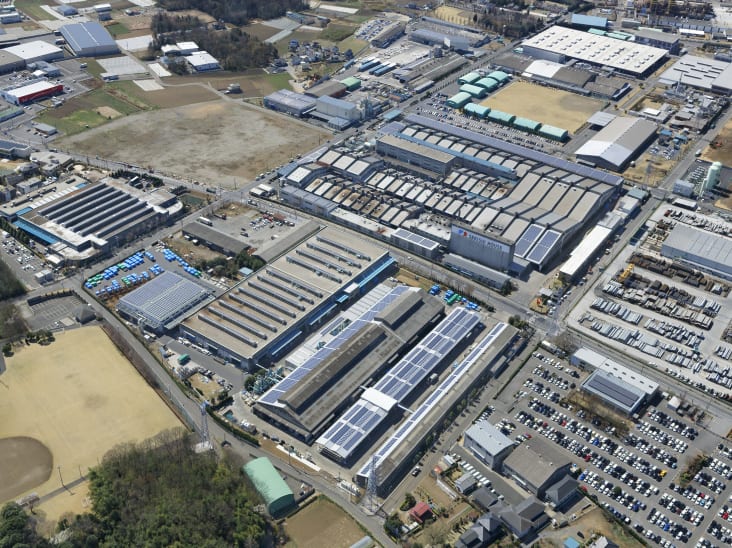
Kanto Factory mega solar
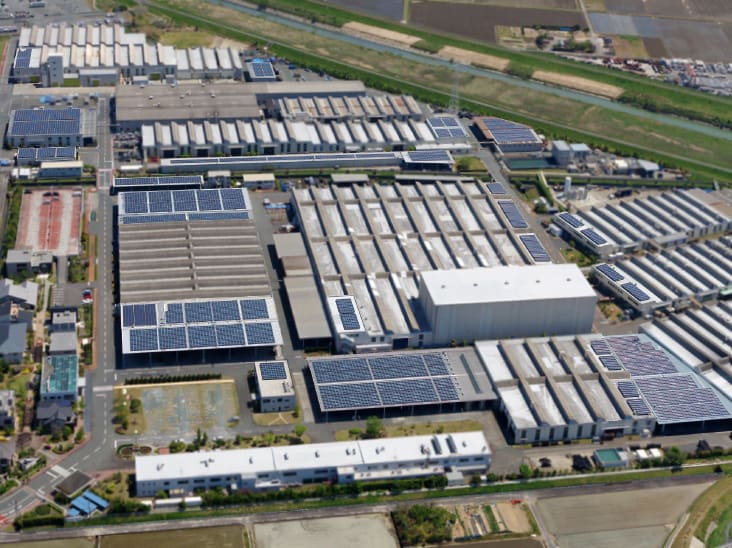
Shizuoka Factory mega solar
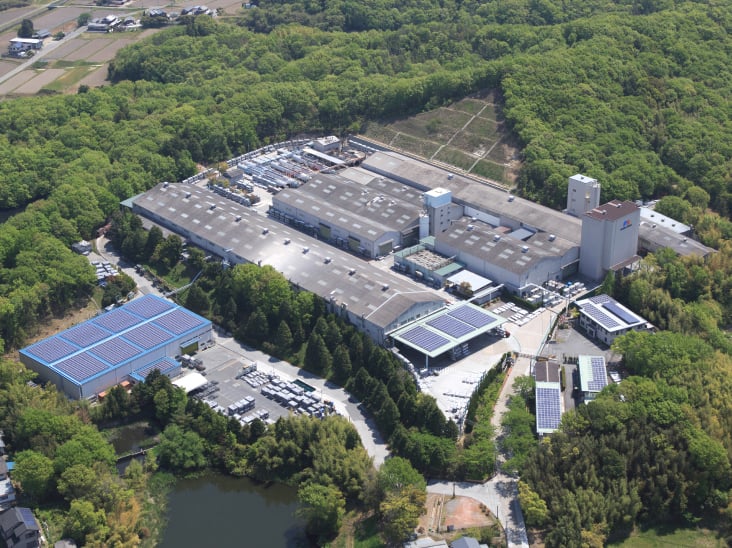
Hyogo Factory mega solar
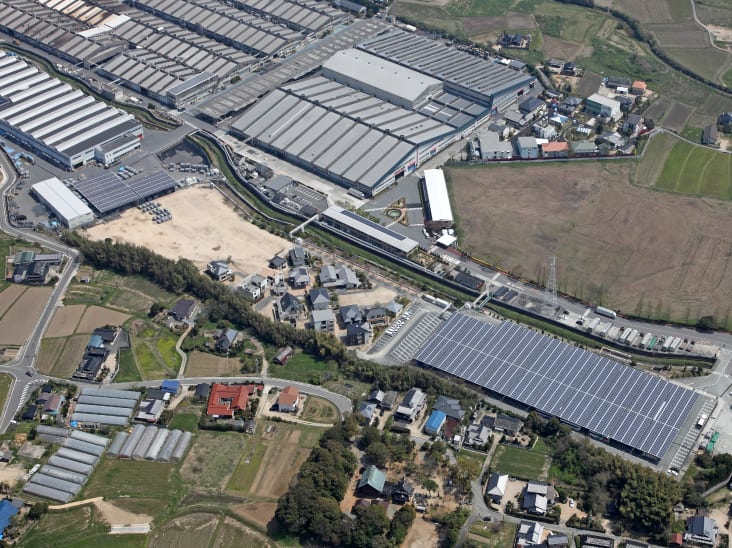
Yamaguchi Factory mega solar
To reduce energy use in production, we are systematically replacing existing machinery with high-efficiency models. Factory lighting reached 100% LED in FY2025. Moreover, we expect to achieve 100% electrification of our forklifts in FY2026. We are also systematically replacing Company vehicles with hybrid electric (HEVs) and battery electric vehicles (BEVs).
As for production facilities, we are working to improve productivity by reducing production issues and updating production methods while saving energy through such initiatives as optimizing production conditions. For drying equipment and other facilities that use heat, we are improving insulation performance to cut energy use and switching fuels to liquified natural gas, which emits less CO2, while examining ways to eliminate the use of fossil fuels in the future.
Through the efficient selection and use of resources at every step from raw materials to final products, we are optimizing material yields to save resources and reduce waste. At the same time, we are advancing circular economy activities, such as recycling waste into raw materials and reusing it in products for other purposes.
East Japan Product Center, Tohoku Factory
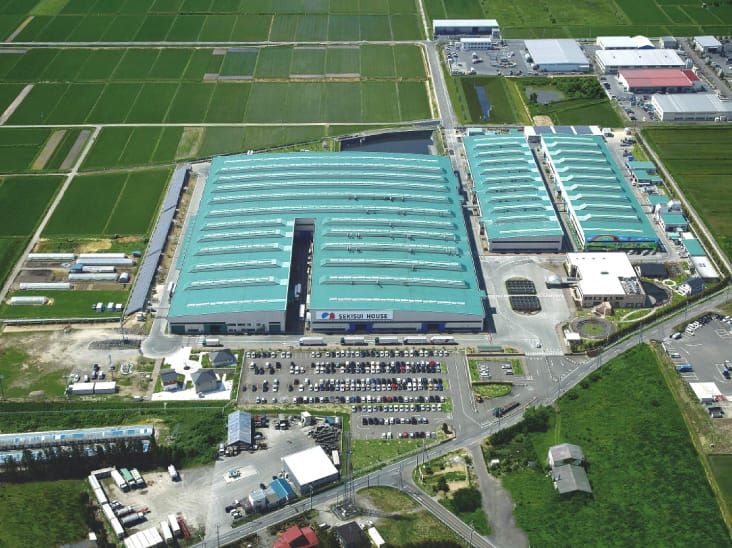
The Tohoku Factory manufactures Bellburn earthenware exterior wall panels exclusively for SHAWOOD homes. The firing furnace in this process uses a great deal of energy. To reduce energy use, exhaust heat from the firing furnace is captured and used in the drying furnace, thereby increasing energy efficiency.
After the Great East Japan Earthquake, Sekisui House formed a disaster prevention agreement with Shikama-Cho, Miyagi (where the Tohoku Factory is located), to set up a cooperative system in the event of a disaster. Environmentally friendly in ordinary times and providing safety and peace of mind to customers and the local community in times of disaster, the site serves as a disaster risk reduction factory of the future. Aiming to speed up initial response and enable energy self-sufficiency when disaster strikes, the factory has built a smart energy system comprising the existing photovoltaic power generation system as well as new large storage cells, gas engine generators, plug-in hybrid electric vehicles (PHEVs) and a factory energy management system (FEMS). Using the large (2 MW-class) storage cells, the factory seeks to lower its peak electricity draw. The use of FEMS improves the visibility of energy use by the factory’s main facilities, and doing so has improved employee awareness of energy saving and helped to reduce energy use.
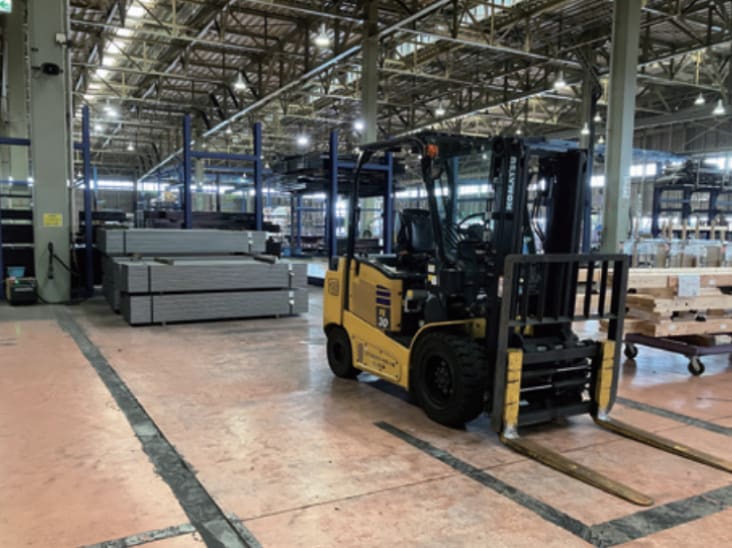
Electric forklift
1. Initiatives to reduce CO2 emissions from production
(production at factories plus shipping and transportation)
To reduce CO2 emissions from production, we are working to improve production efficiency by lowering the product defect rate, replace air conditioners and other equipment with energy efficient models, and improve the energy efficiency of chillers using energy-saving equipment. We have also advanced the electrification of forklifts within our factories as part of our decarbonization efforts, and achieved 100% electrification in the Tohoku Factory in 2025. In terms of shipping and transportation, we used trucks with larger loading capacities in the transport of materials for new detached houses, improving loading efficiency. For large multi-building housing developments, we transported materials for multiple buildings together, thereby reducing CO2 emissions.
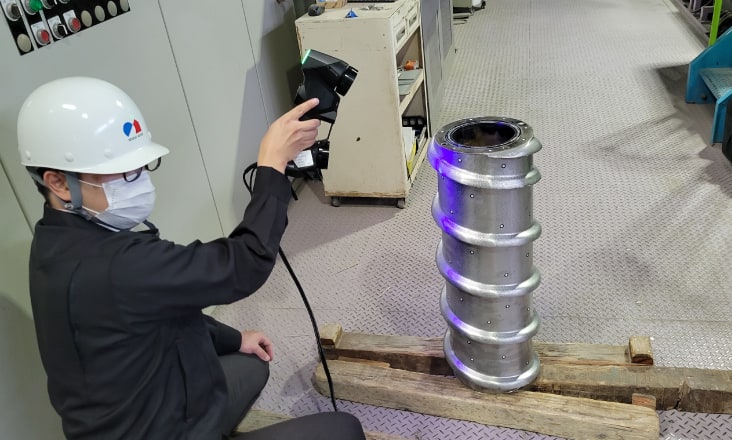
3D scanning
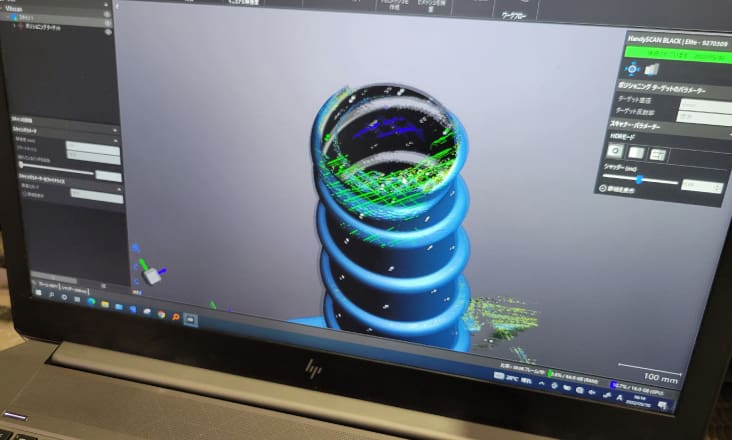
Model on screen
2. Resource recycling initiatives
In the Bellburn manufacturing process, we used 3D scanners to create digital 3D models of components that greatly affect the material yield rate. By implementing multifaceted analyses and reducing the defect rate, we are working to reduce waste. In December 2025, we began an initiative to pulverize ceramic exterior wall panel scraps and recycle them into raw materials for new ceramic exterior wall panels. At the Resource Recycling Center, we survey and analyze waste sent back from new construction sites. By sharing the survey results with the branch and sales offices to develop countermeasures, we are continuously committed to improving systems and reducing waste.
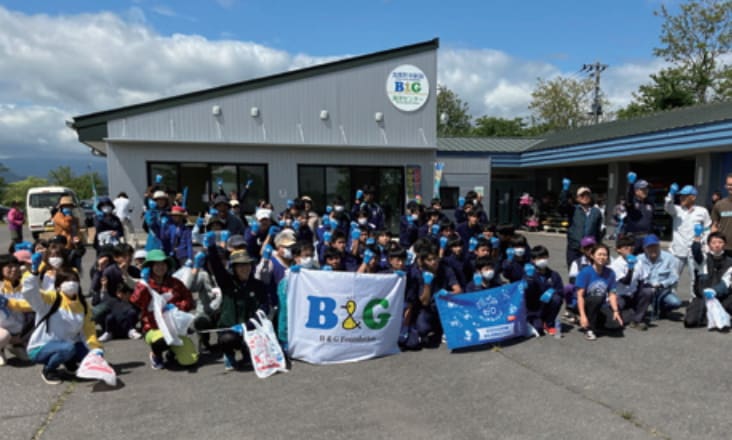
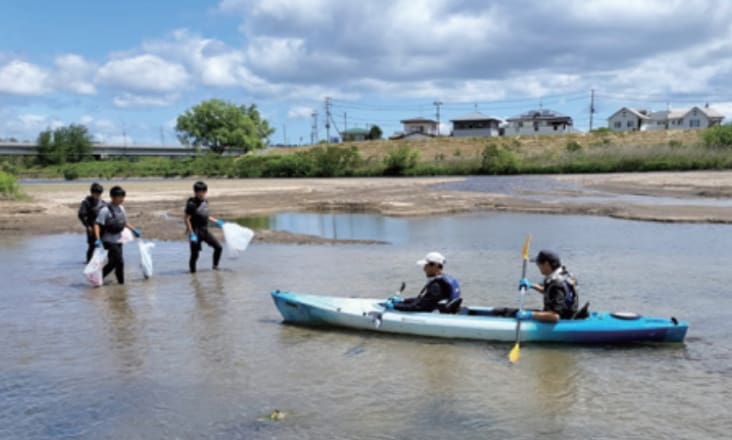
Zero Marine Trash Festival in Kami Town
3. Rehabilitation of ecosystem networks and contribution to society
Since 2023, as part of community outreach efforts, the Company has participated in the Zero Marine Trash Festival in Kami Town, a waterfront environmental conservation activity through which we are helping raise awareness of the problems caused by marine plastics.
East Japan Product Center, Kanto Factory
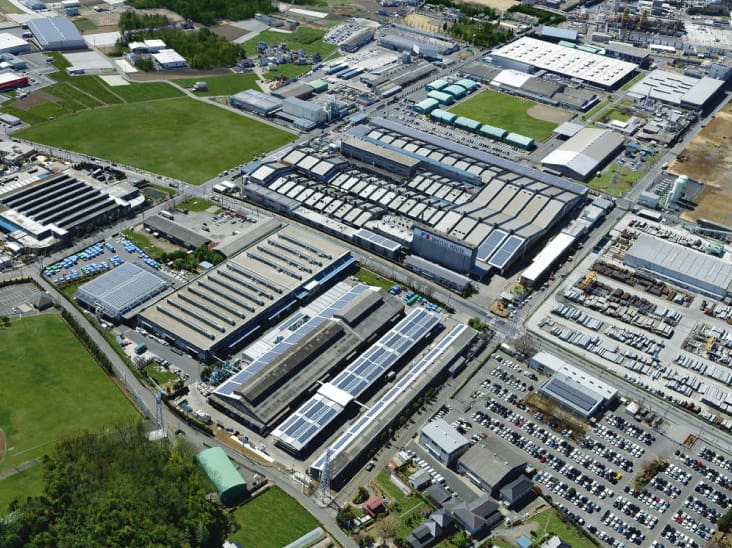
The Kanto Factory manufactures high-performance Dyne Concrete exterior wall panels. This process uses a great deal of energy. We are implementing a variety of measures to save energy in the manufacturing process, such as using exhaust heat from steam boiler drains and changing the heat source for drying furnaces from steam to burners. Furthermore, in the manufacture of steel frame members, panel components, and processed wood parts, we are systematically implementing upgrades such as replacing existing equipment with high-efficiency models, including updating cubicles and installing amorphous transformers.
In 2022, we rebuilt the factory’s office, creating a net zero energy building (ZEB) of the type that Sekisui House is promoting using the expertise cultivated in the housing business. Aiming to ensure peace of mind for everyone working there and create a comfortable space to be in, the building’s basic specifications include disaster resilience, efficient ventilation systems (in light of the COVID-19 pandemic), and thermal insulation. In addition, we adopted a free address system, did away with land lines, and designed the layout to facilitate interaction between departments to make the office environment more pleasant. Rebuilt as a Green First office, the new building also uses less energy.
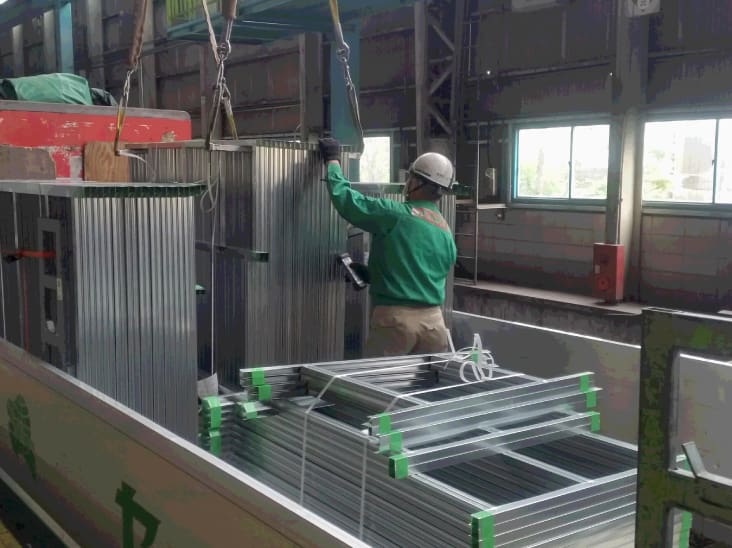
Improved loading efficiency through adjustments at the production stage
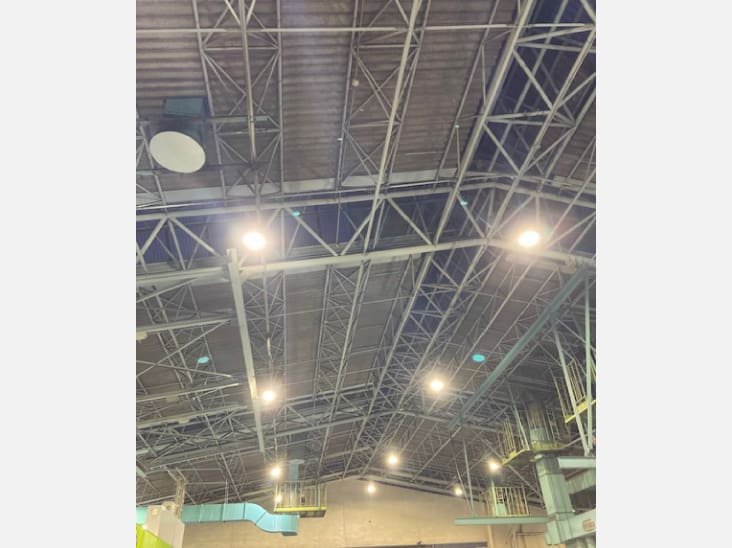
Interior LED lighting
1. Initiatives to reduce CO2 emissions from production
(production at factories plus shipping and transportation)
We are advancing our efforts to reduce CO2 emissions mainly in the areas of energy-saving equipment and controls. We installed inverter compressors, LED interior lighting and other energy-saving equipment, and implemented the electrification of forklifts. We also adopted energy-saving controls for heating and cooling equipment in electrodeposition coating processes to reduce electricity use. On the steel frame member welding line, we used AI to establish an optimized production method. This greatly improved productivity and reduced the line’s electricity use.
To minimize CO2 emissions during shipping and transportation, we are working to improve our truck loading methods to reduce the number of trucks required.
For example, we made adjustments to packing at the production stage based on the way that materials are loaded onto trucks, eliminating the need for a loading trestle and thus expanding the effective truck bed space. Through such efforts, we are successfully improving loading efficiency.
2. Resource recycling initiatives
Waste reduction activities are focused mainly on improving yields and reducing sludge. In the Ironwork Group, chemical sludge can form during electrodeposition coating processes. To minimize this, we utilize temperature controls for pretreatment chemicals, allowing us to curb the formation of chemical sludge. The Dyne Wall Panel Group is making improvements to vibrators to increase the uniformity of concrete placing, working to increase yields and reduce waste. In FY2023, we installed new crushing equipment to turn concrete waste generated in the factory into raw materials, increasing the Company’s concrete waste recycling rate.
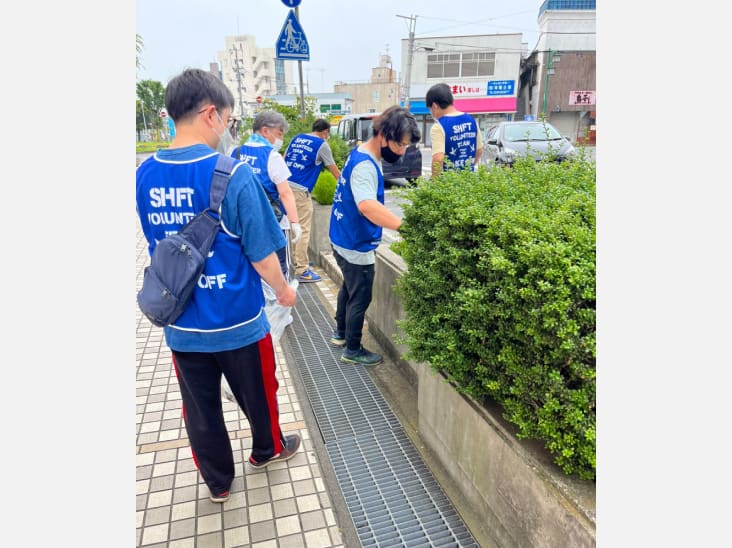
Cleanup activities near Koga Station
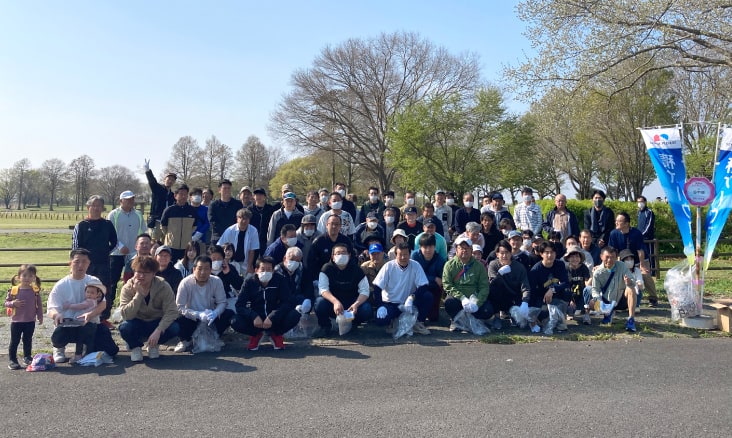
WATARASE YUSUICHI cleanup campaign.
3. Rehabilitation of ecosystem networks and contribution to society
Since 2022, we have been implementing such initiatives as donating Bellmark charity points to the local social welfare council, and participating in cleanup activities near Koga Station organized by local soccer club FC Koga, an NPO, and WATARASE YUSUICHI cleanup campaign.
Central Japan Product Center, Shizuoka Factory
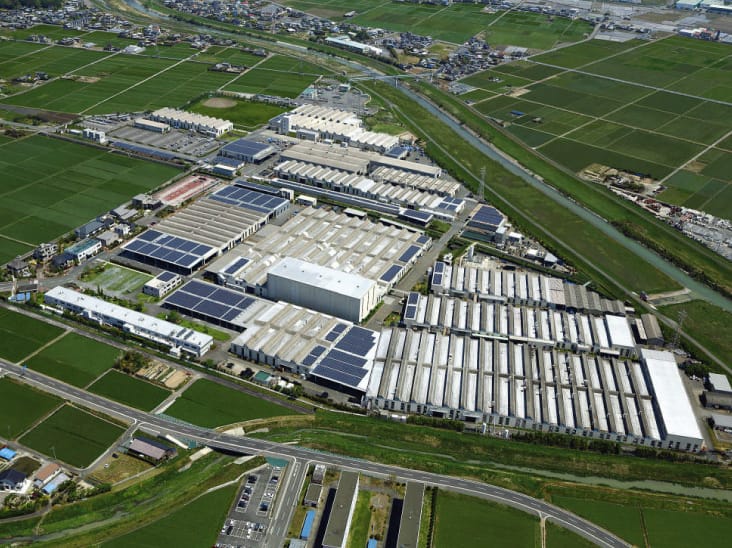
The Shizuoka Factory manufactures Bellburn earthenware exterior wall panels exclusively for SHAWOOD homes. This process uses a great deal of energy, but to save energy, the factory changed fuels from liquid propane gas (LPG) to liquid natural gas (LNG) in 2011. We have installed an LNG storage tank within the factory to provide a stable supply of fuel. LNG is evaporated in an air heat vaporizer, which draws on natural energy provided in the form of heat by the ambient atmosphere. We are also implementing ongoing initiatives to save energy by improving LNG consumption efficiency, including directing exhaust heat from firing furnaces to warming and drying facilities.
The electrification of all Company-owned forklifts at the Shizuoka Factory was completed in February 2025.
Among the Group’s five domestic factories, the Shizuoka Factory is actively working to reduce water use, as it is located in a water-stressed area. To this end, we store rainwater and use it to clean the dehydrators in the factory’s wastewater treatment facilities.
In terms of resource recycling, we have installed equipment to recycle defective Bellburn panels. We use AI in quality inspections, and dispose of panels that do not meet our strict quality standards. Such tiles are crushed and recycled as filler in sound-absorbent flooring, thereby making effective use of materials and reducing waste.
1. Initiatives to reduce CO2 emissions from production
(production at factories plus shipping and transportation)
We are switching to LED lighting, shifting to high-efficiency equipment and transitioning to electric forklifts. In terms of shipping and transportation, we are working to reduce CO2 emissions by changing production to reduce transport distance and improving loading efficiency to reduce the number of trucks used.
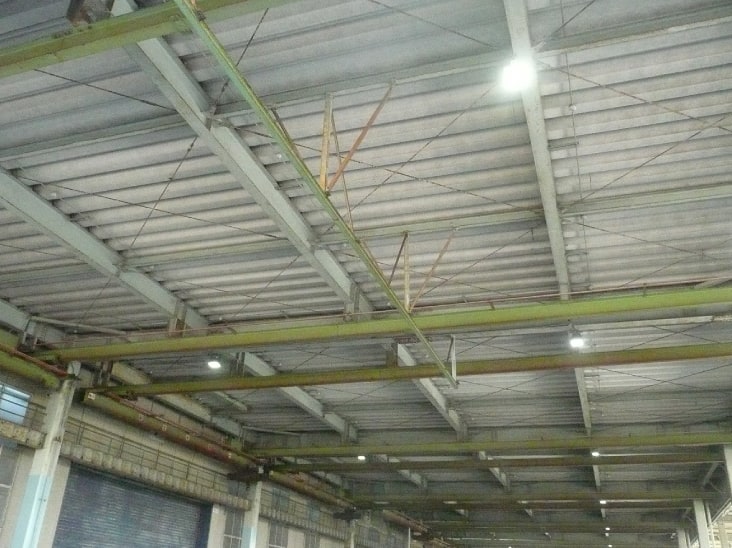
LED lighting in Yard 2
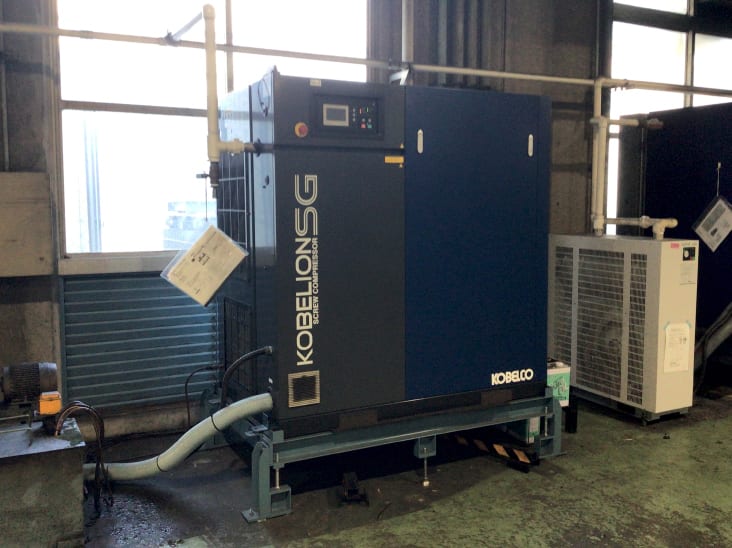
Ironworks compressor (replacing equipment with high-efficiency models)
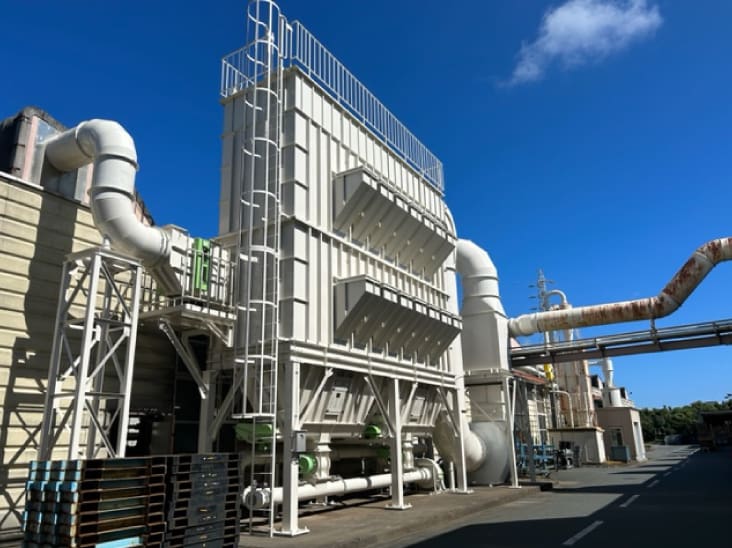
Woodworking dust collector(replacing equipment with high-efficiency models)
2. Resource recycling initiatives
To minimize factory waste, we are working to improve the yield of wooden pillars and coatings and reduce the mass of sludge from internal processes through dehydration. Initiatives started in December 2020 to recyclerejected Bellburn ceramic exterior wall panels for use in filler for sound absorbent flooring are producing significant results. Since December 2024, we have been using sieving machines to separate crushed waste that is unsuitable for use as sound-absorbent filling and have begun recycling ceramic powder as a raw material for ceramic exterior wall panels.
3. Rehabilitation of ecosystem networks and contribution to society
The Shizuoka Factory focused on maintaining and improving the greening of the site based on a greening plan. On May 26, 2022, a ceremony to grant a subsidy to certified NPO Tokinosu Forest Club under the Sekisui House Matching Program was held at the Shizuoka Factory. The factory has been involved with Tokinosu Forest Club since 2010 through annual tree planting volunteer activities, and the subsidies granted through the Matching Program have helped deepen our involvement in these projects. In March 2023, the Company signed a four-party agreement with Shizuoka Prefecture, Kakegawa City and Tokinosu Forest Club to form the Shizuoka Future Forest Supporters. The Company then kicked off the Sekisui House Forest Creation event in July 2023, and we will continue these activities in the future. Since 2002, we have conducted coastal cleanup activities in June each year as part of our cooperative efforts to achieve Kakegawa City’s Coastal Area Vision. More than 150 people (employees and their families) take part in the activities each time, and we are committed to continuing these cleanup activities moving forward.
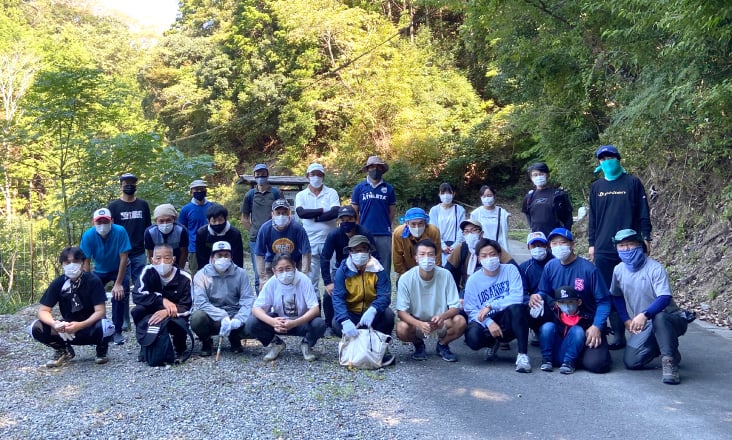
Clearing underbrush (group photo)
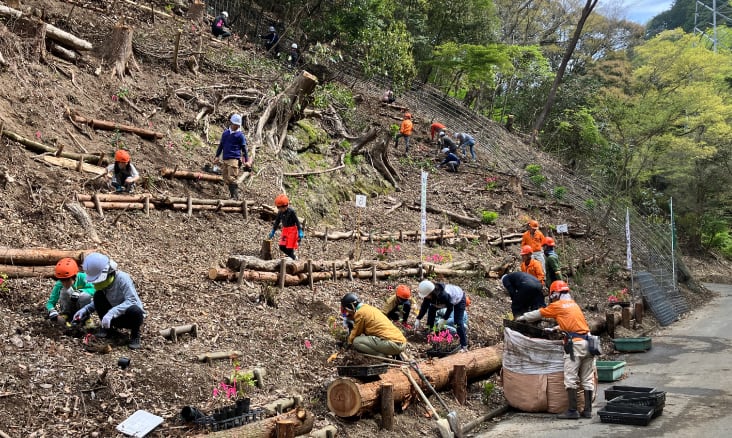
Tree-planting
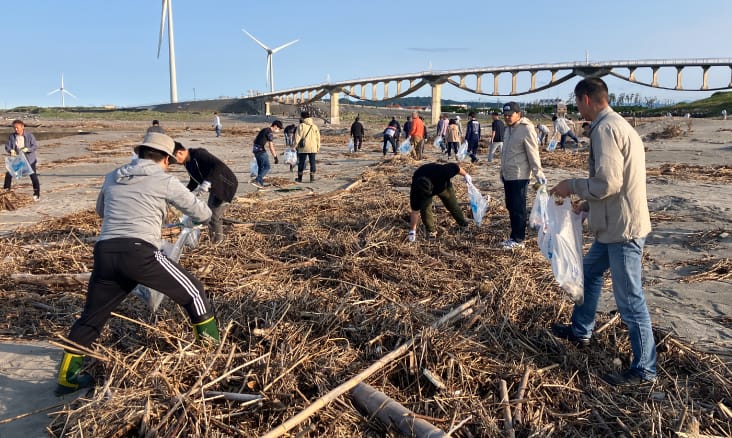
Coastal Cleanup Activity
Central Japan Product Center, Hyogo Factory
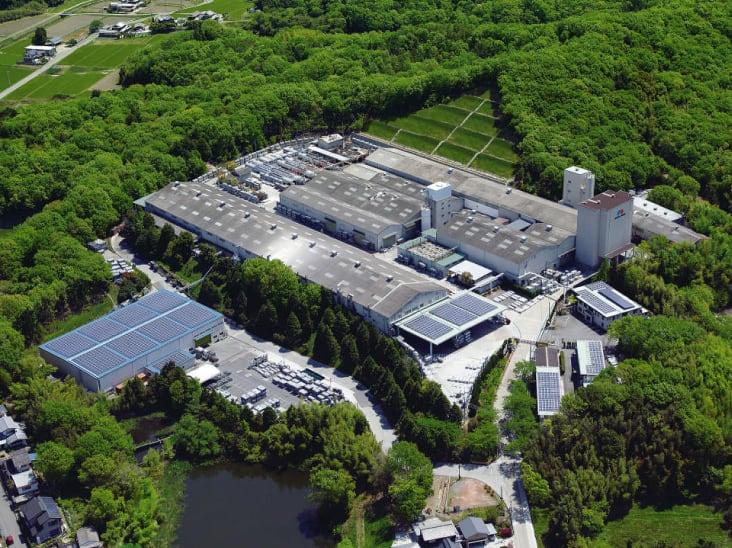
The Hyogo Factory manufactures high-performance Dyne Concrete exterior wall panels. The production of concrete uses a large amount of steam. We have installed automatic steam valves in the pipes that supply steam to each process. These enable steam supply to be shut off to processes not in use, saving energy. In 2020, we replaced one of the boilers that supplies steam with a cutting-edge high-efficiency model. Through system control that prioritizes the use of the new boiler, we have promoted further energy saving. In addition, we have applied a thermal barrier coating to the roof of the office building, reducing summer air conditioning power consumption. Responding to calls for energy saving in light of power shortages, we have installed three 35 kW in-house stations to reliably power the factory in the event of electrical grid instability.
We are also working to reduce concrete waste in concrete manufacturing. We are implementing a variety of initiatives to this end, including installing automatic scrapers to prevent material from sticking to the sides of concrete hoppers and switching to butterfly valves on the intake ports of pumps for pouring liquid concrete into molds to prevent liquid concrete spatter. By collecting dust from Dyne Concrete panel processing to recycle as raw material, we are further reducing concrete waste. We have also installed equipment to automatically inspect panel thickness during concrete placement, improving the precision of product thickness and thereby helping reduce raw material use.
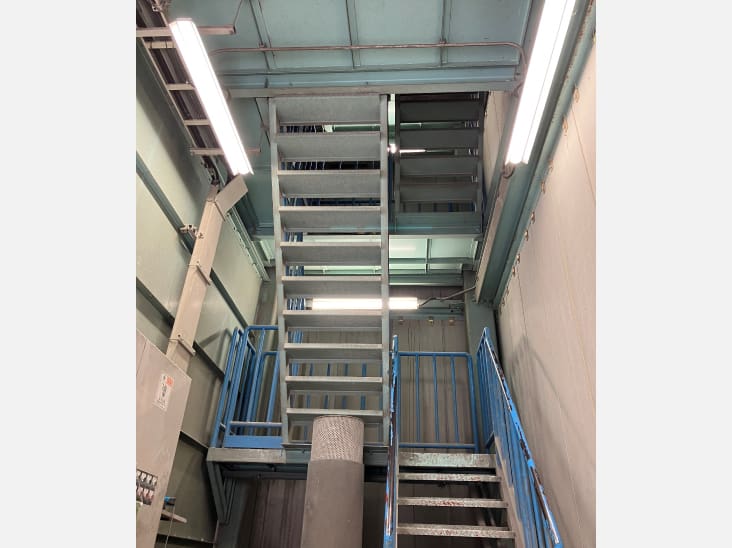
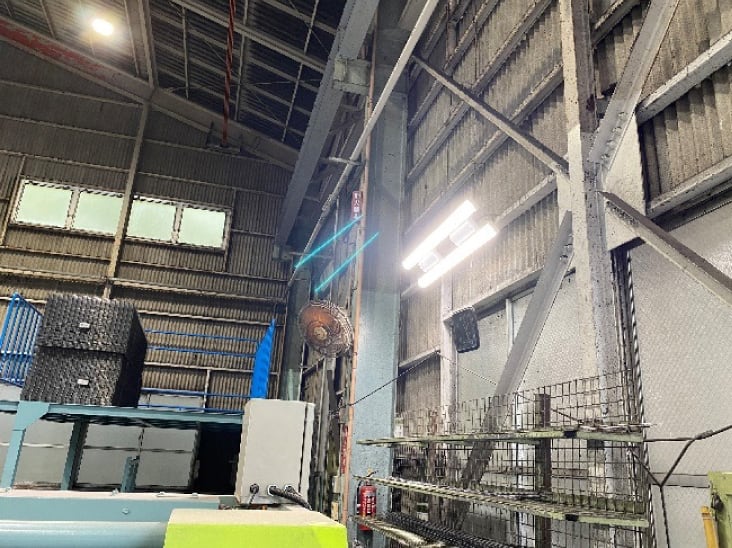
LED focal lighting
1. Initiatives to reduce CO2 emissions from production
(production at factories plus shipping and transportation)
We began transitioning to LEDs for focal lighting in production processes in FY2022 and completed the full conversion in FY2024. Additionally, the electrification of all Company-owned forklifts at the Hyogo Factory was completed in FY2024. We have also been reducing CO2 emissions by adjusting the pressure of compressors that provide power to production lines and changing the boiler control program. We are working to curb CO2 emissions in transportation by increasing the operating rates of 25-tonne and 21-tonne trailers, thereby reducing the number of 10-tonne trucks in use.
2. Resource recycling initiatives
In addition to recycling dust collected from manufacturing and processing as a raw material in-house, we have been using new crushing equipment,installed in FY2023, to turn concrete waste generated in the factory into raw materials, increasing the internal recycling rate of concrete waste.
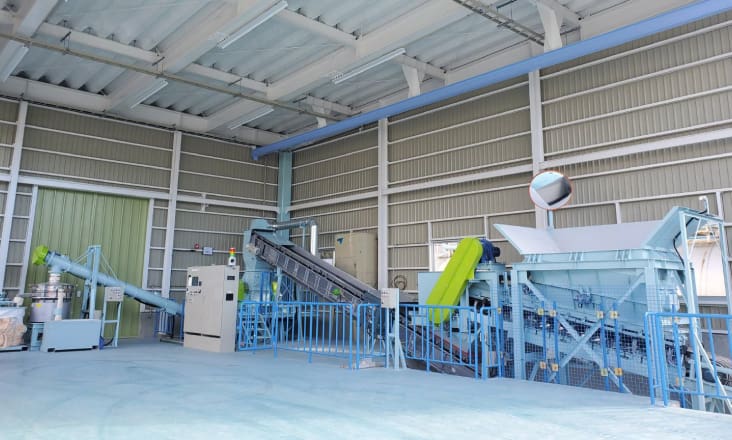
Crushing equipment
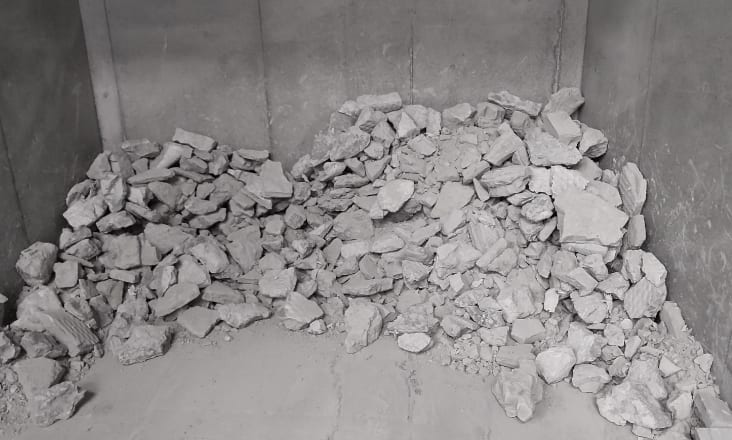
Before crushing
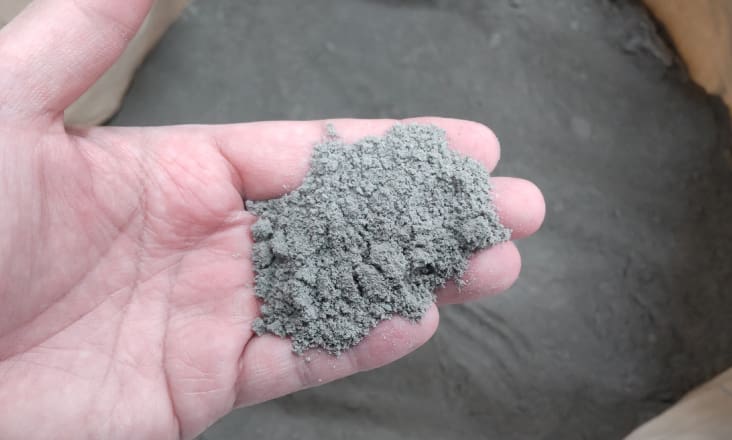
After crushing
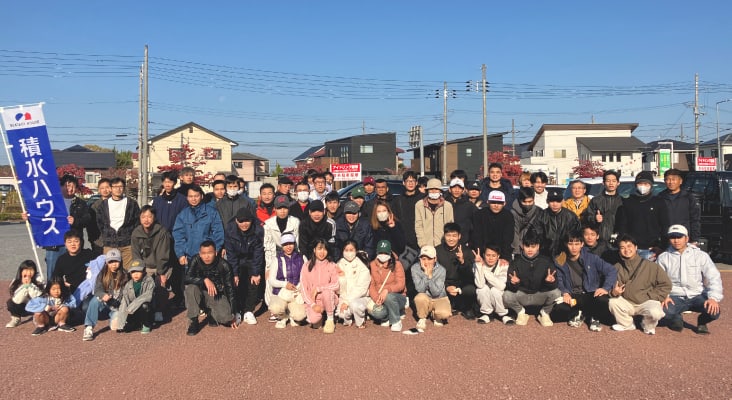
Tojo Interpark Cleanup Activity
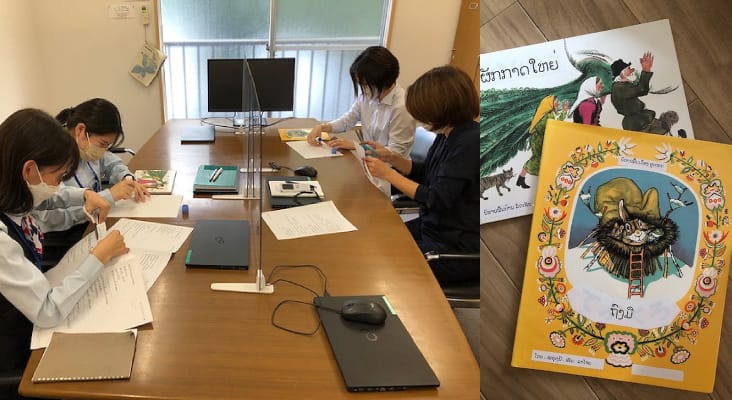
Making Lao picture books
3. Rehabilitation of ecosystem networks and contribution to society
We are helping to clean up the Tojo interchange park near our factory as part of our efforts to beautify the neighborhood. In local social contribution activities, we participate in food and blood donation drives sponsored by the Kato City Social Welfare Council. We also hold a charity drive for Children’s Day and take part in campaigns to support the recovery of disaster-affected areas. In addition, employees volunteered by participating in the Lao Picture Book Project by pasting Lao translations into Japanese picture books, creating and donating Lao versions of The Gigantic Turnip and The Mitten
West Japan Product Center, Yamaguchi Factory
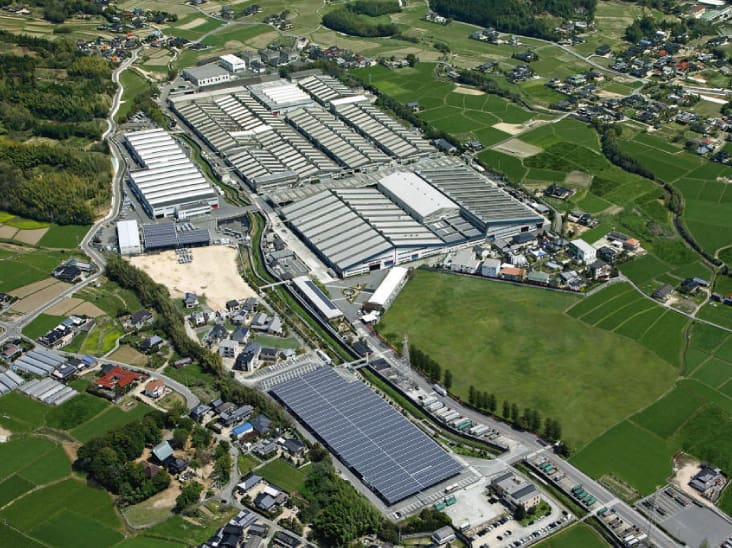
The Yamaguchi Factory manufactures steel frame members and panel components and processes lumber. We have been implementing innovative measures to save energy, such as using IoT technology to control compressor operations and improve efficiency since FY2019. Specifically, a remote control system developed in-house predicts compressed air usage based on the operational status of manufacturing processes to provide an optimized energy supply by controlling electric valves and multiple compressors. Other energy-saving measures include replacing existing equipment with high-efficiency models, improving productivity and efforts to use energy efficiently.
We have internally developed and launched a smart manufacturing system using IoT, big data, and AI for the line that manufactures beams for the Flexible ß System, Sekisui House’s construction method for 3- and 4-story steel-frame housing. In this system, AI trained on automatically collected past manufacturing data (big data) makes judgments based on manufacturing conditions. Using this technology, we have automated adjustments to production volumes and employee allocation, which previously relied on the expertise of managers. As a result, AI-powered improvements to efficiency in manufacturing line operations and power-saving operations have increased material yield, reduced working hours, and cut electricity use.
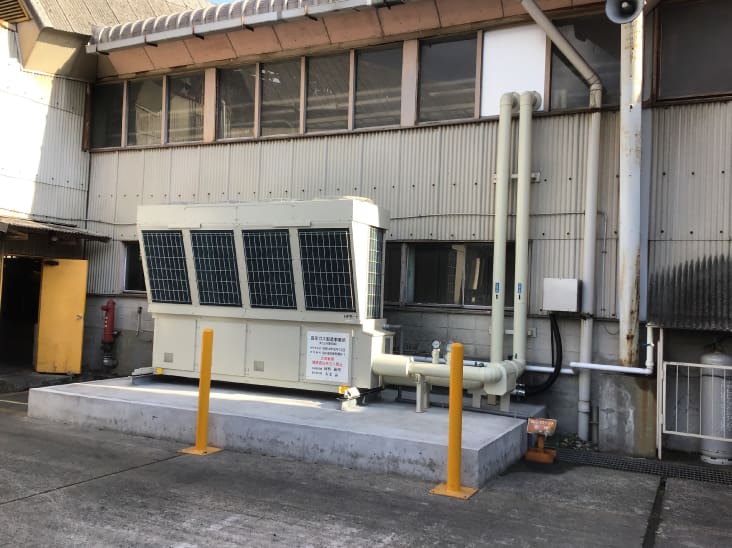
The new chiller
1. Initiatives to reduce CO2 emissions from production
(production at factories plus shipping and transportation)
To use energy more efficiently, we are replacing equipment with high-efficiency models and working to improve productivity on an ongoing basis. In FY2022, we replaced the chiller used to cool electrodeposition coating materials for iron components with a model that can both cool and warm. This has enabled efficient temperature control of these materials, cutting CO2 emissions by 12 tonnes annually. In addition, we are transitioning to LED ceiling lamps.
We also replaced office air conditioners and the cafeteria noodle cooker, improved the power control of factory night-lights, and implemented the intermittent operation of conveyors, fans, and pumps, as we continue to implement these and other energy-saving initiatives.
2. Resource recycling initiatives
In addition to recycling dust collected from manufacturing and processing as a raw material in-house, we have been using new crushing equipment,installed in FY2023, to turn concrete waste generated in the factory into raw materials, increasing the internal recycling rate of concrete waste.
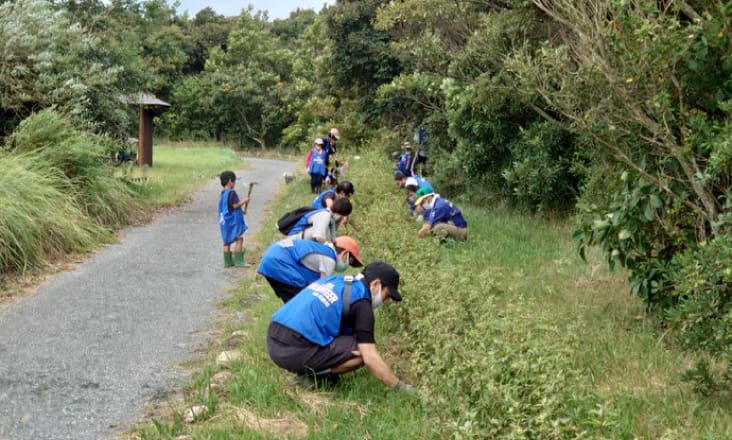
Scenic road maintenance
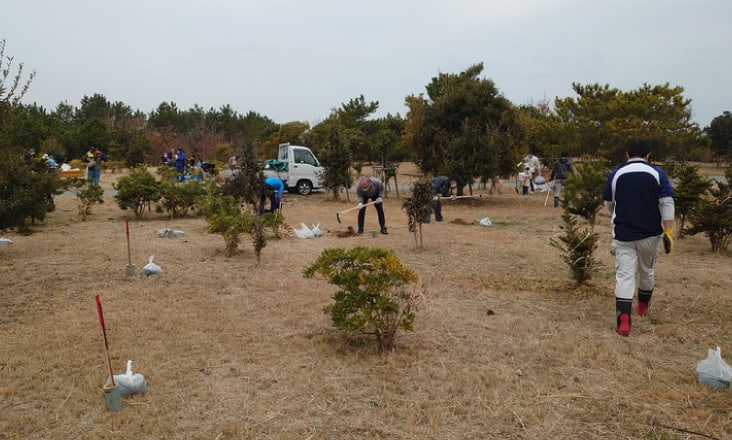
Planting trees in Kirarahama
Nature Observation Park
3. Rehabilitation of ecosystem networks and contribution to society
Since FY2022, we have continued contributing to ecosystem preservation through a variety of activities in cooperation with the NPO YachoYamaguchi, which manages the Kirarahama Nature Observation Park (located in Yamaguchi City), where we took part in tree planting, volunteered to implement controlled burns of park reed grass, and helped jointly maintain a scenic road.