[ Japanese ]
“Kids First”
Basic Approach
Since our founding, the Sekisui House Group has considered housing to be an important form of social asset. For this reason, our mission is to provide high-quality housing that can be lived in for generations, and we recognize our role in creating happiness for those who live in our homes. Consequently, we believe it is our duty to engage in activities that contribute to the happiness of future generations of children.
Meanwhile, there are reports indicating that the mental well-being of Japanese children ranks notably low among developed countries. Recognizing the profound impact of these social issues on children, we have embraced the “Kids First: Nurturing Sensitivity” approach, focusing on the emotional and sensory development of children. We believe that children who grow up with rich sensitivity and happiness will become creative and imaginative adults, driving innovation in future Japanese society. With this vision and as a way to contribute to the happiness of children, we are focusing our efforts on three key initiatives: supporting the emotional and sensory development of children through our business activities, providing children with opportunities to learn about housing through our outreach activities, and contributing to society by offering the Sekisui House Matching Program (a corporate program to match employee donations).
Supporting the Emotional and Sensory Development of Children
Based on its many years of expertise in housing research and development, Sekisui House is proposing its Kids Design Kodomo idokoro houses. With a focus on children’s safety, peace of mind, and self-reliance, smart universal design creates a suitable place for children that fosters their vitality. This proposal emphasizes a style of child-rearing in which children try to nurture themselves. There are four key aspects of child rearing: emotional and sensory development, physical, intellectual, and social. It is during childhood that these abilities see the most remarkable development, as children acquire essential life skills they can use throughout their lives. Several theories in developmental psychology suggest that contemporary children in Japan undergo six developmental stages. Each developmental stage highlights the importance of the four abilities. Our concept for Kids Design, a house that nurtures a child’s vitality, is based on this child-rearing perspective. Through this, we seek to foster the four abilities at developmentally appropriate times.
Emotional and sensory development includes one’s senses and the accompanying traits such as curiosity, empathy, and self-expression. This development is acquired through experiences from a very young age, with the most crucial development stage occurring from infancy to early childhood. This development continues during other life stages as well.
Our approach to supporting the emotional and sensory development of children focuses on creating homes and communities from children’s perspectives. Our goal is to create environments that nurture children’s emotional and sensory, physical, intellectual, and social development. To achieve this, we are strengthening our initiatives that foster these qualities and expanding our “Kids Design” projects to offer enriching living spaces and communities for children.
Kids Design Awards
As part of our efforts to evaluate and communicate support for children’s emotional and sensory development, we submit entries to the Kids Design Awards. The Kids Design Award is an awards program administered by the NPO Kids Design Association aimed at recognizing all products, services, spaces, activities, and research that support children and child-rearing.
The Company has participated in this awards program for 19 consecutive years, winning a total of 127 awards since the first edition. This makes us the company with the highest number of such awards in the housing and construction industry.
At the 19th Kids Design Awards in 2025, a total of six entries received Kids Design Awards.
Comprehensive collaboration with Kyoto University: Public Reporting Session
Note: Collaboration with Kyoto University Original Co., Ltd.
University initiatives for business development
In the first year, we held discussions with researchers across a range of fields, including educational psychology, sociology, information science, and cognitive science, to explore and establish joint research themes. Moreover, to investigate the impacts that family connections in the home have on children’s emotional and sensory development and degree of happiness, we conducted a preliminary survey of families across Japan. As a result, we decided to focus on “connections with others,” and established the following joint research theme centered on family, which is a familiar topic closely related to the home: Research on connections in the home through conversation between children and their families—Aiming for children’s emotional and sensory, and social development.
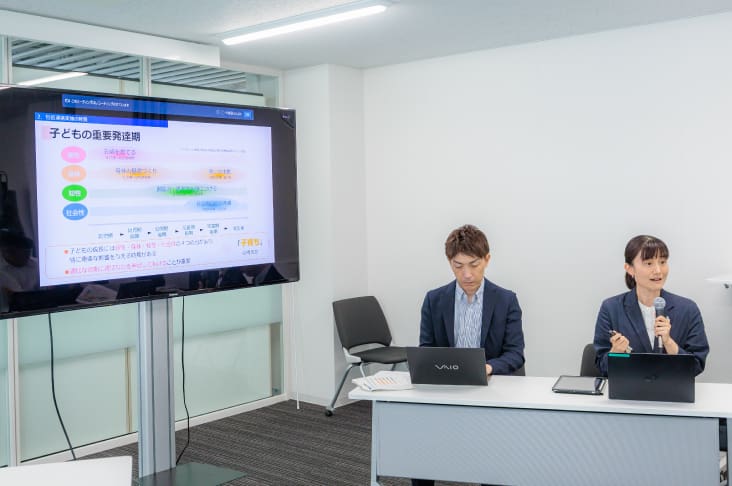
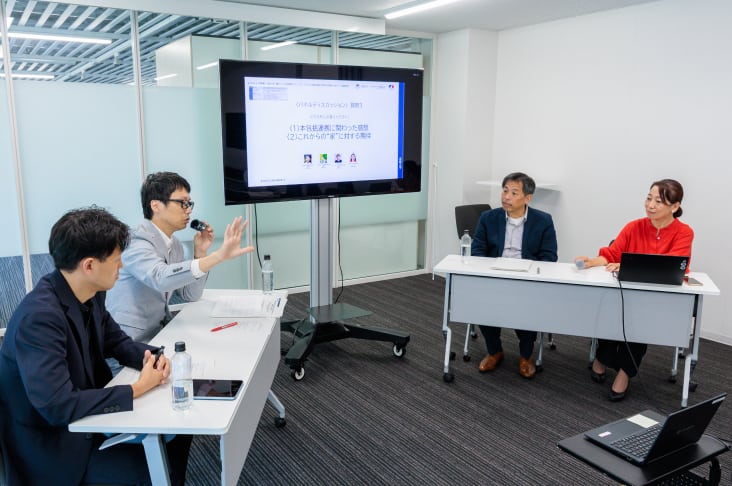
A public presentation was held at Kyoto University in June 2025, during which we reported our results from the first year and our research policy for the future. We also used the presentation to report on our exploration of research themes and preliminary surveys, and shared knowledge on how conversation with family in the home impacts children’s emotional and sensory, and social development. Moreover, we explained the course of action for joint research and our research policy for the second year onward. There was also a panel discussion between researchers from Kyoto University and the Company, in which those involved discussed the relationships between children, families, and homes from diverse perspectives.
In the second and third year of the project, we are conducting joint research with a focus on “family conversation in the home” based on established research themes. Specifically, we are looking at different styles of family conversation and analyzing the impacts that these have on children’s degree of happiness and non-cognitive skills. The aim is to build evidence related to spaces where family conversation naturally occurs. To develop homes into places that nurture connections in the family and lead to children’s emotional and sensory, and social development, we will further strengthen our scientific evidence and improve our proposal capabilities to support children’s emotional and sensory development.
News release: Sekisui House Begins Comprehensive Collaboration with Kyoto University to Create Housing Designs That Foster Children’s Emotional and Sensory Development (Japanese only)
News release: Kyoto University and Sekisui House Establish Joint Research Theme for Comprehensive Collaboration: Connections in the Home Through Conversation Between Children and Their Families (Japanese only)
News release: Kyoto University and Sekisui House Host Public Presentation Relating to Their Joint Research Project—Sharing Knowledge on Children’s Growth and the Relationships Between Their Development and the Home (Japanese only)
Providing Children with Opportunities to Learn About Housing
Since 2008, Sekisui House has been providing opportunities for children to learn about housing in a fun way, utilizing the knowledge and expertise we have accumulated through our experience in housebuilding and community development. We offer field trips led by our employees and hands-on classes using our facilities. In cooperation with the national government, local governments, educational institutions, and other organizations, we offer programs that allow children to think independently through hands-on experiences based on familiar subjects such as housing and nature.
From FY2008 to FY2025, approximately 28 thousand people have participated in our employee-run classes and approximately 77 thousand people have participated in hands-on programs and facility tours held at our plants, display homes, and Resource Recycling Centers. In addition, we offer environmental education programs on the themes of global warming prevention and ecosystem conservation, which we advocate as an “Eco-First Company,” as well as environmental education programs utilizing our biodiversity garden, Shin Satoyama, which is adjacent to our head office building, and the Sekisui House Eco-First Park on the grounds of our Kanto Factory. We also offer classes planned in collaboration with school teachers and vocational lectures to provide children with opportunities to think about the joys and roles of work.
In August 2025, we will open JUNOPARK, a large-scale housing edutainment (education + entertainment) facility in Kizugawa City, Kyoto Prefecture, designed to nurture children's emotional and sensory development. This facility offers children opportunities to nurture their emotional and sensory development through a variety of content based on the six forms of "personal happiness" the Company has identified through its ongoing research on housing, providing playful, hands-on learning experiences.
JUNOPARK, a housing edutainment facility
JUNOPARK is a housing edutainment (education + entertainment) facility that seeks to enable children to find their own personal happiness through various housing-related themes, and in turn promote their emotional and sensory development to independently shape their own lives. Since its opening in August 2025, the facility has welcomed more than 20,000 visitors.
As a company that has long been committed to housing, one of the ways in which we can contribute to children living in the era of the 100-year lifespan is to develop mindsets that can find personal happiness in everyday life.
Through our programs and displays related to Sekisui House’s concept of the six forms of emotional and sensory development through daily life, and through experiences that naturally provide spark feelings of fun and curiosity, JUNOPARK aims to be a place for nurturing children’s personal emotional and sensory development. The space embraces the idea that “there is no single right answer” and “you can choose for yourself,” allowing children to discover what they like, what matters most to them, and what they want to immerse themselves fully.
Learning programs for children through housing
In 2019, Sekisui House was the only company in the housing and construction industry to participate in the “Programming Education Promotion Month in Future Studies,” an educational initiative conducted in collaboration with the Ministry of Education, Culture, Sports, Science and Technology; the Ministry of Internal Affairs and Communications; and the Ministry of Economy, Trade and Industry. Since then, at our five Tomorrow’s Life Museums, experience-based housing facilities nationwide and other facilities, we have hosted approximately 700 elementary school children across the country. Elementary school children are given the chance—through programing education we offer—to take ideas from our facilities to design and build their own house of the future using architectural simulation software on computers.
In addition, since 2021, we have provided opportunities for children to experience and nurture their interest in housing by utilizing our model houses located throughout Japan. Children explore and discover from their own perspectives the ingenuity incorporated into the model houses, and experience aspects of housebuilding that they are rarely exposed to. Since its launch, approximately 600 children have participated in the program, which is divided into two types: field trips to a model house to see the actual product and remote explorations of model houses using tablets while at school.
As part of our new initiative, in March 2025, we partnered with RePlayce Inc., supported by our corporate venture capital fund, the Sekisui House Investment Limited Liability Partnership, to implement a housing education program aimed at fostering emotional and sensory growth called "What If I Built a House? My House Championship" for elementary and junior high school students. We will continue to develop housing education programs that emphasize nurturing the happiness as well as emotional and sensory development of children who will shape the future.
Hands-on classes: “A Letter From Dr. Forest”
An employee, acting as a green specialist by the name of “Dr. Forest,” conducts classes on biodiversity using schoolyards and other natural areas. The objective of the program is for children to enjoy learning about the relationship between greenery and living creatures while completing various missions, and to take action to protect the nature around them. We also respond to requests for teacher training based on this program (dispatching instructors to workshops organized by boards of education, subject research groups, etc.)
Field trip: Captain Earth “Ie-cology” Seminar
We implement an experiment-based program in which participants learn about energy-saving practices applicable to everyday life, together with our employees who serve as instructors. The program focuses on comparing the insulation performance of houses and understanding the performance of energy-saving devices. It provides an opportunity for children to learn about the relationship between climate change and their daily lives, and to promote their understanding of eco-friendly lifestyles and voluntary actions.
Special sponsor: The 7th Minecraft Cup
As a Gold Partner, we have been supporting the Minecraft Cup National Competition since FY2021 to encourage children’s digital craftsmanship.
The Minecraft Cup is a contest that utilizes Minecraft Education (an educational version of Minecraft), which is used in teaching settings around the world to foster a programming-oriented mindset in children. At the 7th Nationwide Competition held in 2025, a total of 836 entries were submitted across two categories: “Community Development” and “Building Design.” In the “Community Development” category, 28 finalists were selected from 14 blocks across Japan and internationally to advance to the final round of judging.
Number of participants in housing education
| Unit | 2008~2025 | |
|---|---|---|
| Employee participation in field trips (total) | Persons | 28,520 |
| Participation in our facility tours and experience programs (total) | Persons | 76,873 |
Note: From FY2025, the number includes adults who participated together with children.
Sekisui House Matching Program
Since 2006, we have been engaging in the Sekisui House Matching Program, a joint donation program between employees and the Company. We established the “Children’s Fund” and “Environmental Fund” in a matching gift format, where the company contributes an amount equal to the employee’s donation. These funds are aimed at creating a society and environment where children can continue to live happily, providing grants to non-profit organizations. Beyond short-term support, we are committed to helping organizations strengthen their foundations over the medium- to long-term. Since the program’s launch in FY2006 through FY2025, we have granted approximately ¥550 million to a total of 696 non-profit organizations. Moreover, as of the end of FY2025, 7,365 Group employees have enrolled in the program.
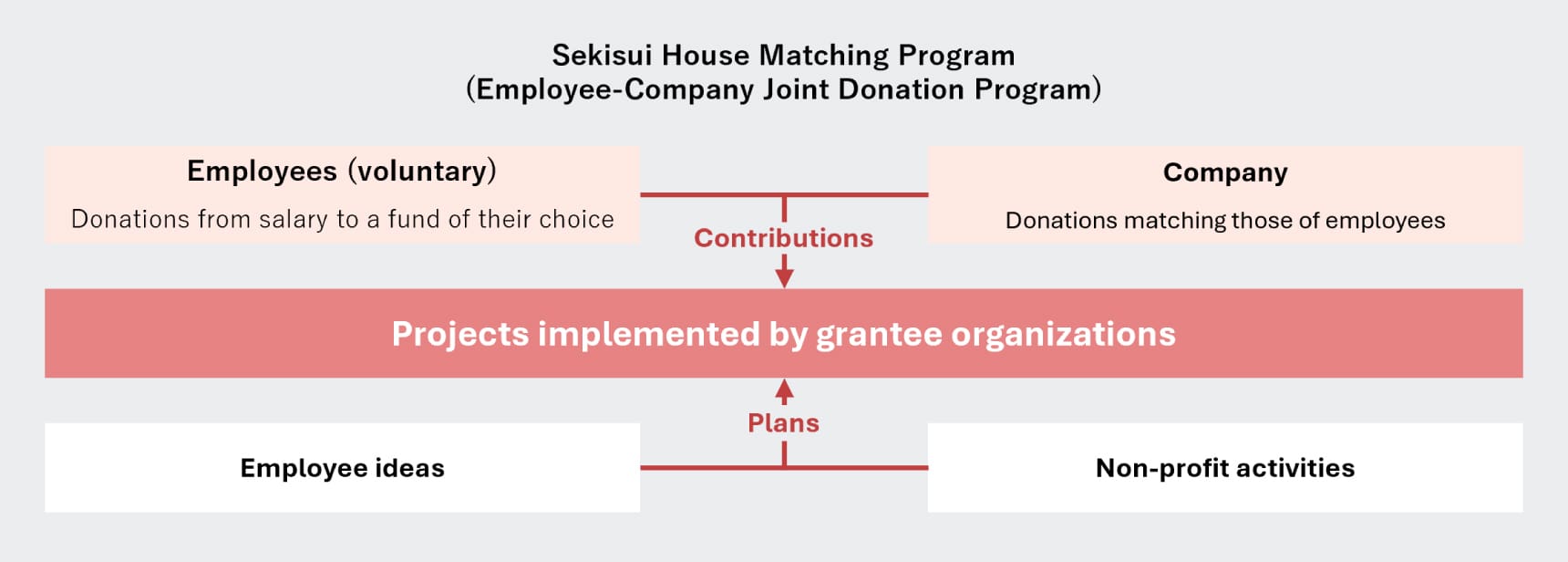
Sekisui House Matching Program subsidies
| Boundary | Unit | FY2023 | FY2024 | FY2025 | |
|---|---|---|---|---|---|
| Joint employee and Company donations |
Group (Japan)*1 |
Millions of yen |
50.55 | 53.02 | 52.00 |
| Employees enrolled in the employee-company joint donation program | Persons | 7,944 | 7,628 | 7,365 | |
| Integrated employee-initiated ideas | ー | Ideas | ― | 117 | 117 |
| Funded projects | 94 | 56 | 53 |
*1 Up to FY2023, Sekisui House and major domestic Group companies (excluding Konoike Construction), Sekisui House Financial Services Co., Ltd., and Sekisui House Asset Management, Ltd.; for FY2024, includes Sekisui House Innovation and Communication, Ltd.; for FY2025, includes Sekisui House Umeda Operation Co., Ltd.
Starting in FY2023, we launched a new program to provide grants for projects—conceived by employees and submitted to Sekisui House Innovation & Performance (SHIP) Awards—that combine ideas for social contribution and social innovation with the activities of non-profit organizations.
From August 2024 to the end of November 2024, we planned projects with non-profit organizations, and after a two-month internal review process, we awarded ¥52 million in grants to 53 projects (FY2025 grants).
Through co-creation with local communities, we will achieve further solutions to social issues. Of the projects eligible for grants are 117 employee proposed ideas, including the effective use of vacant houses and scrap wood, creating spaces for children to stay and have experiences, and environmental conservation initiatives.
We consider the organizations supported through the Sekisui House Matching Program to be our co-creation partners. The launch of project initiatives that combine employee ideas with the activities of nonprofit organizations has not only led to increased employee participation in volunteer activities, but has fostered collaboration in business activities, such as renovating buildings for the grantee organizations and partnering on new initiatives.
Examples of funded projects in FY2025
As part of our co-creation project with the NPO Leyline, we used our Sha Maison facility to open a free after-school club for children from low-income families. Through these clubs, we have offered various educational opportunities, such as programming classes using Minecraft and painting classes. We were able to provide 330 local children, who previously had limited opportunities and low confidence, with the sense of joy that comes from being recognized by others through engaging experiences at the facility. Each experience is helping to light a small flame within the children, which over time will develop into a firm belief that they can achieve anything.
Moreover, as part of our co-creation project with the NPO Team 1.5 Oita, 66 children participated in the “Children’s Earth Class” activities. Surrounded by the scent of the forest, the gentle sound of the river, and local lifestyles, the children learned that the earth is not just something to protect but something that they must nurture and develop together. In addition to improving children’s environmental awareness, these realizations also help to develop their capacity to grow into individuals who can take the initiative. Some children who have participated in these activities are now working as staff of the NPO, engaging in activities to sustain the earth and the community. In their new role as supporters, they are passing on the knowledge and joy they previously experienced to the children of the future, creating a virtuous cycle. The small steps taken by these children are nurturing strong seeds of hope for their communities and the future.
Fostering a new art culture with the Koji Kinutani Tenku Art Museum
Sekisui House operates the Koji Kinutani Tenku Art Museum to promote culture and the arts in society. The museum is located in the Umeda Sky Building, home to our head office. The museum is dedicated to the works of the late Koji Kinutani, an Order of Culture recipient who was at the forefront of Japan’s art world as a leading figure in fresco painting. Alongside Kinutani’s colorful, energetic frescos and sculptures, the museum also features interactive content, such as a 3D visual system that allows viewers to seemingly enter the world of his paintings, as well as a virtual reality presentation in which the artist himself introduces the museum and his atelier. Since its opening in December 2016, the museum has welcomed a total of over 500,000 visitors from Japan and overseas.
Based on our “Kids First” approach, we are supporting children’s learning and creativity. In addition to actively welcoming children from local elementary schools for extracurricular classes, we also offer an art appreciation program to nurture children’s ability to closely observe artwork. Moreover, since 2021, we have held the Kids’ Drawing Contest annually for elementary and junior high school students. In its fifth year in 2026, the contest received 2,223 entries both from Japan and overseas. We will continue to provide opportunities for learning through this one-of-a-kind, cutting-edge museum and to communicate the appeals of culture and the arts.
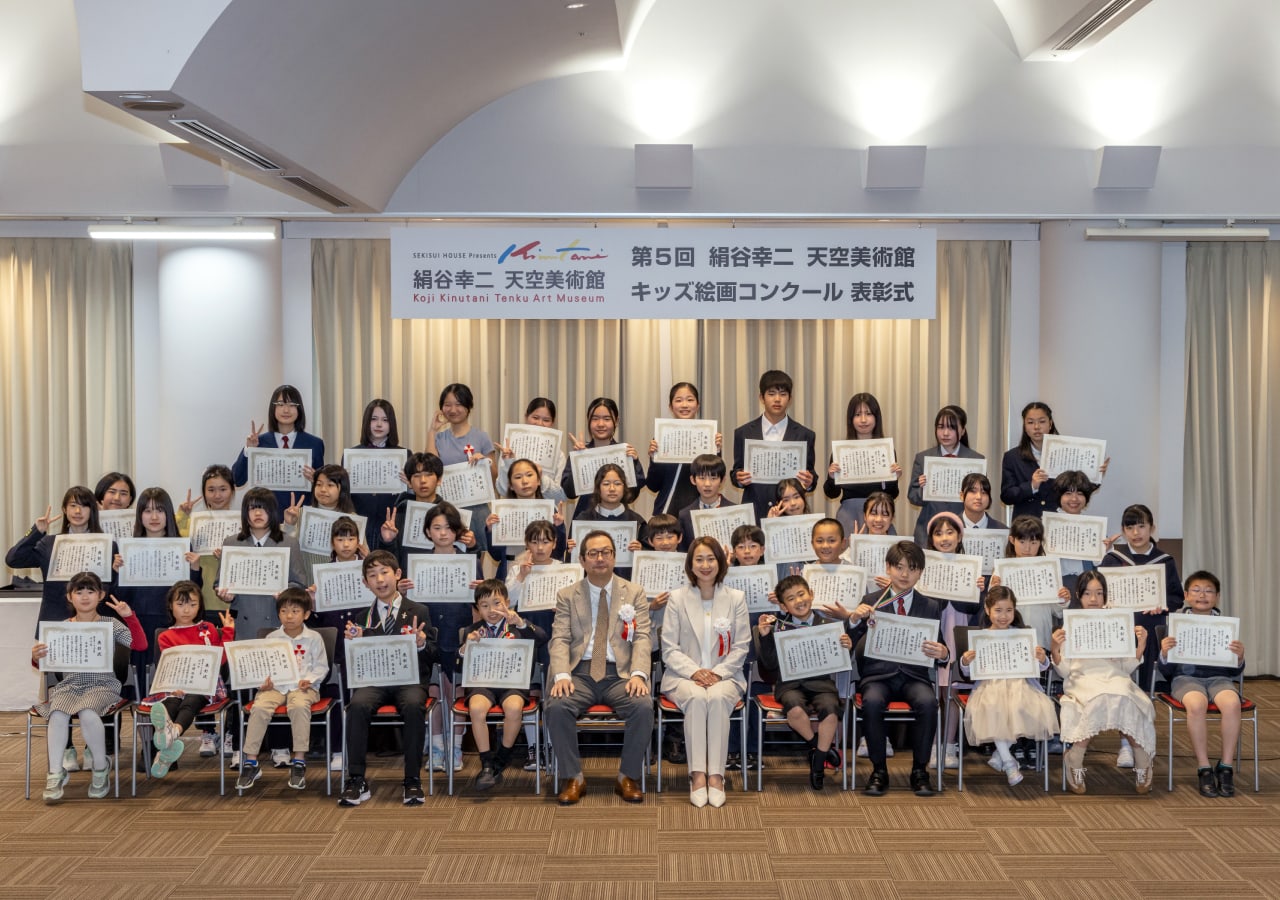
The 5th Kids’ Drawing Contest Award Ceremony