[ Japanese ]
Regional Revitalization Businesses
Basic Approach
The aging of society and the outflow of people to large metropolitan areas have led to depopulation, posing a significant challenge for regional municipalities. One way to address these social issues is by creating attractive employment opportunities to increase the number of people working in these regions and in turn prompting a sort of U-turn that brings jobs back to rural areas from cities. Based on this mindset, the Sekisui House Group, which develops businesses across Japan, is creating appealing work in local areas by strengthening the recruitment of housing technicians (crafters).
The charm of rural areas remains abundant—whether it be the rich natural environments, friendly communities, leisurely pace, or farm-fresh food—offering experiences only available through direct visits. Promoting tourism that highlights these charms can revitalize regional economies, an effort we contribute to by working together with Marriott International in encouraging the exploration of lesser-known destinations through a system of roadside rest stations known as Michi-no-Eki. These efforts are part of a regional revitalization business known as the Trip Base Michi-no-Eki Stations Project.
In recent years, regional issues have become more complex, with simultaneous needs to promote an influx of younger people while increasing the number of maternity hospitals. The Group works to understand local issues, build relationships with local governments, and collaborate with property operators while advancing business that contributes to coexistence with local communities. In building structures that support these efforts, the Group utilizes the strength of its nationwide business presence, the knowledge of experts and specialized departments in various fields, and network of external specialists to create various solutions and proposals geared toward solving regional and social issues.
Training and Recruiting Homebuilding Craftsmen
Strengthening recruitment of crafters
Housing technicians, or “crafters,” are one of the job types involved in building houses for the Group’s Sekisui House Construction. These staff take on the important role of constructing buildings for customers by utilizing various skills and techniques. In recent years, the construction industry as a whole in Japan has been facing the serious issue of labor shortages. To solve this issue, the Sekisui House Construction Group is making efforts to strengthen the hiring and training of these crafters, with a focus on prospective high school graduates. We are conducting human resource development to strengthen our construction capabilities, with the goal of becoming the number one construction company in Japan.
The Sekisui House Construction Group welcomed 112 new graduates hired in April 2026. (As of March 2026) We plan to continue at this level and have 113 new graduates join us in FY2027. Crafter development takes place at three “training schools” over a period of six months after hiring. At these Company-run training facilities, crafters learn to facilitate interactions as professionals and gain systematic knowledge and skills related to construction. On-the-job-training taking place at worksites is handled by highly experienced chief crafters in an apprentice-style system where two new hires are trained by a single chief crafter, creating an environment where precise guidance can be given.
We also conduct training and other activities related to educational guidance methods for these chief crafters to improve their educational abilities. This educational system, where chief crafters pass on their experience and knowledge to the next generation, ensures the continued transmission of skills.
Through continued hiring and development, we strengthen our construction capabilities, further establishing our position in the industry. In our efforts to strengthen these capabilities and develop human resources, we are establishing a work environment that ensures greater work ease and satisfaction for crafters, enhances the attractiveness of home-building artisans, and contributes to the creation of high-quality housing stock as part of our goal to become the number one construction company in Japan.
Skeleton and infill (SI) business: A joint construction business with partner companies
In 2023, we initiated the industry’s first joint construction business (SI Business) to enhance the seismic resistance of wooden-frame housing by broadly disseminating our seismic resistance technologies.
In our SI Business, Sekisui House designs the “skeleton,” or structural framework, which is the most important part in regard to the earthquake resistance of wooden-frame housing, while Sekisui House Construction handles the foundation, framing, and joint connections. Partner companies complete the “infill” work, which includes interior and exterior finishes. We leverage our strong regional land procurement and sales capabilities to propose plans tailored to the unique characteristics of each area, ensuring customer relations that are closely connected to the community.
Through these initiatives, we are expanding our offering of wooden-framed housing with high seismic resistance across Japan, thus creating high-quality housing stock. We collaborate with partner companies rooted in local communities to promote coexistence and co-prosperity, contributing to the creation of employment in these regions. As of January 31, 2026, this business has 10 partner companies and operates businesses from the Tohoku region to Kyushu.
Third Sekisui House Carpentry Competition, WAZA 2025
To express our sense of gratitude to our carpenters, who lead Japan in the level of their technique, Sekisui House held the Sekisui House Carpentry Competition WAZA in 2023 to thank them for their unwavering dedication to our endeavor of building attractive homes and to further enhance their motivation while promoting carpentry as an attractive dream career to those outside the Group. In this event’s third year in 2025, we introduced the new Under-35 Division to support the enthusiasm and activity of our younger carpenters, boost their motivation and help pass on technical capabilities. A total of 26 skilled carpenters, 13 from the Under-35 Division and 13 from the Master Division, were selected through regional recommendations. These contestants competed for the championship by showcasing their skills in home interior construction.
Trip Base Michi-no-Eki Stations Project
The Trip Base Michi-no-Eki Stations Project, a regional revitalization project developed by Sekisui House with Marriott International, promotes travel that encourages the exploration of lesser-known destinations to discover their unique charms through a system of roadside rest stations known as “Michi-no-Eki.” The project has been gradually rolled out since October 2020. In the first stage of the project, 15 roadside hotels were opened across six prefectures by March 2022, providing a total of 1,152 rooms. In the second stage, 1,184 rooms at 14 locations in eight prefectures were opened by November 2023, bringing the total of 2,336 rooms at 29 facilities in 14 prefectures.
In FY2025, the Company continued to cooperate with the KURADASHI Challenge, which is a social contribution-style internship where students interested in food loss issues and regional revitalization participate. We worked together with these students to create a regional revitalization proposal around the harvest of black edamame beans in Kyotanba Town, Kyoto Prefecture. Additionally, we collaborated with local fishermen in Susami Town, Wakayama Prefecture, to devise methods for utilizing Japanese flying squid with the participating students. In Mino City, Gifu Prefecture and Nikko City, Tochigi Prefecture, we are also collaborating on a study-away-from-home program that connects local communities with families raising children in nursery schools. In Yabu City and Awaji City, Hyogo Prefecture, we held a financial and economic educational event focused on local resources, where children learned about agriculture and finance. We also hosted for the first time the "Michiru Tabi Marche" at the Umeda Sky Building, which is home to our head office, to communicate the charms of regional areas in the city center. By deepening understanding and affection for local industries and encouraging continued engagement from those who become fans of the region, we are steadily working on regional revitalization by solving local issues. We will continue to contribute to regional revitalization by promoting tourism, with the aim of expanding the number of rooms to roughly 3,000 nationwide.
Development Business
Basic policy of the Urban Redevelopment Business
Leveraging our decades of expertise in housing construction, Sekisui House is implementing urban redevelopment that goes beyond mere scrap-and-build. Through the urban redevelopment of rental and for-sale condominiums, offices, hotels, commercial facilities, and mix-use complexes, we aim to create inclusive environments that are suitable for everyone and will be passed on to future generations, thereby creating value for society as a whole with a focus on people, communities, and the future. When planning urban redevelopment projects, we consider the impact on the environment and community while adhering to relevant laws, regulations, and internal rules.
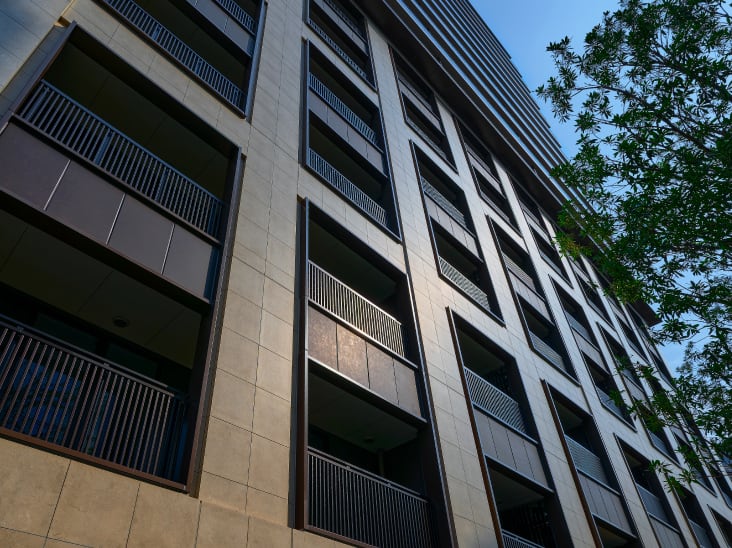
GRANDE MAISON Fukuoka The Central Luxe (Fukuoka City)
GRANDE MAISON Fukuoka The Central Luxe is our first GRANDE MAISON property in the Tenjin area of the central Fukuoka City. Based on the location’s characteristics, we designed the composition, layouts, and interiors of the units based on “The Hotel Life” concept. Moreover, the façade of the building changes where the layout of the units changes. The exterior of the lower floors features frames that cover two floors in each grid, while the upper floors have been designed to display a sense of weightlessness to ensure a stunning exterior from every angle. Around the building, there are plans to install greenery and benches in the open space on the northeast side to bring charm and calm to the streetscape.
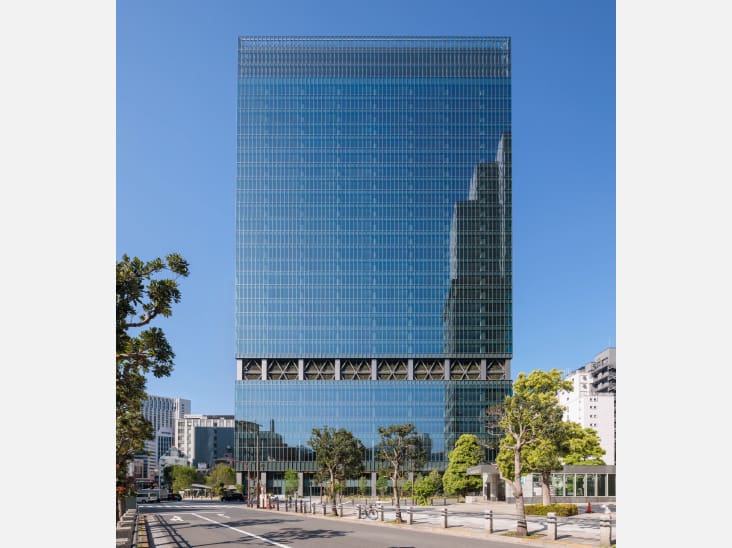
Akasaka Green Cross(Minato-ku, Tokyo)
This high-grade next-generation building was completed in May 2024 as a joint venture with Nippon Life Insurance Company. This building blends into the lush natural environment of the surrounding area and contributes to the well-being of its users as a place that fosters creativity in new businesses while building connections between people through its inspiring presence.
Initiatives for tenants and local communities
Sekisui House is engaged in business centered on the residential domain that goes beyond just housing. Protecting the lives and assets of residents and tenant employees from increasingly severe natural disasters is a significant social issue and part of Sekisui House’s mission. With this mindset, we develop and manage our offices, hotels, rental condominiums, and other properties with consideration for not only the environment and local communities, but also for the comfort of residents, users, and tenant employees.
Miramachi, a large-scale development complex
Created on a 27-hectare redevelopment project on a former factory site in Toyohashi City, Aichi Prefecture, Miramachi was developed with the aim of solving local issues and realizing a compact city. The complex focuses on three future values based on the concept of creating a town connected to the future. These three values are: child-friendliness, disaster resilience, and enjoying life. The first value of child-friendliness is a town-wide endeavor focusing on supporting the future of children through child support centers, parks where families can make lasting memories, and the installation of crime-prevention cameras. The second value of disaster resilience prevents flooding from worsening typhoons and heavy rains by elevating the entire town and setting up parks that also serve as reservoirs. The last value of enjoying life leverages the
Company’s expertise to create a community using both advanced technologies and lifestyle design. We believe that fostering a community is essential for creating a pleasant living environment, we have established a management association aimed at resident-led town management. Through these efforts, we are creating a place where both residents of the town and visitors can interact more deeply.
Moreover, this project was the first in Japan to use smart electric meter communication technology to read electric, gas, and water meters. Making usage visible helps improve convenience for residents and promotes environmental conservation.
Platinum Business
The Platinum Business is the general term for the Sekisui House Group’s construction businesses, including elderly housing, for senior citizens, nursing care service offices, clinics and other medical facilities, and nursery and childcare facilities.
We are enabling people to fulfil their desire to “live here forever” by creating environments that cater to the diverse life stages of everyone—from children to adults, including the elderly and persons with disabilities—as well as addressing the needs of the local community.
Through comprehensive planning, technical expertise and construction capabilities, the Company has developed safe and comfortable buildings that combine a home-like feel with ease of use, not only for visitors, residents, and patients, but also for doctors and other staff. Moreover, incorporating the Company’s unique universal design and eco-friendly technologies, we are creating a design that is comfortable for people from the perspectives of users, residents, and workers.
Cumulative Buildings Constructed in our Platinum Business
| Boundary | Unit | FY2023 | FY2024 | FY2025 | |
|---|---|---|---|---|---|
| Elderly and nursing care facilities | Sekisui House, Ltd. | Buildings | 1,556 | 1,599 | 1,638 |
| Medical facilities | 3,865 | 3,951 | 4,067 | ||
| Facilities for people with disabilities | 623 | 662 | 695 | ||
| Childcare facilities | 441 | 445 | 452 |
Public Private Partnership (PPP) and Private Finance Initiative (PFI) Efforts
Japan actively promotes PPP and PFI initiatives to achieve efficient, effective and high-quality public services by utilizing private funding and creative ingenuity in the maintenance and management of public facilities and similar establishments. PPP is a general term for public-private partnership initiatives, while PFI is a representative method under PPP that utilizes private sector funding and expertise for public facility maintenance and management.
Through active participation in PPP and PFI initiatives, the Sekisui House Group aims to resolve social and regional issues. Specifically, the Sekisui House Group leverages its unique knowledge and expertise to propose various solutions primarily in the areas of public facilities, public rental housing, town development, medical care, nursing care, childcare, and parks. We have also been designated as a PPP Agreement partner by the Ministry of Land, Infrastructure, Transport and Tourism and contribute to the promotion and awareness of PPP and PFI.
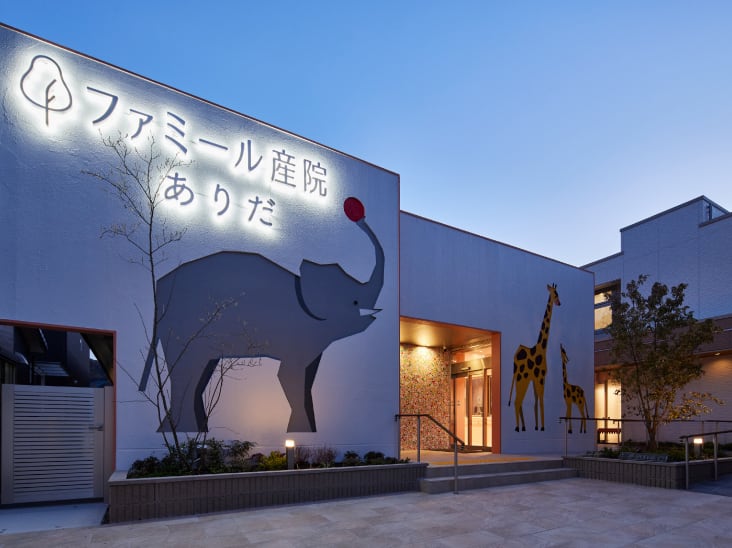
Famile Maternity Clinic Arida
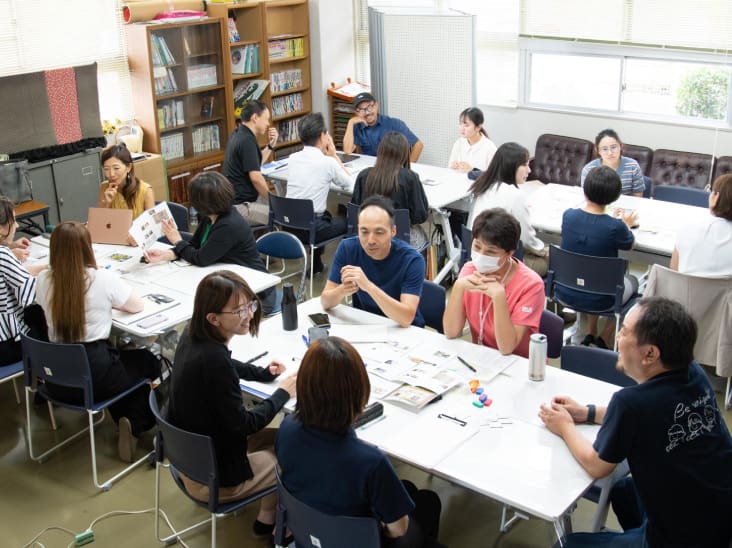
A meeting at a Maternity Clinic
Famile Maternity Clinic Arida, a PPP project
Famile Maternity Clinic Arida opened in April 2024, with the aim of being a childbirth facility rooted in the community, allowing mothers to give birth and raise children worry-free in their own town. As the population continues to decline, the collapse of regional healthcare due to insufficient medical services and physician shortages is a social problem shared across Japan. However, this is a problem that is difficult for single local governments and companies to resolve on their own. This project was made possible precisely because it was a PPP initiative, utilizing public and private cooperation. The facility comprises two buildings: an outpatient clinic that was constructed by reducing the floor area of and renovating a former nursery school owned by Arida City in Wakayama Prefecture, and an in-patient delivery clinic newly built on the adjacent former playground. As of January 2026, the clinic has delivered 250 babies since its opening.
This project was implemented as part of Arida City’s private proposal system. A consortium comprising three companies—Sekisui House, Ltd., Medical Corporation Mother Key, and Konoike Building Technology Co., Ltd.—applied to use the system and was subsequently selected. Arida City and members of the consortium enhanced the quality of their discussions through logical proposals based on data analysis, and through detailed and repeated dialogue, those involved simultaneously achieved both public-private collaboration and broader regional cooperation through collaboration between the Arida regional healthcare municipalities. Although the facility development project has been completed, in order to continue providing childbirth services in the Arida healthcare region on a sustainable basis, we are holding exchange events aimed at fostering ongoing community support and strengthening local connections. We are also continuing our co-creation initiatives with university students and professionals engaged in regional healthcare, nursing care, and welfare. In FY2025, the project received the Minister for Children’s Policy Award at the 19th Kids Design Award, and was highly rated as a framework for regional revitalization through sincere efforts to address declining birthrates.
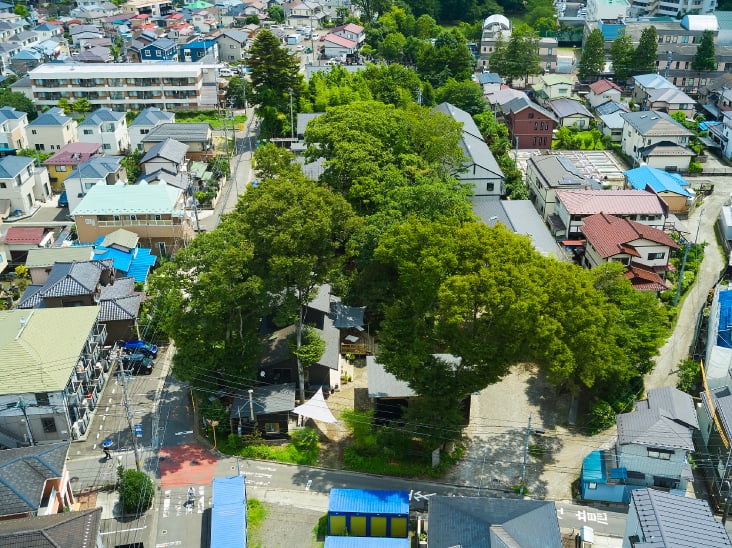
Dai-no-mori Project
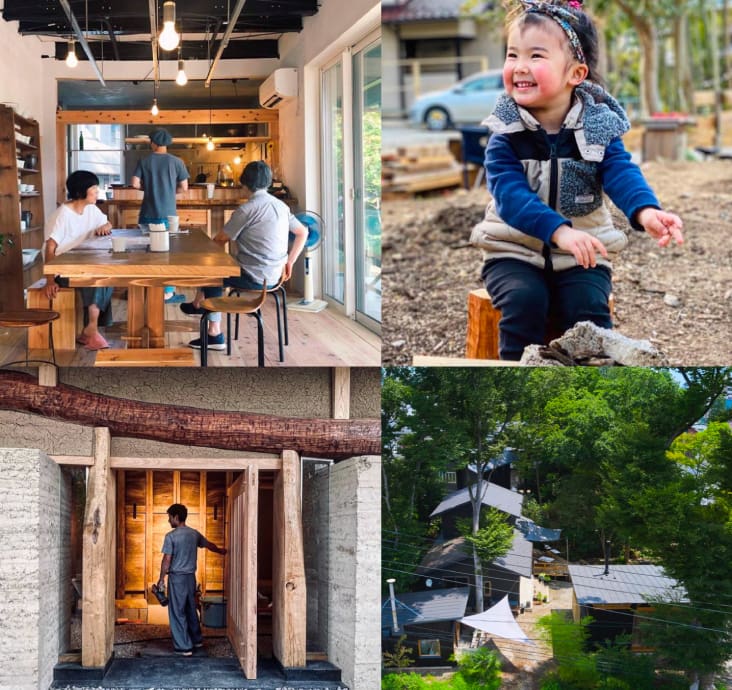
The Dai-no-mori Project: Creating a center of interaction to pass on local resources to the future
The Dai-no-mori Project in Sendai City is an initiative to create a symbiotic community that preserves memories of daily life from times gone by, along with valuable local resources including a forested property and wells passed down through generations, fruit-bearing trees, and a zelkova tree over 300 years old. The Company proposed a community-oriented hub where a group home for people with disabilities, pottery workshop, café, gallery, and restaurant all coexist harmoniously. Based on the lessons learned from the Great East Japan Earthquake, we focused on building face-to-face, multi-generational relationships. Therefore, we interviewed 90-year-old residents about their childhood memories, exchanged opinions with residents, and developed and implemented a plan to create a new place where visitors can develop attachment and increase involvement with the area. The warehouse gallery (constructed by Mitsu Woodworking Studio) was built using leftover itakura, a storehouse remaining on the site made from thick wooden planks. The interiors of the gallery, café, restaurant, and other spaces were completed through a workshop-style initiative in which business operators, their families, local volunteers, and children participated and shared the experience of creating a space together. The project’s development process received high evaluations as a potential model for children’s participation in community development and was awarded the Kids Design Association President’s Award in FY2021. In FY2024, the project was selected as a leading model by the Ministry of Land, Infrastructure, Transport and Tourism for businesses creating living environment models, and it continues to grow daily as a sustainable hub for the community.