[ Japanese ]
Climate-related disclosures in accordance with the TCFD Recommendations and relevant climate-related disclosure regulations in various countries
Governance
The Sekisui House Group has established the ESG Promotion Committee as an advisory body to the Board of Directors to determine and implement action policies while confirming that all ESG management initiatives are reasonable and in line with societal expectations. The committee meets once every three months. Climate change response is positioned as one of the important agenda items of this committee, which evaluates the appropriateness of action policies and progress, and reports important matters to the Board of Directors.
The Company-wide, cross-departmental Environmental Subcommittee reports to the ESG Promotion Committee. Mainly composed of head office department heads involved in environmental management and individuals in charge of environmental management in each business division, this subcommittee meets once every three months to promote the alignment of organizational effort by sharing information on environmental matters and examining action policies and other resolutions, such as action policies. In addition, the Environmental Subcommittee broadly disseminates the decisions of the ESG Promotion Committee for adoption throughout the Group. The ESG Promotion Committee ensures effective, timely management oversight by providing the director of the Board responsible for each business and other managers with routine reports and instructions on the implementation of ESG initiatives.
Strategy
The Sekisui House Group aims for steady progress toward the overall decarbonization of its businesses. Accordingly, to clarify the appropriateness of the Group’s strategy and issues, we anticipate various situations that may occur in the future, then conduct a scenario analysis while taking into consideration the specific circumstances of business activities and resources, as well as physical risks, including assumed business activities, duration, and the useful life of assets. We also evaluate transition risks based on potential scenarios for legislation, technology development and market conditions, and identify and address climate-related risks (physical and transition risks) and opportunities for our business activities.
We have already completed risk assessments and adaptation plans for most of our businesses. However, since we have expanded our business into new areas, including M&A over the past few years, we are planning to create transition plans for all existing businesses based on their specific circumstances by roughly 2028 in order to adapt to physical risks. In addition, we intend to establish a system for early risk assessment and response for 100% of our new businesses in the future, and disclose the necessary related information.
The scenario we refer to is the 1.5°C scenario shown in Table 1. However, even if regulations are strengthened to achieve the 1.5°C scenario, it is possible that individual countries will not be aligned in their actions, resulting in Table 1. Scenario Analysis Assumptions Item a world as projected in the 4°C scenario, where climate change is even greater. For this reason, we must prepare for both scenarios simultaneously.
In February 2025, Japan set a new greenhouse gas emission reduction target of 60% by FY2035 and 73% by FY2040 compared to the FY2013 levels, with a view to achieving net zero emissions. Based on this target, a direction has been set in the housing industry to ensure energy-saving performance equivalent to standards for newly constructed Net Zero Energy Houses (ZEH) and Net Zero Energy Buildings (ZEB) from FY2030 onward, aiming to achieve such performance across our entire housing and building stock by 2050. For the residential sector, policy directions are aimed at accelerating the transition to non-fossil energy sources and enhancing demand response capabilities of residential facilities. Specific governmental measures include promoting the introduction of energy-saving equipment for water heating, which currently accounts for approximately 30% of household energy consumption, as well as the installation of functions necessary to flexibly align its energy demand with supply. At the same time, energy suppliers will be called upon to take stronger action, such as stepping up information disclosure. For this reason, we have conducted a large-scale scenario analysis for all of our businesses and reviewed our strategies. Furthermore, in FY2025, we moved forward with preparations ahead of the mandatory disclosure of climate-related information in line with laws and regulations in each country. For Australia, we prepared for the submission of reports that comply with the Australian Sustainability Reporting Standards (ASRS), and for the State of California in the U.S., we sought to track trends and appropriately prepare for climate disclosure laws in California (Climate Corporate Data Accountability Act [SB253] and Greenhouse Gases: climate-related financial risk [SB261]). The potential financial impact of the major risks and opportunities identified through these initiatives, as well as our responses, are shown on the next page.
The financial impact and time horizons are defined as follows.
Financial impact: Large: ¥30 billion yen or more; medium: ¥10 billion or more; small: less than ¥10 billion yen
Time horizons: Short term: up to 3 years from 2025; medium term: up to 2030; long term: up to 2050
Table 1. Scenario Analysis Assumptions
| Item | Assumptions |
|---|---|
| Reference scenarios |
We take into account the scenarios published by the above international organizations, as well as announcements made by the Japanese government and relevant councils. |
|
Subject companies and businesses |
All existing businesses of the Sekisui House Group companies*6 (including overseas subsidiaries in the U.S., etc., and the entire upstream and downstream value chain). |
| Quantitative/qualitative | Mainly a qualitative analysis of all existing businesses of the Sekisui House Group (including overseas subsidiaries in the U.S., etc.). Quantitative estimates of financial impact amounts for particularly important opportunities and risks. |
Note: Although non-climate-related factors such as the shrinking and aging population in Japan will also have a market impact, we have not considered said impacts in this analysis, as the focus is climate change-related impacts.
*1 IPCC: Intergovernmental Panel on Climate Change
*2 IEA: International Energy Agency
*3 NGFS: Network for Greening the Financial System
*4 NatHERS(Nationwide House Energy Rating Scheme)
*5 the Building Sustainability Index (BASIX) established by the New South Wales Government
*6 Sekisui House, Ltd. and its major consolidated subsidiaries in Japan and overseas (42 companies)
Table 2. Major Risks, Potential Financial Impacts, and Responses
| Transition risk: Introduction of carbon pricing | |||
|---|---|---|---|
| Impact | Carbon pricing has been widely adopted around the world. In Japan as well, the government’s Emission Trading Scheme (GX-ETS) will begin in April 2026. If carbon pricing is implemented, it may lead to increases in both direct and indirect business costs, as well as a potential decline in competitiveness. | Financial impact | Time horizons |
| High | Short-term | ||
| Response | The Group as a whole and its suppliers have a long way to go in order to decarbonize their business activities in the medium term, and if a carbon tax or emissions trading scheme with a unit price of around 10,000 yen/t-CO2 is imposed, the impact will be significant. We have already started a variety of initiatives throughout the value chain, including promotion of RE100, energy conservation in offices and production facilities, and reduction of CO2 emissions in the building materials manufacturing stage through collaborative efforts such as questionnaires and seminars with suppliers, and we intend to reduce this impact as quickly as possible. | ||
| Transition risk: Rising housing prices and a shrinking market | |||
|---|---|---|---|
| Impact | In the long term, the new construction market itself may shrink as housing prices soar due to the need to comply with stricter regulations required for achieving net zero emissions, and as the number of houses with poor energy efficiency and seismic resistance decreases, and more high-quality housing stock is being circulated in the market. Overseas, the impact of rising costs could be severe for low-priced products that specifically target first-time homebuyers. | Financial impact | Time horizons |
| High | Long-term | ||
| Response | The impact on regulatory tightening in the short to medium term on the Group is expected to be small. However, in response to further regulatory tightening in the long term, we will need to work systematically on the development of cost-competitive decarbonized housing. In addition, we are exploring ways to strengthen our supplied housing business, in preparation for the contraction of the new construction market. | ||
| Transition risk: Decline in rental business revenues due to market changes | |||
|---|---|---|---|
| Impact | Managed properties that do not have sufficient decarbonization performance will lose competitiveness, leading to lower occupancy rates and rents. | Financial impact | Time horizons |
| High | Long-term | ||
| Response | We will strive to increase the ratio of ZEH units in managed properties and promote decarbonization remodeling of non-ZEH units in order to maintain and increase the value of rental housing that appeals to renters. | ||
| Transition risk: Decline in rental business revenues from managed properties with higher disaster risk | |||
|---|---|---|---|
| Impact | Managed properties in disaster-prone areas will have lower occupancy rates and rents due to the increase in climate change-related disasters (floods due to rivers overflowing, landslides, etc.). | Financial impact | Time horizons |
| High | Long-term | ||
| Response | We recognize this as an issue, and are continuing to study this issue by checking government hazard maps and understanding the hazards in areas where construction is planned. | ||
| Transition risk: Costs required to decarbonize business activities | |||
|---|---|---|---|
| Impact | In order to decarbonize our business activities, various costs will be incurred, such as converting business locations to ZEB, electrifying Company vehicles, and making production facilities energy-efficient. | Financial impact | Time horizons |
| Low | Short-term | ||
| Response | The Company is systematically promoting decarbonization in all of its business activities, and the risk of incurring major costs that would affect its business is low at this point. | ||
| Transition risk: Increased costs associated with tightening of restrictions by the government | |||
|---|---|---|---|
| Impact | In our Australia business, there is a possibility that tighter climate-related restrictions will be enforced during our development of long-term projects. This could have an impact on our income and expenditure plan, such as increased payments of interest arising from delays in projects. | Financial impact | Time horizons |
| Low | Medium-term | ||
| Response | We will appropriately manage any risks by shifting to medium-scale short-term projects and transforming existing projects into joint ventures. | ||
Damage to Company-owned assets and the supply chain due to weather-related disasters
The Sekisui House Group conducts risk management based on the following assumptions about rain or wind storms of a severity it has never yet experienced.
Table 2. Major Risks, Potential Financial Impacts, and Responses
| Physical risk: Damage to Company-owned assets due to weather-related disasters | |||
|---|---|---|---|
| Impact | Nationwide weather disasters could damage assets owned by the Group (factories, office buildings and other business locations, production facilities, vehicles, etc.), making it impossible to continue operations and incurring significant repair or replacement costs. | Financial impact | Time horizons |
| High | Medium-term | ||
| Response |
The Sekisui House Group operates throughout Japan, with the exception of Okinawa Prefecture, and has already established a system that allows its business to continue through support from undamaged areas in the event of a disaster in some areas, including the head office functions. Such business continuity planning (BCP) measures are properly managed by the Risk Management Committee and updated as necessary. |
||
| Physical risk: Damage to the Company’s value chain due to climate change | |||
|---|---|---|---|
| Impact | The frequency of supply chain damage and difficulties in obtaining construction materials will increase due to the intensification of disasters associated with climate change, as well as the increase in flooding, extremely hot days and heavy snowfalls. In addition, construction sites may be affected for the same reasons, and administrative costs may increase due to longer construction periods. In our overseas business, particularly in California, USA, wildfires and other disasters have a significant impact, potentially causing delays in land development plans and decreases in the valuation of planned development sites. In addition, such issues as a reduction in developable areas due to water shortages brought on by droughts and the disruption of wood growth caused by pests and diseases linked to higher temperatures are also considered risks that could lead to rising costs. | Financial impact | Time horizons |
| Not calculated | Medium-term | ||
| Response | Although the Company already has measures in place to decentralize the supply chain in anticipation of damage to suppliers’ factories and transportation routes, and to prevent heat stroke at construction sites, continued consideration is needed in anticipation of an increase in the scale and frequency of natural disasters both in Japan and overseas. | ||
Other risks
Before purchasing land for resale either in Japan or overseas, we require the use of hazard maps and predictive data from water risk analysis tools such as the WRI Aqueduct developed by the World Resource Institute (WRI) to conduct an analysis of possible risks. When constructing large buildings, such as condominiums, we also refer to hazard maps during planning to minimize the risk of damage. However, the impact of climate change is growing year by year, and the scale and frequency of natural disasters may increase, so the Sekisui House Group will continue to study how to deal with related risks.
Table 3. Major Opportunities, Potential Financial Impacts, and Responses
| Major opportunity: Increase in ZEH/ZEB orders | |||
|---|---|---|---|
| Impact | The Japanese government has set goals that include reducing greenhouse gas emissions in the residential sector by 66% compared with the FY2013 baseline by FY2030, positioning ZEH and ZEB as key measures. In addition, demand for ZEH and ZEB is expected to increase in the future, as consumers become more ethically conscious and businesses further decarbonize. Moreover, we anticipate increasing demand for ZEH specification products overseas. | Financial impact | Time horizons |
| High | Medium-term | ||
| Response | The ratio of our detached ZEH homes exceeds 90%, and ZEH is already a standard specification. We are moving forward with our response to new ZEH standards (GX ZEH). We are also actively promoting ZEH and ZEB in rental housing, condominiums, and non-residential constructions. We will expand ZEH and ZEB orders for the entire Group. In our overseas business, if the installation of photovoltaic panels and storage cells becomes mandatory, our early adoption of ZEH standards provides competitive advantage in procurement and other areas. Early adoption also enables us to appeal to customers with benefits such as houses that maintain high resale value over the long term. | ||
| Major opportunity: Increase in rental business revenues by converting managed rental properties to ZEH | |||
|---|---|---|---|
| Impact | The Japanese government intends to require ZEH-level energy efficiency in all new buildings constructed in and after FY2030. In addition, ZEH conversion of rental housing will eventually become more common, so the need for ZEH rental housing could increase dramatically as consumers become more ethically conscious. | Financial impact | Time horizons |
| High | Medium-term | ||
| Response | Since completing Japan’s first rental housing that meets the ZEH standard for all units in 2018, we have been working to promote ZEH units that can appeal to residents. Orders are steadily expanding and we are preparing for a future expansion of demand for rental ZEH units, especially among ethically conscious consumers. | ||
| Major opportunity: Increase in orders for decarbonization remodeling | |||
|---|---|---|---|
| Impact | The government’s goal of reducing greenhouse gas emissions in the residential sector by 66% compared with 2013 by FY2030 requires energy-saving renovations to housing stock. For this reason, various reform support policies are being implemented and orders for decarbonization remodeling are proceeding well. | Financial impact | Time horizons |
| High | Medium-term | ||
| Response | The government’s goal of reducing greenhouse gas emissions in the residential sector by 66% compared with 2013 by FY2030 requires energy-saving renovations to housing stock. For this reason, various reform support policies are being implemented and orders for decarbonization remodeling are proceeding well. | ||
| Major opportunity: Reduction of RE100 promotion costs | |||
|---|---|---|---|
| Impact | Achievement of RE100 is essential to the realization of a decarbonized society. However, procuring renewable energy usually entails significant costs. | Financial impact | Time horizons |
| Low | Medium-term | ||
| Response | Through the Sekisui House Owner Denki initiative, renewable energy power is procured at almost no cost. Considering the possibility of the electrification of energy used in business in the future, such as a shift to EVs for Company vehicles, the cost of electricity may increase with conventional procurement methods. The cost reductions achieved through the Sekisui House Owner Denki initiative can be utilized to secure funding for other purposes, and can therefore be regarded as an opportunity. | ||
| Major opportunity: Decarbonization of the production stage | |||
|---|---|---|---|
| Impact | In decarbonizing the entire value chain, efforts by suppliers to reduce emissions at the construction material manufacturing stage are fraught with difficulties. | Financial impact | Time horizons |
| Low | Short-term | ||
| Response | Since a high percentage of our construction materials, such as exterior walls and frameworks, is produced in-house, it is easier to reduce greenhouse gas emissions from material production through planned technological development and capital investment than when relying more on external procurement, thus reducing the impact of carbon taxes. The cost reductions are considered as an opportunity, because they can be utilized to secure funding for other purposes. | ||
| Major opportunity: Increase in infrastructure construction and waste disposal due to more frequent and severe weather-related disasters | |||
|---|---|---|---|
| Impact | As sudden heavy rains are expected to occur more frequently, demand for construction related to stream and flood control infrastructure, including the replacement and maintenance of aging existing infrastructure, will increase. In addition, demand for proper waste disposal following damage caused by greater than expected rainfall will increase. | Financial impact | Time horizons |
| Low | Long-term | ||
| Response | To meet increased demand for infrastructure development related to disaster countermeasures, we will build up expertise in extending service life through preventive and protective infrastructure renewal and allocate personnel as needed in preparation for receiving orders. We will invest in technological development and the introduction of new technologies to increase competitiveness and differentiation by such means as offering waste disposal with high recycling rates for buildings, household goods, and other waste materials arising from wind and water damage. | ||
Confirmation of the resilience of the Sekisui House Group’s existing strategies
The review found that the Sekisui House Group’s strategy has already begun to address decarbonization and extreme weather events in all of its business activities, and it has been determined that no fatal impacts are currently apparent, either in terms of transition risk to a decarbonized society or physical risk due to climate change.
Risk Management
As part of the Group-wide risk management process, the Sekisui House Group conducts assessments to determine climate change-related risks and opportunities based on the TCFD recommendations. Risks and opportunities are identified for the entire Group, led by the principal department of each business, and the results are aggregated by the Environmental Subcommittee, which conducts a financial impact assessment. Major risks and opportunities that are identified based on this process are reviewed by the ESG Promotion Committee, an advisory body to the Board of Directors, before being reported to the Board of Directors, which considers risk mitigation, transfer, acceptance, and control, as required. Furthermore, matters related to operational risks and hazard risks are shared with the Risk Management Committee, and reviewed and managed within the Group’s overall risk management structure.
Metrics and Targets
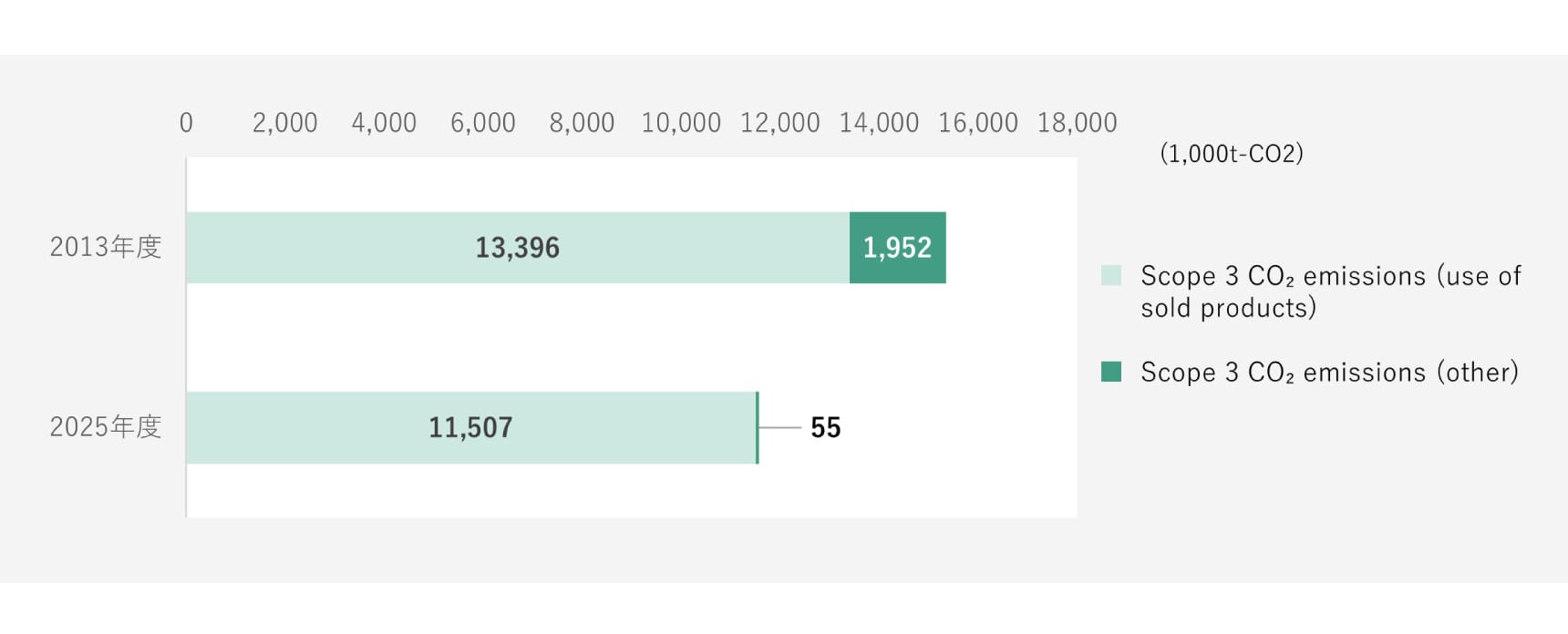
In 2008, the Sekisui House Group declared its Vision 2050, which aims to achieve zero CO2 emissions from housing by 2050. The Group has already begun various initiatives to achieve net zero CO2 emissions in all business activities, including the use of renewable energy. As a milestone toward achieving this goal, by 2030, compared with FY2013 levels, we aim to reduce our own CO2 emissions in Scope 1*7 (direct emissions: fuels consumed for factories, offices, vehicles, etc.) and Scope 2*7 (indirect emissions: energy consumed by the Company, such as electricity) by 75%, and those in Scope 3, Category 11*7 (use of sold products) by 55%. These targets have been set by the Science Based Targets initiative (SBTi)*8 in line with a 1.5°C trajectory. Currently, we have set equivalent reduction targets with FY2023 results as our base year, and simultaneously established a target of net zero across the entire value chain by 2050. Both targets have been approved by the SBTi. Since we already met the 50% reduction target in FY2022, we have revised the targets for Scope 1 and Scope 2 reductions upward to a more ambitious goal for 2030.
As a RE100 member company, we are committed to converting to renewable sources of electricity for our business operations, adopting targets of 50% by 2030 and 100% by 2040. Various concrete measures have already been initiated to achieve these targets, with the 50% target for 2030 being achieved in FY2023.
*7 Classification of CO2 emissions according to the categories of the Greenhouse Gas Protocol.
*8 Science Based Targets initiative (SBTi): A joint initiative established in 2015 by WWF, CDP, the World Resources Institute (WRI) and the United Nations Global Compact (UNGC).
Figure 1. The Sekisui House Group’s Scope 1 and 2 CO2 Emissions Reduction
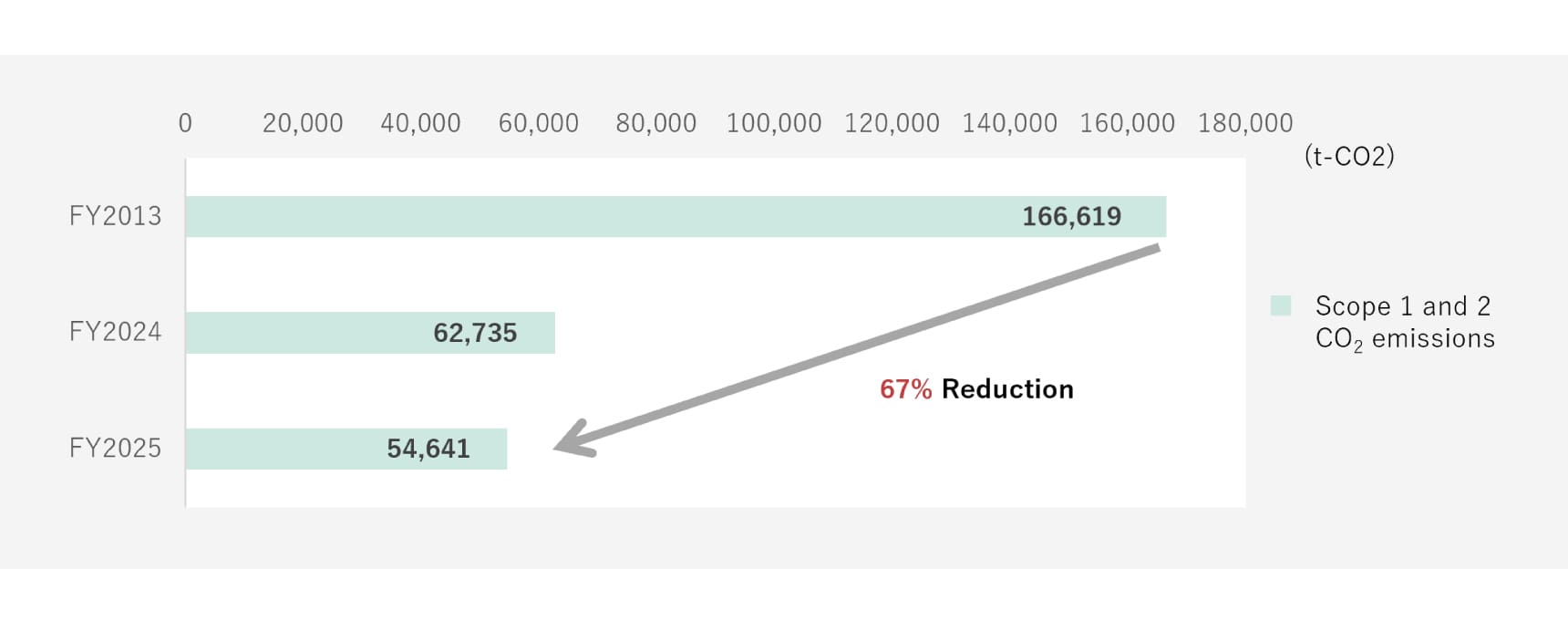
Figure 2. The Sekisui House Group’s Scope 3 CO2 Emissions Reduction
Future issues for the Sekisui House Group
As indicated thus far, the Group has already taken measures to address the anticipated risks from climate change and does not expect any significant financial burden. However, in order to ensure that the Group continues to implement decarbonization management as it has in the past, we will continue to monitor the major risk factors with significant financial impact that have been identified in this analysis and strengthen the necessary initiatives while further quantifying risks and improving the accuracy of the analysis. As for challenges going forward, we believe that the mission of the Group is to contribute to the transition to a sustainable society by further quantifying and improving the accuracy of risks related to newly consolidated Group companies.
In addition, climate change involves many uncertainties, so we need to gather a broad range of intelligence from outside the Group. In order for the Group to demonstrate leadership in the international community, we will further focus on stakeholder engagement through participation in various domestic and international initiatives, including the United Nations Framework Convention on Climate Change (UNFCCC) and the Global Alliance for Buildings and Construction (GlobalABC), of which we are the only member in the Japanese private sector.