Making the Childcare Leave Experience More Meaningful
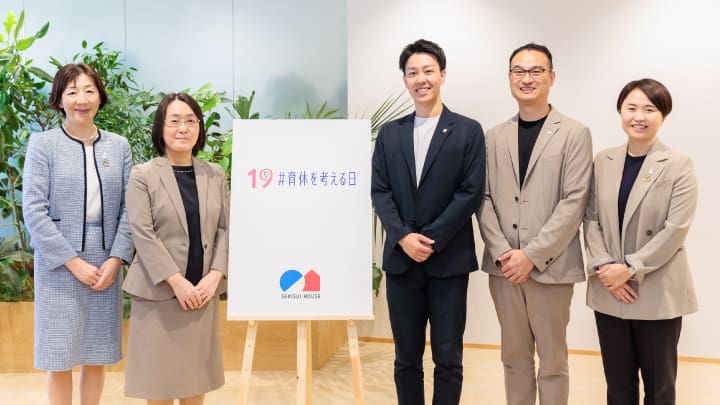
Since 2019, Sekisui House has designated September 19 as Think About Childcare Leave Day and has been implementing the IKUKYU.PJT project to promote greater awareness of paternity leave in industry, government, and academia with the goal of using paternity leave as a catalyst for a better society. As part of this effort, we held an event to present the 2025 White Paper on Paternity Leave. Now in its seventh year, the event featured the Tomoiku Project, survey results on paternity leave, and case studies from employees and partner companies, offering insights on how to make the childcare leave period more enriching.
Greetings from the Organizer
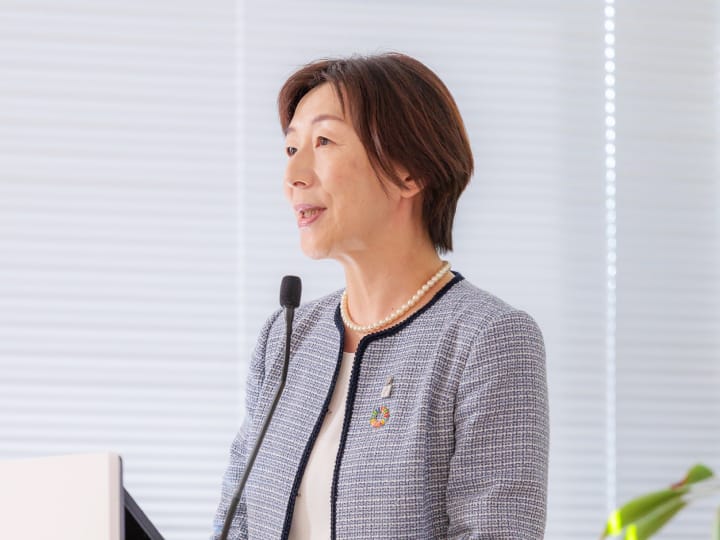
Miwa Yamada
Executive Officer, Senior Manager of ESG Management Promotion Headquarters
Miwa Yamada, Senior Manager of the ESG Management Promotion Headquarters, delivered the opening remarks, outlining the episode that inspired Sekisui House to promote paternity leave and highlighting the specific initiatives that followed.
Childcare Leave: A Time for Nurturing Family Happiness and Shaping the Future
To realize Sekisui House’s global vision of “making home the happiest place in the world,” we believe that the happiness of our employees and their families must come first. This is why we actively promote paternity leave. Our commitment to promoting men’s childcare leave began in 2018, when President Nakai visited Sweden and was struck by the sight of fathers casually pushing strollers in a park on a weekday. Seeing how naturally and joyfully they cared for their children inspired us to ensure the same for our employees, leading to the immediate launch of our Paternity Leave system. Since then, we have consistently maintained a 100% rate of employees taking at least one month of childcare leave.
Since 2019, we have hosted the annual IKUKYU.PJT initiative toward paternity leave awareness in collaboration with partners from many different fields. Guided by our vision of creating a society in Japan where it is natural for men to take childcare leave, we share the message that childcare leave is a time to nurture family happiness through the White Paper on Paternity Leave, TV commercials, and social media outreach. As a “Kids-First” company committed to supporting childcare, Sekisui House also strives to help build a society where children can grow up healthy and secure. This belief—placing the happiness of future generations at the heart of our corporate activities—directly informs our efforts to promote childcare leave.
Childcare leave is more than a company program—it is a meaningful chapter in life. Time spent with your child, supporting your partner, and reflecting on yourself all help shape the future of your family. That is why it is essential not only to take childcare leave but to make the most of that time. Sekisui House will continue to advance a wide range of initiatives as we work together with our employees.
The Ministry of Health, Labour and Welfare’s Tomoiku Project

Mayumi Ueta
Section Manager, Work–Life Balance Division, Employment Environment and Equal Employment Bureau, Ministry of Health, Labour and Welfare
Mayumi Ueta of the Ministry of Health, Labour and Welfare provided an overview of the Tomoiku Project, a new initiative launched in July 2025 to promote dual-income families and shared child-rearing, accompanied by related survey data from the Ministry.
A New Project Launched in Response to Social Trends and Shifting Attitudes Among Younger Generations
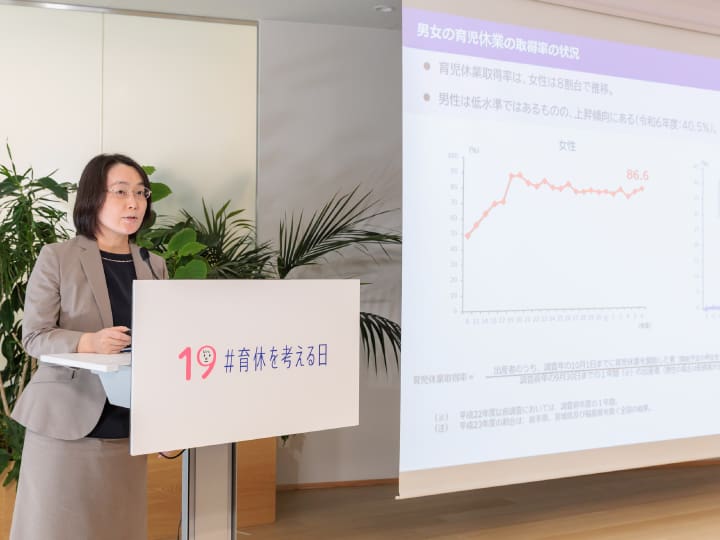
The Tomoiku Project is a public awareness initiative designed to support dual-income families and shared child-rearing by encouraging paternity leave and promoting flexible work arrangements. Launched in July 2025, it succeeds the Ikumen Project, which had been in place since fiscal 2010.
Looking at childcare leave trends, women consistently take leave at rates above 80%. While still lower, the rate for men has risen sharply in recent years, reaching 40.5% in fiscal 2024. In terms of leave duration, over 90% of women take six months or more, whereas about 40% of men take less than two weeks. Although the length of men’s leave is increasing, it remains considerably shorter than that of women. Time spent on housework—which is closely tied to work styles—also shows a significant difference: wives average 6 hours and 32 minutes per day, compared with 1 hour and 57 minutes for husbands, a 3.4-fold gap.
When it comes to gender attitudes toward work and childcare, younger generations show distinct trends. More than 70% state that gender “does not matter” for daily childcare responsibilities, such as pick-ups, caring for a sick child, or routine household tasks like cleaning and laundry. Likewise, more than 70% of both men and women say that gender should not influence childcare leave. Around 80% of young professionals—and 70% of young men—wish to take at least one month of childcare leave. During job searches, many also pay close attention to factors such as paternity leave rates and the support systems available for covering employees who take leave.
The Tomoiku Project was launched in response to these social changes and evolving attitudes among younger generations. The project aims to advance a comprehensive approach—not only encouraging men’s participation in childcare and increasing childcare leave rates, but also promoting more balanced sharing of household and childcare responsibilities and rethinking work styles that make balancing work and family difficult. A key focus will be promoting company-based parenting classes, an initiative designed to help families consider how they will divide household and childcare duties. We hope to see this approach widely adopted in workplaces across Japan.
Release of the 2025 White Paper on Paternity Leave
Positive Changes from Paternity Leave and Ongoing Challenges
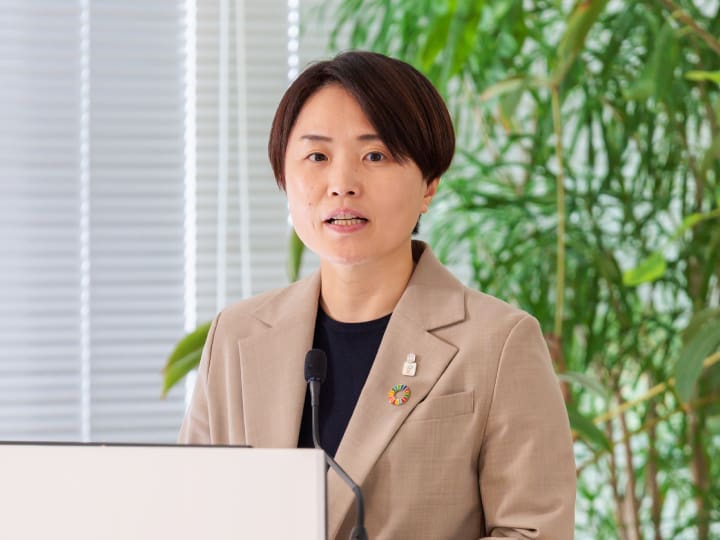
Ayumi Yokoyama
Senior Manager, Diversity and Inclusion Promotion Department
Since 2019, Sekisui House has been conducting an annual survey to determine the realities of housework and childcare for men, the results of which are published in our White Paper on Paternity Leave. Ayumi Yokoyama, Senior Manager of the Diversity and Inclusion Promotion Department, presented our initiatives related to paternity leave and highlighted key topics from the 2025 White Paper on Paternity Leave, which examines current paternity leave trends.
■IKUKYU.PJT
This year, IKUKYU.PJT was endorsed by 174 companies and organizations, 20 more than in the previous year. Now in its seventh year, the project produced a web video, My First Childcare Leave | #ThinkAboutChildcareLeaveDay, based on the real experiences of employees who took childcare leave and on survey findings. The video shows how families grow closer during the childcare leave period and communicates the message that making the most of this time can help foster lasting family happiness after returning from leave.
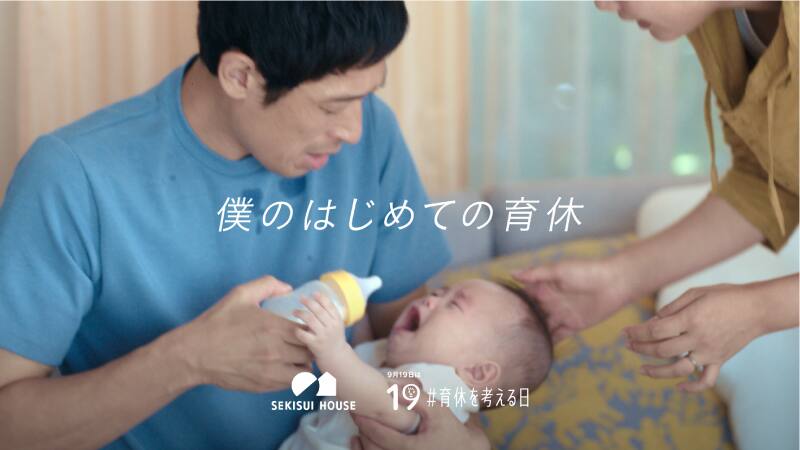
IKUKYU.PJT project website My First Childcare Leave | #ThinkAboutChildcareLeaveDay web video
Continuing a 100% Childcare Leave Rate Through Ongoing System Enhancements
Guided by our global vision of “making home the happiest place in the world,” Sekisui House has promoted paternity leave since 2018. The paternity leave program began in September 2018 and is available to employees with children under the age of three. Key features include full acquisition of at least one month of childcare leave, a paid first month (available to all genders), and the option to take leave in up to four segments. The system is designed to reduce barriers that might prevent employees from taking childcare leave.
Ahead of the legal revisions that took effect in October 2022, we also launched the Childcare Leave at Birth program in April 2021, expanding our childcare leave program for men. This flexible system allows employees to take leave in one-day units during the eight weeks after childbirth—when maternal support is most needed and postpartum depression is a particular concern—regardless of the number of segments taken.
At Sekisui House, the first step in taking paternity leave is to prepare a Family Meeting Sheet. This tool helps families discuss when and why leave will be taken, as well as how household and childcare responsibilities will be shared before, during, and after the leave period. We believe that open communication with one’s family before taking childcare leave leads to a more positive leave experience and greater family happiness.
As of the end of August 2025, 3,428 male employees were eligible for childcare leave, and all 2,497 who reached their deadline had taken at least one month. Since full-scale implementation began in February 2019, we have consistently maintained a 100% childcare leave acquisition rate.
■Family Meeting Sheet
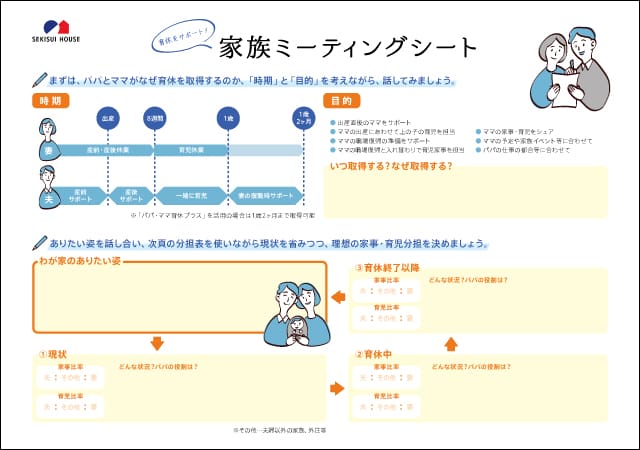
Family Meeting Sheet (Available to download and use freely)
Continued Rise in Paternity Leave, Reaching a Record High
Key findings from the 2025 White Paper on Paternity Leave show that 36.3% of men living with preschool-aged children took childcare leave—the highest rate recorded to date. The Ministry of Health, Labour and Welfare also reported in July that 40.5% of men who welcomed a child in the past year took childcare leave, up about 10 percentage points from the previous year. These results indicate that paternity leave is increasingly becoming the norm.
Increased Willingness to Take Paternity Leave, but Uncertainty Remains on Where to Start
Among wives whose husbands took childcare leave, 43.5% felt that their husbands’ leave was more than just “taking leave for the sake of taking it.” This is a 10-point increase from the previous year, indicating a clearly positive shift. Around 80% of men also reported that they chose to take childcare leave voluntarily. However, nearly half said they “didn’t know what to do before or during the leave.” Even though attitudes toward taking paternity leave are becoming more proactive, addressing this uncertainty is essential to ensuring a more fulfilling childcare leave experience.
Importance of Open Communication Before and During Childcare Leave
In households where husbands took childcare leave, satisfaction levels differed significantly depending on prior communication. Among wives who felt their husbands’ leave was “taking leave for the sake of taking it,” satisfaction was 55.6%, compared with 86.6% among wives who felt it was not just “taking leave for the sake of taking it”—a gap of roughly 31 points. During the leave period, men most often reported difficulty or fatigue in staying attentive to their partner’s feelings and changes, while women said they felt they were “the only one making an effort,” leading to frustration. These concerns are largely communication-related, highlighting the importance of open dialogue between partners both before and during childcare leave.
The Influence of Satisfaction During Childcare Leave on Post-Leave Housework and Childcare Satisfaction
Among respondents satisfied with household communication, 76% were also satisfied with their childcare leave experience, compared with just 29.1% among those dissatisfied. A similar pattern appeared in satisfaction with housework and childcare after returning from leave. Those who reported high communication satisfaction had also discussed key topics in advance, such as the length of the childcare leave and how responsibilities would be shared during the leave.
About 80% of Men Continue to Enjoy Parenting After Taking Childcare Leave
Even among men who initially felt unsure about what to do during childcare leave, nearly 80% of those satisfied with household communication said that parenting became more enjoyable and that they began looking forward to coming home. In contrast, only around 30% of those dissatisfied reported the same, indicating that they were less able to enjoy housework and childcare. The data also showed that men who performed fewer childcare and housework tasks or who took fewer days of leave were more likely to view their experience as “taking leave for the sake of taking it.”
Taking Paternity Leave Brings Positive Changes for Women as Well
The most common change reported in men after taking childcare leave—according to both men and women—was the increased confidence to handle tasks such as putting the child to bed or preparing meals on their own. Women also noted additional improvements, including their husbands’ ability to manage outings alone with the child and a better understanding of the child’s daily rhythms. Paternity leave also led to an increase in the number of housework and childcare tasks men performed. Women themselves also reported positive outcomes such as a stronger sense of teamwork in sharing household and childcare responsibilities, reduced stress, and an improved ability to secure adequate sleep.
Positive Paternity Leave Experiences That Also Benefit the Workplace
Men who reported high satisfaction with their childcare leave also experienced positive changes at work. Many noted an increase in mutual support among colleagues and greater awareness of time management, suggesting that supporting a meaningful childcare leave experience can also have beneficial effects in the workplace. Workplaces that actively communicate the purpose and reasons for paternity leave to the wider organization were also found to be more understanding and cooperative regarding paternity leave.
The Importance of Strengthened Communication Within the Family
At Sekisui House, we use the Family Meeting Sheet introduced earlier to help couples communicate before taking childcare leave, making it easy to discuss the purpose and timing of leave as well as how childcare and housework will be shared. Male employees who used the sheet reported higher satisfaction with household communication than the general population of men taking childcare leave, and their satisfaction during leave was also roughly 10 points higher than average.
As paternity leave rates in Japan reach record highs, now is the right time to consider how to further improve the childcare leave experience. We hope that the findings of the 2025 White Paper on Paternity Leave will help spark discussion about the quality of childcare leave. Childcare leave is a valuable period for nurturing family happiness, and Sekisui House will continue working to build a society where taking childcare leave is a natural choice for all men.
■2025 White Paper on Paternity Leave

* Click here for more information.
Testimonials from Male Employees Who Took Paternity Leave
Growing as a Parent Together with My Wife Through Childcare

Shohei Kimura
SI Strategy Office, Detached House Business Strategy Department, Corporate Strategy Division
Joined in 2007
Tasks
Promotion of “SI Project” joint construction projects, including technical support and development
Family members
Wife and two children (6-month-old twins born in March 2025)
Childcare leave taken
[Period 1] March 12 to May 6, 2025 (29 days);
[Period 2] July 14 to July 27, 2025 (10 days)
Planning a Longer Childcare Leave in Preparation for Twins
I took childcare leave twice, first immediately after the birth of our twins, and again in July. My wife and I began discussing the first leave around the previous October and decided the timing and duration early. Because this was our first experience with childcare, and because we were having twins, we felt it was important for me to take a longer period of leave.
When my wife entered the stable phase of pregnancy in October, I informed my supervisor of the expected delivery period, and from December, I began gradually handing off my responsibilities. By February, just before my leave, all handovers to team members were complete. For pre-scheduled training sessions, I used the Childcare Leave at Birth program, which allows employees to take leave in one-day increments, so I could attend as planned.
A Period for Building Childcare Skills and Confidence
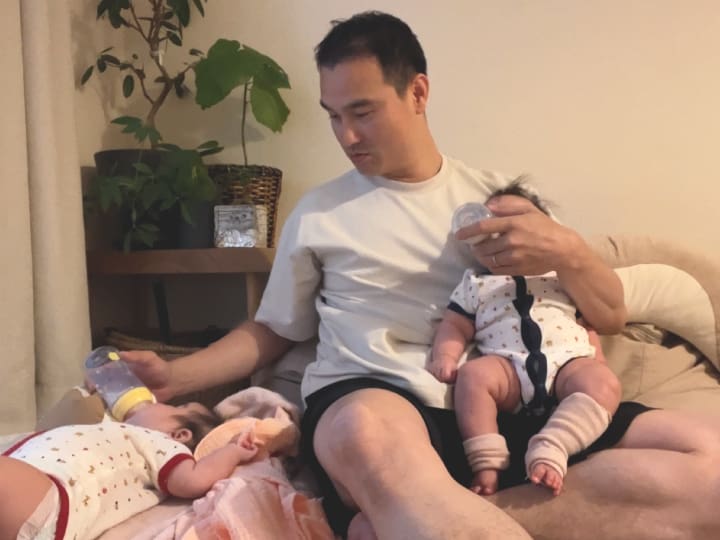
Before taking leave, my wife and I talked about supporting each other and becoming capable of handling childcare and household responsibilities together. Looking back, our first childcare leave was primarily about learning to navigate childcare, and it became a valuable preparation period where we developed our skills and confidence as parents.
I took my second childcare leave to handle childcare and housework during my wife’s surgery and hospitalization, and to support her after she returned home. Thanks to the skills I gained during my first leave—and by making full use of tools for feeding and putting the twins to sleep—I was able to manage on my own.
Improving Communication and Supporting Each Other as Parents
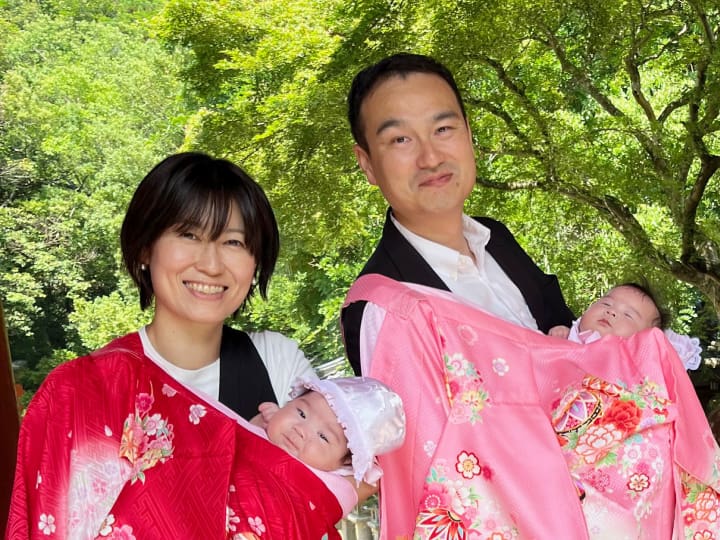
During childcare leave, my wife and I prioritized working together on both childcare and housework. We wanted to grow as parents at the same pace, and we shared our vision for how we wanted to raise our children and talked through many things together. Now, we’ve become each other’s trusted partner when it comes to parenting.
One of the greatest benefits of taking childcare leave was being able to support my wife right after childbirth. Sharing the challenges of raising twins also strengthened our sense of teamwork. Childcare leave gave me the chance to be present with my family and grow alongside my wife. I now feel confident handling unexpected situations on my own, and my appreciation and love for my family have grown even stronger.
[Case Studies from Supporting Companies]
RENAISSANCE INCORPORATED
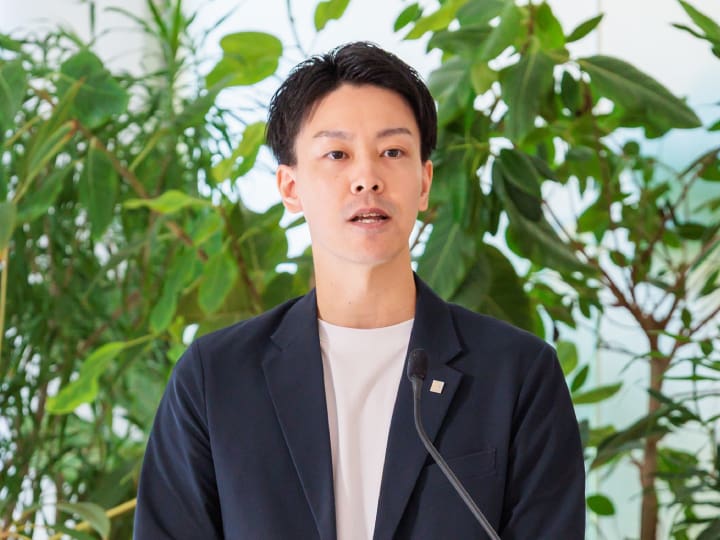
Satoshi Tahara, Deputy Section Manager,
Human Resources Development Team and DE&I Promotion Team, Human Resources Department
Established
October 8, 1979
Number of employees
1,958 (as of March 31, 2025)
Businesses
Sports clubs; health promotion for municipalities and companies; nursing care rehabilitation; etc.
Building a Strong Network for Peer Support
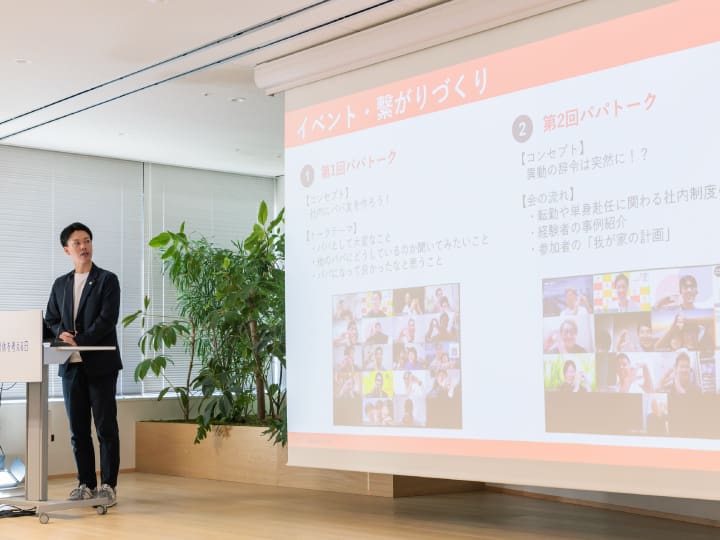
Guided by our corporate philosophy of being a “company for creating purpose in life,” we actively promote women’s participation and support employees in balancing work and childcare, and in 2016, we launched Renefami+, a networking group for employees raising children. This includes efforts to encourage male employees to participate in childcare and housework, helping create a culture where peers can consult and support one another while building toward their future career goals. Over the past decade, our paternity leave rate has steadily grown, reaching 94.4% in fiscal 2024. As we work toward 100%, we are also focused on enhancing both the duration and the overall experience of childcare leave.
Our key initiatives to support paternity leave and work–life balance include creating a childcare leave guidebook, organizing events, and building connections among fathers. Because our stores and facilities are located nationwide, it can be challenging for employees to build peer networks, and information tends to be limited. Through these initiatives, we aim to show that there are many successful examples and creative practices related to childcare leave and participation in childcare and housework across our organization.
Dai Nippon Printing Co., Ltd. (DNP)
Tadashi Honda, Manager,
Diversity & Inclusion Promotion Office
Established
October 9, 1876
Number of employees
36,890 (consolidated; as of March 31, 2025)
Businesses
General printing (Smart Communications, Life & Healthcare, Electronics)
Taking the Lead in Promoting Paternity Leave from Top Management
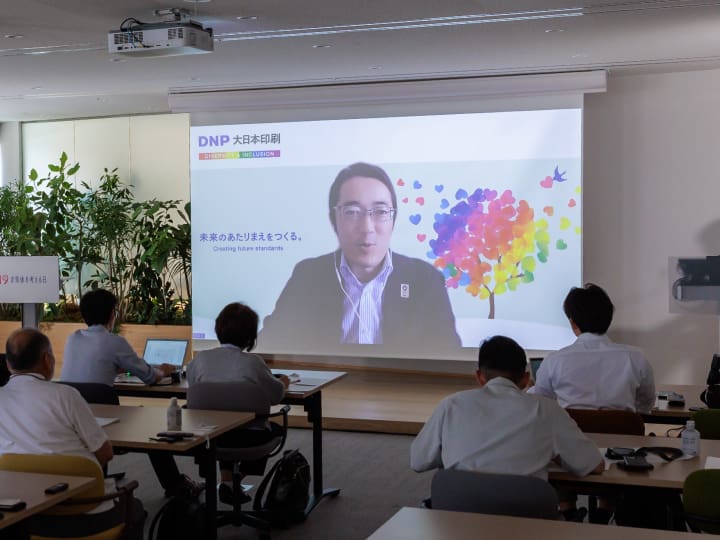
In December 2020, the president of the DNP Group personally declared a goal of 100% paternity leave, positioning it as a company-wide priority. While the paternity leave rate was in the 50% range in fiscal 2020, it rose to the 80% range the following year and reached 96.4% in fiscal 2024. The average number of days taken also increased steadily to 27.6 days, and we are now aiming for an average of 40 days.
As part of our paternity leave policy, we hold a Kangaroo Club, a seminar to support the balancing of work and childcare. External partners can join as well, allowing couples to learn essential information, discuss their childcare strategy as a team, and start their parenting journey on the same footing. We also provide e-learning training for all employees across the Group to help create a workplace culture where men feel comfortable taking childcare leave. In addition, the company intranet features testimonials and roundtable discussions from male employees who have taken paternity leave. By passing on these real-life stories, we aim to broaden understanding and support for childcare leave throughout the DNP Group.